Hormuz, reopened: what an Iran deal on Trump's terms actually settles — and what it doesn't
A US-Iran deal announced on 14 June 2026 promises immediate, toll-free passage through the Strait of Hormuz. The fine print is conspicuously absent — and the asymmetry of who is talking says as much as the deal itself.
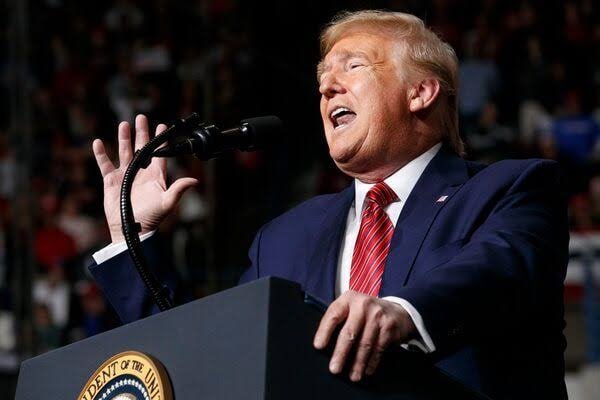
On 14 June 2026, at roughly 21:32 UTC, the official channels of Iran's Tasnim News Agency, the Mehr News Agency, and Al Alam Arabic carried an identical, three-line declaration from Donald Trump: the agreement with the Islamic Republic of Iran, in his words, "has been fully finalized," and he is "fully authoriz[ing] the re-opening of the Strait of Hormuz without complications" — toll-free, and effective immediately on signing. The phrasing was reproduced almost word-for-word across Iranian state-aligned outlets, suggesting the text originated in Washington and was simply relayed. Ynet, the Israeli outlet, had already reported at 19:50 UTC that the US president was prepared to lift the naval blockade "immediately," ahead of the phased timetable his own administration had been sketching. By 21:35 UTC, Al Alam Arabic was carrying the announcement as urgent, breaking-news copy. The two governments have not jointly published the text. The deal is, for now, a presidential utterance that both sides are treating as a fait accompli.
That is the story in one paragraph. The interesting question is what kind of deal this is — and what it isn't.
A blockade, lifted by the side that imposed it
For weeks before the announcement, the United States had maintained a naval blockade against Iranian-linked shipping in and around the Strait of Hormuz, the narrow chokepoint through which roughly a fifth of the world's seaborne oil passes. Tehran's leverage in the standoff was the strait itself: even a partial closure moves the global benchmark by single-digit dollars per barrel within hours, and a full closure moves it by tens. The Israeli wire's reporting on 14 June captured the dynamic clearly — the original US plan was a phased reopening, calibrated to verifiable Iranian steps; Trump's reversal collapsed the schedule into a single moment.
This is the structural oddity of the announcement. In a normal agreement, two states publish terms and a sequencing; here, the US president declared a deal complete and the Iranian state-aligned press echoed his words. There is no Iranian counter-text in the thread. The deal exists, in other words, primarily as an American statement — a feature worth dwelling on, because the asymmetry is the deal.
The Iranian framing, treated as wire
Read carefully, the Iranian coverage of the announcement is more than a translation of the White House. Tasnim and Mehr are both organs of the Islamic Republic's security-establishment press architecture, and their simultaneous publication of Trump's declaration — with the same phrasing, in the same minute — suggests an intentional choice: to validate the deal by carrying it as a US commitment the Iranian side can hold Washington to. The Mehr wire goes further than the others, quoting Trump as "ordering the immediate li["beration of …]" — the text was truncated in the thread copy, but the verb choice is the giveaway. A blockade lifted on order is a concession extracted; a blockade lifted because a counterparty earned its removal is a transaction. Tehran is choosing, for now, to present itself as the party that won the concession.
This is a familiar pattern. Iranian state media treats presidential declarations from Washington as primary-source legal facts, then re-publishes them under their own mastheads so the language cannot later be disowned. It is, in plain terms, hostage-style verification — the same logic Tehran applied to the JCPOA text in 2015.
What is conspicuously not in the announcement
Three things are missing from the lines carried by Tasnim, Mehr, and Al Alam Arabic, and their absence is the news.
First, the enrichment question. There is no mention, in any of the three Iranian reprints or in the Ynet account, of Iran's uranium-enrichment programme, the status of Iran's stockpile of 60%- and 90%-enriched material, or the fate of the IAEA inspectors. A "full" deal in June 2026 that does not name the central proliferation file is either a confidence-building first step, a deliberate ambiguity, or a deferral — and the public record does not yet let us say which.
Second, the missile file. The thread is silent on Iran's ballistic-missile arsenal, on the Houthi axis in Yemen, and on the Iraqi militias that have periodically closed overland routes. A deal that reopens a waterway but does not address the regional force posture that could close it again within weeks is a deal with a half-life.
Third, the hostages. There is no reference in the four Iranian carryings or in the Ynet piece to any reciprocal release — of the American detainees Iran has held in recent years, or of the Iranian-funds flow that previous rounds of this negotiation turned on. Either those questions are settled, or they are not on this page. Given that both sides have an interest in presenting the moment as comprehensive, the silence is itself an answer — and not a reassuring one.
The structural frame, in plain language
Stripped of acronyms and personalities, what is happening is a hegemonic-management exercise. The United States can enforce a blockade of the Strait of Hormuz in cooperation with regional partners; it cannot enforce it indefinitely while the price of oil does political damage to incumbents ahead of midterm cycles. Iran cannot close the strait without losing the revenue and the diplomatic cover it needs to keep the nuclear file moving in its preferred direction. The equilibrium both sides are converging on is therefore a paid-for peace — quiet, reversible, and priced into the tanker market long before the ink dries on whatever text eventually appears. Trump is, in effect, monetising the blockade's end. Tehran is, in effect, accepting payment in the only currency that matters to it: regime survival time.
The version of the story most Western readers will see in the next 24 hours is the version that emphasises the deal — reopened waterway, stabilised prices, a crisis averted. The version Iranian state media is choosing to print is the version in which a US blockade was lifted on Washington's own order, in the words of a US president, with no Iranian concession named on the front page. Both versions are true, and the difference between them is the deal's actual substance.
What we don't yet know
The thread context is unusually thin for a story of this weight. It contains four Iranian reprints of a US statement, one Israeli-wire summary, and one social-media wire — and nothing from a non-Iranian, non-Israeli primary source. The text of the agreement itself has not been published. There has been no joint statement from the US State Department or the Iranian foreign ministry, no IAEA read-out, and no oil-market confirmation of physical passage resuming in the strait as of the time of writing. The deal, in other words, is a declaration. It is not yet a fact on the water.
Monexus will treat it as a fact when the tankers move and the inspectors move with them — and not before.
— Monexus News, 14 June 2026, 21:35 UTC.
Wire provenance
This editorial synthesis draws on the following public wire/social posts:
- https://t.me/mehrnews
- https://t.me/Tasnimnews_en
- https://t.me/JahanTasnim
- https://t.me/alalamarabic
- https://t.me/wfwitness