Hormuz in the Balance: How a Single Telegram Cluster Captured a US-Iran Standoff on the Brink
A cascade of Saturday evening reports suggests the White House may lift its naval blockade of Iran in a single stroke to head off an Israeli strike — a gamble that puts the Strait of Hormuz at the centre of Middle East brinkmanship.
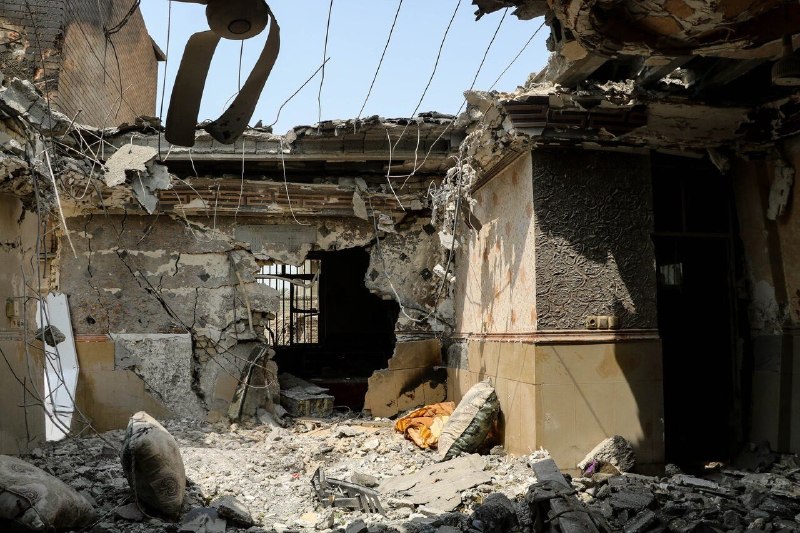
By 19:59 UTC on 14 June 2026, the day's Middle East wire had compressed into a single, repeating tremor. Telegram channels from Tel Aviv, Beirut-aligned networks and US monitoring accounts pushed nearly identical text: President Trump may be preparing to unilaterally lift the US naval blockade of Iranian ports to prevent an Iranian attack on Israel, with the explicit goal of reopening traffic through the Strait of Hormuz on a faster timetable than the phased framework currently on the table. The reporting traces back, in the main, to a single Israeli source — Ynet — and was amplified by Channel 12. The cascade moved in under three hours from suggestion to claim to counter-claim, and in doing so it exposed the architecture of a crisis in which a single channel commander's port call may now be weighed against the price of crude.
What is moving, and what is being moved against, is the Strait of Hormuz. Trump himself posted early in the day — at 05:31 UTC, per an Unusual Whales capture — that "the Hormuz Strait will be open to all immediately after a deal is signed." Six hours later, Tehran answered through a different channel: Iran's leadership had rejected additional US economic incentives offered in exchange for not targeting Israel, framing the offer as a transaction in which allies are treated as commodities. The pattern is not new; the simultaneity is. A blockade announcement, an Israeli strike on Dahieh reported in Iran's framing, an economic sweetener, a refusal, and an off-ramp being floated in the same news cycle.
The blockade, and what "unilateral lift" would actually do
The American naval blockade of Iranian ports — a posture that has shaped shipping insurance, regional deployment and Iranian export logistics since it was first imposed in its current form — functions less as a wall than as a graduated pressure system. Reopening the Strait of Hormuz, even partially, would shift that system faster than markets or regional militaries have been pricing. A unilateral lift, as opposed to a phased timetable, would tell Iran's customers in Asia that crude could move under hull in days, not months. It would also tell the Iranian leadership that the cost of restraint has been paid, in cash-flow terms, up front.
This publication reads the Ynet-sourced reporting as a signal of two things at once. First, that the White House believes the immediate risk of an Iranian retaliatory strike against Israel is high enough to warrant paying for de-escalation in real time. Second, that Washington prefers to pay that price in maritime access rather than in formal sanctions relief, because the latter would be politically unsellable on Capitol Hill. The two together amount to a transactional restructuring of the same pressure that has defined the US-Iran economic relationship for two decades.
Tehran's reply: dignity priced in
The Iranian counter-signal was unusually pointed. Reporting carried by Channel 12 and relayed through Fotros and Middle East Spectator networks had Iran rejecting the cash-for-restraint proposition, with a formulation that framed the proposal as buying the silence of clients rather than engaging a sovereign. Whether the framing originated in Tehran or in Beirut-aligned amplification is harder to pin down — Telegram's op-sec, such as it is, is not designed for sourcing discipline. But the substantive position is consistent with what Iranian officials have said on the record in previous rounds: sanctions relief delivered as a bribe is a different commodity from sanctions relief delivered as a contract.
That distinction matters because it sets the ceiling on any unilateral American offer. If Tehran will not accept money in exchange for restraint, then the negotiation has to move toward something with longer legal weight — sanctions waivers, frozen-assets release, formal commitments. Each of those is a harder sell in Washington than a blockade lift, which is operationally reversible and politically invisible to most American voters.
The Israeli variable
The reporting places Israel as the party the United States is most immediately trying to protect. Israeli security concerns in this corridor are not abstract: a closure of Hormuz and a simultaneous Iranian retaliation would put Israeli territory and Israeli-linked shipping inside a tightening envelope. The Ynet-sourced framing — that the blockade lift is being offered specifically to "prevent an attack on Israel" — is a recognition of that geometry. It is also, implicitly, an admission that the United States does not trust the present sanctions architecture to deter the response it is trying to prevent.
What is notable is that the Israeli-source reporting treats the lift as a Trump move, not a joint US-Israeli move. That matters for the politics of any subsequent strike. If the blockade is lifted and Iran attacks anyway, the Israeli public conversation will be about a missed window. If the blockade is lifted and Iran holds, the American political conversation will be about a transaction that worked. The Israeli side, in this reading, is the protected asset, not the contracting party.
The structural frame: chokepoint diplomacy in the oil age
What is being played out is a familiar pattern dressed in unfamiliar clothes. A great power uses control of a maritime chokepoint as leverage; a regional power demands a price for restraint; a middle power (Israel) absorbs the residual risk; and the price of crude sits in the middle of the table moving with every rumour. The pattern is not new — it is the structural logic of any hegemonic order that has outsourced the policing of global commons to a single navy. The novelty is in the venue: a unilateral lift, announced or floated, becomes a tradable instrument in its own right, not a policy.
The Global South read of the same events is more pointed. Asian buyers of Iranian crude, African importers waiting on discounted cargoes, and Latin American refiners with exposure to Middle East sour grades are watching a chokepoint opened and closed by a state that is not a party to their bilateral trade. The framework in which that is acceptable — a US-guaranteed commons, free at the point of use, priced only at the margin — depends on the United States continuing to underwrite it. The current cycle suggests that underwriting is being repriced, transaction by transaction, in negotiations that exclude most of the eventual customers.
What remains contested
The single largest uncertainty is provenance. The Ynet-sourced reports are the spine of the Saturday-evening cluster; the Iranian rejection of incentives is filtered through Channel 12, Fotros and the Middle East Spectator network, each with its own editorial angle. Telegram amplifies in a way that smooths provenance into a single voice. A reader working only from the primary Israeli source would see a more cautious formulation; a reader working only from the Beirut-aligned amplifiers would see a more emphatic Iranian refusal. Both can be true; neither is the whole story.
Second, the operational meaning of a "unilateral lift" is not specified. Reopening Hormuz to commercial traffic is one thing; restoring Iranian-flagged vessel access to international insurance is another. The current reporting does not draw that line. Third, the timeline is fluid. A phased timetable, a single-stroke lift, and a deal-conditioned lift are three different policy choices, and the public statements — Trump's morning post about Hormuz opening "immediately after a deal is signed," the Ynet reporting of an immediate lift — are not yet reconcilable into a single plan.
Finally, the Israeli strike on Dahieh that Iran cites as the trigger for its threatened response is itself under-sourced in the cluster that reached this publication. Israeli strikes on the southern Beirut suburb have been a recurring feature of the past year's reporting, and the framing of the latest strike as the proximate cause of the Iranian threat is consistent with prior cycles — but the specific event of 14 June has not, in the material available to this publication, been independently corroborated against a primary Israeli military source.
The forward view
If the lift is announced, two things will follow in short order. Freight rates for VLCCs operating in the Persian Gulf will fall, hard, and Asian spot crude will move within hours. Iranian retaliatory calculus will change, because the cost of action will have been paid in advance — and Tehran's stated refusal to treat that payment as sufficient will be tested against a different reality on the ground. If the lift is not announced, or is announced in diluted form, the Israeli-Iranian exchange that the day is currently suspending will resume on a shorter clock than it would otherwise have run.
The single most important reading of Saturday's cascade is not who said what, but the speed at which the proposition moved from rumour to reported policy. A chokepoint that can be opened and closed on a single afternoon of Telegram traffic is, by definition, no longer a piece of infrastructure. It is a trading instrument. The week ahead will tell which side of that line the current standoff settles on.
This publication treats the Ynet-sourced reporting as the cluster's primary Israeli signal, the Channel 12 reporting as the secondary commercial-broadcaster layer, and the Fotros/Middle East Spectator network as the regional amplifier. Where the three diverge in emphasis — most notably on how firmly Iran has rejected the US offer — the divergence is itself the news.
Wire provenance
This editorial synthesis draws on the following public wire/social posts:
- https://t.me/middleeastspectator/
- https://t.me/rnintel/
- https://t.me/wfwitness/
- https://t.me/rnintel/
- https://t.me/fotrosresistancee/
- https://t.me/fotrosresistancee/
- https://t.me/middleeastspectator/
- https://t.me/middleeastspectator/
- https://x.com/unusual_whales/status/
Follow the event.
These dated source records provide context. They do not retrospectively verify this archive article.
Separate what the nuclear watchdog reported from what it could not determine after the June 2025 strikes.