Israel pushes deeper into south Lebanon as Hezbollah's daily strike tally ticks upward
Ground operations in Kfar Tebnit and Majdal Zoun mark the deepest Israeli advance into south Lebanon in months, even as Hezbollah releases its end-of-day statement claiming a guided-missile hit on a Merkava tank.
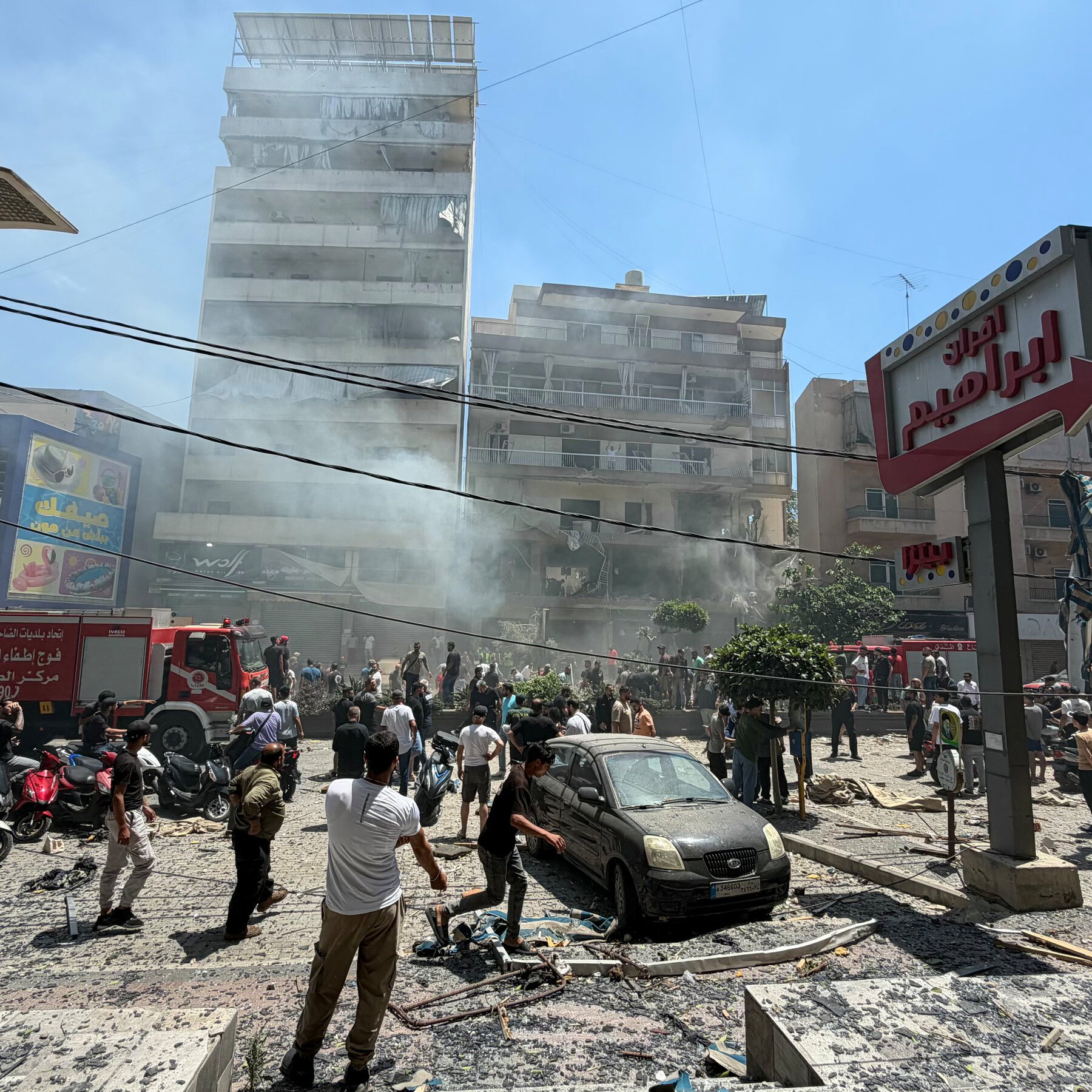
The Israel Defense Forces on the evening of 13 June 2026 advanced into the towns of Kfar Tebnit and Majdal Zoun in southern Lebanon, both of which sit north of the Litani River and well beyond the line that a November 2024 ceasefire arrangement was supposed to hold as a buffer. The push came after what field accounts describe as extensive airstrikes and artillery preparation, and it is the most concrete Israeli ground movement into Lebanese territory in several months. Within hours, Hezbollah released its end-of-day statement claiming anti-tank guided-missile fire that, according to footage circulated by the group's media arm, struck an Israeli Merkava tank at Majdal Zoun. The two pieces of reporting — Israeli ground advance, Hezbollah retaliation — were published within a 40-minute window and frame a single, hard-to-disentangle fact: the southern border is no longer a ceasefire line in any operational sense.
What is unfolding is not a new war so much as the steady erosion of the diplomatic architecture that was supposed to keep one from restarting. Each daily statement from either side now arrives as both a military and a political document, calibrated for the camera as much as for the battlefield. The ground advance gives Israel a tactical claim to a deeper security buffer; the Hezbollah strike — whether or not the footage is later confirmed — gives the group a daily proof-of-life that its rocket and missile capabilities remain intact. The pattern is the story, and the story on 13 June is that the pattern is accelerating.
What the reporting on the ground actually says
The two field channels carrying the most granular detail on Friday evening were AMK_Mapping and the war-monitoring account wfwitness, both publishing into Telegram in near real time. At 22:08 UTC, AMK_Mapping reported that the IDF, after extensive airstrikes and artillery bombardment, had expanded ground operations into Kfar Tebnit and Majdal Zoun, both north of the Litani. Forty minutes later, wfwitness circulated additional footage from Majdal Zoun appearing to show a Merkava tank struck by a guided missile launched by Hezbollah. By 22:45 UTC, the same channel was reposting what it described as the group's final statement of the day, framing the strike as a response to Israeli ceasefire violations and an exercise of "the right to resist."
The sourcing here is openly partisan on both sides. The Telegram channels that surface this footage aggregate from Lebanese and Israeli social media, militia spokespeople, and IDF-aligned commentators; they are useful as a near-real-time index of claims but they are not independent verifiers. Independent confirmation of either the IDF's position inside Majdal Zoun or the destruction of a specific Merkava will, as a rule, arrive hours or days later, when journalists on the ground or satellite-imagery analysts publish their assessments. The interesting editorial question is not which claim is true — both are plausible on the evidence available — but why the two are being released in lockstep, and what each side is buying by releasing them.
The counter-read: a managed escalation, not a breakdown
There is a defensible alternative reading. A case can be made that what looks like escalation is, in fact, a managed daily rhythm in which both sides conduct limited operations inside an understood ceiling, then narrate the day for domestic audiences. The Litani buffer has not held in practice since well before this week; the IDF has carried out strikes and short-duration incursions into south Lebanon repeatedly since the November 2024 arrangement. Hezbollah, for its part, has continued to fire at Israeli positions and at military vehicles in the border area at a tempo that the group itself frames as retaliatory. The two sides are, on this view, settling into a chronic low-intensity contest with a daily press release attached.
That reading holds only up to a point. Two things distinguish the 13 June reporting from the background tempo. First, the IDF advance is described as a ground operation into named towns, not as a raid or a strike-and-extract action; that implies a more durable presence and a more deliberate clearing operation. Second, Hezbollah's end-of-day statement was released within minutes of the footage of a Merkava strike, which is the public-relations cadence of an organisation that wants the day's tactical win to land before the morning news cycle, not the cadence of a group that is merely trading fire. The structure of the messaging — the pairing, the timing, the geographic specificity — looks more like the opening moves of a deeper round than like the daily metronome of a frozen conflict.
What is at stake beyond the border
The Israeli calculation is, on the surface, the one the security establishment has been making for two decades: a deeper buffer pushes the launch point for anti-tank and rocket fire further from the Galilee communities that have been evacuated and re-evacuated repeatedly since October 2023. The Hezbollah calculation, as articulated in its own communiqués, is the mirror image: continued fire and continued footage demonstrate that any unilateral Israeli definition of a buffer zone will be met, that the group's missile and guided-munitions inventory remains usable, and that the political cost in Israel of holding ground against a daily drip of casualties is real. Both sides are, in other words, pricing the other side's tolerance for casualties and political weariness in real time.
The regional stakes are larger than the border. A sustained Israeli ground presence north of the Litani complicates the working assumption behind the broader ceasefire-track diplomacy — that the November 2024 arrangement was a floor rather than a temporary pause. It also raises the question of what, exactly, the United States and France, the two external guarantors of that arrangement, are willing to enforce, and on what timetable. If the buffer is being redefined by Israeli bulldozers and Hezbollah anti-tank teams rather than by the monitoring committee that was supposed to police it, the diplomatic track is being steadily hollowed out by both sides at once.
What remains genuinely uncertain
The most honest thing to flag is what the available reporting does not yet establish. The footage of the Merkava strike is consistent with a hit and a kill, with a hit and a disable, or with a near-miss; the visual record, as circulated on the evening of 13 June, does not on its own resolve that question. The IDF's actual ground footprint in Kfar Tebnit and Majdal Zoun — whether it is a platoon-level clearing operation, a company-level lodgement, or a continuous presence with engineering assets — is not specified in the open-source reporting. And Hezbollah's end-of-day statements have, in past rounds, sometimes outrun the tactical reality of what the group actually delivered. A sober read treats both the ground advance and the strike as real and operationally significant, while reserving judgment on scale, on casualties, and on the political decisions being made in Tel Aviv and in Beirut's southern suburbs about how far each side is willing to push this particular week's escalation.
Desk note: Monexus has framed the 13 June reporting as a single integrated event — Israeli ground movement and Hezbollah retaliation published within the same news cycle — rather than as two separate stories, on the view that the pairing is itself the news. The Telegram channels cited are treated as primary-source aggregators of in-theatre claims, not as independent verifiers.
Wire provenance
This editorial synthesis draws on the following public wire/social posts:
- https://t.me/s/AMK_Mapping
- https://t.me/s/wfwitness
- https://t.me/s/wfwitness
- https://t.me/s/wfwitness