Iran's commanders stage the optics of retaliation
Tehran's 14 June commemoration was a posture document, not an operational signal. The cameras were on clerics and flag-draped coffins, not on launch crews. Read carefully, that substitution is the tell.
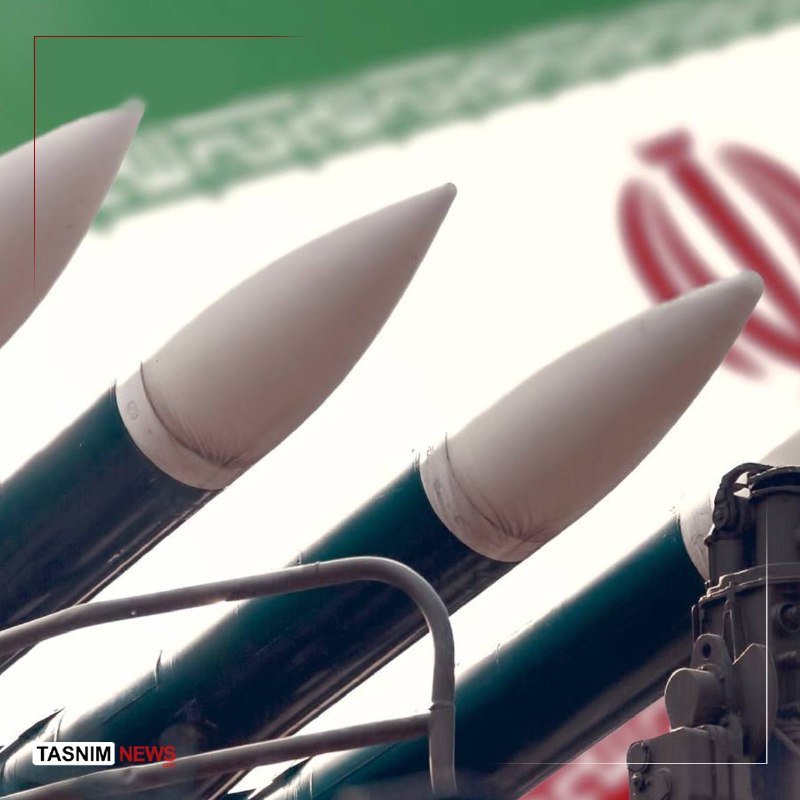
The 14 June 2026 staging in Tehran, choreographed by senior commanders around the bier of martyred dead, was always going to be read two ways. Western wires would magnify the threat, parse the posture, and ask whether the next round was finally imminent. Iranian state media would broadcast the other footage: the grief, the clenched fists raised in unison, the promise that the blood of the fallen had not been spilled in vain. Both readings are operative. Neither is the story.
The structural fact is that Iran's command chose to make its loudest statement of the year about readiness, not about use. A ceremony is, by definition, the careful management of visible things. A launch is not. The choice of venue, the choice of imagery, the choice of who stood where on the platform above the coffins, all of it is designed to convert a kinetic defeat into a political asset. Read carefully, the optics say more about the balance Tehran wants the region to see than about any specific order given to any specific unit on any specific night.
Reading the room in Tehran
The political utility of a martyrs' ceremony, for a regime under regional pressure, is not complicated. It relocates the cost of recent losses away from the institutions that absorbed them and onto the audience that must absorb the resolve. Domestic audiences are presented with a unified command; foreign intelligence services are presented with the same image and asked to wonder whether unity is the same thing as capacity. It rarely is. The two register differently in a war room and on a Telegram channel. A commander standing beside a flag-draped coffin is performing for both audiences at once and, in doing so, signalling neither to anyone.
The most useful exercise is to compare what is being photographed with what is being photographed instead of. If the cameras were on warheads, they would be on warheads. If they were on launch crews, they would be on launch crews. Instead they are on podiums, on clerics, on the senior-officer tier whose job on this kind of day is symbolic rather than operational. That substitution is the tell.
What the Western wire will do with this
The English-language cycle tends to run on the binary of the credible threat. If the ceremony features precision-guided munitions, expect a week of countdown framing. If it features only flags and speeches, expect a week of "rhetoric vs restraint" framing. Both frames treat the event as a forecast when it is more usefully read as a posture document. A regime that wanted the world to wake up to a fait accompli would not announce the fait accompli in a hall with clergy on the dais.
There is a subtler version of the same mistake on the other side of the ledger. Analysts who insist the ceremony is theatre for domestic consumption often ignore that domestic theatre is policy in a system where legitimacy is performative. The question is not whether the scenes are staged. They are. The question is what the staging buys.
What the Iranian domestic line is selling
Inside the information environment Monexus monitors via IRNA English, Mehr News, Tasnim and the broader state-aligned Telegram ecosystem, the day's frame is already set: a nation grieving, a command intact, an enemy punished or about to be. That frame has work to do that goes beyond morale. It shores up the contract between the armed services and the political leadership, recasts recent operational disappointments as the prelude rather than the obstacle, and reassures allied networks in Beirut, Sanaa, Baghdad and the Gulf littoral that the umbrella still holds.
The cycle of commemoration inside the Islamic Republic has its own grammar. Anniversaries are not afterthoughts. They are leverage points, the moments at which a command can re-set the conversation with its rivals and with its own base without the friction of new operational orders. The 14 June staging belongs to that tradition. It is a pressures test, not a launch test.
What the cameras were not on
The harder question, and the one analysts should be doing in quiet rather than on camera, is what was not photographed. There is no footage to date of dispersal activity along the usual launch corridors, no publicised movement of IRGC Aerospace Force units, no commercial satellite frame of prepared sites that gets shared in the open-source channels. Absence of evidence is not evidence of absence, but it is the closest thing the public record offers, and it is consistent with a posture document rather than an operational signal.
Iran's adversaries, who watch this theatre more closely than the Western wire does, will read the same absence and reach the same conclusion. So will Iran's allies, who are hoping for restraint even when they say they are hoping for action. The 14 June staging has bought the command something rarer than attention: it has bought it time, the kind of time that runs out only when the next ceremony is scheduled.
The day to watch
The next data point is not a speech but a satellite image. Any public release of dispersal activity, of launch-stand preparation, of the kind of logistical signatures that the open-source intelligence community can verify within hours, would convert this from posture to trajectory. Until then, the most accurate read is the one Tehran itself is offering, just not in the language the Western wire uses to translate it. The loudest statement of the year was about readiness. What readiness is for, in this command's grammar, is something the cameras were never going to show.
Follow the event.
These dated source records provide context. They do not retrospectively verify this archive article.
Separate what the nuclear watchdog reported from what it could not determine after the June 2025 strikes.