The Iran deal that wasn't, and the war that still might be
A memorandum of understanding was supposed to be signed on Sunday. Iran says it never agreed. Trump is reminding Tehran of the alternative. The distance between those two statements is where the next war gets decided.
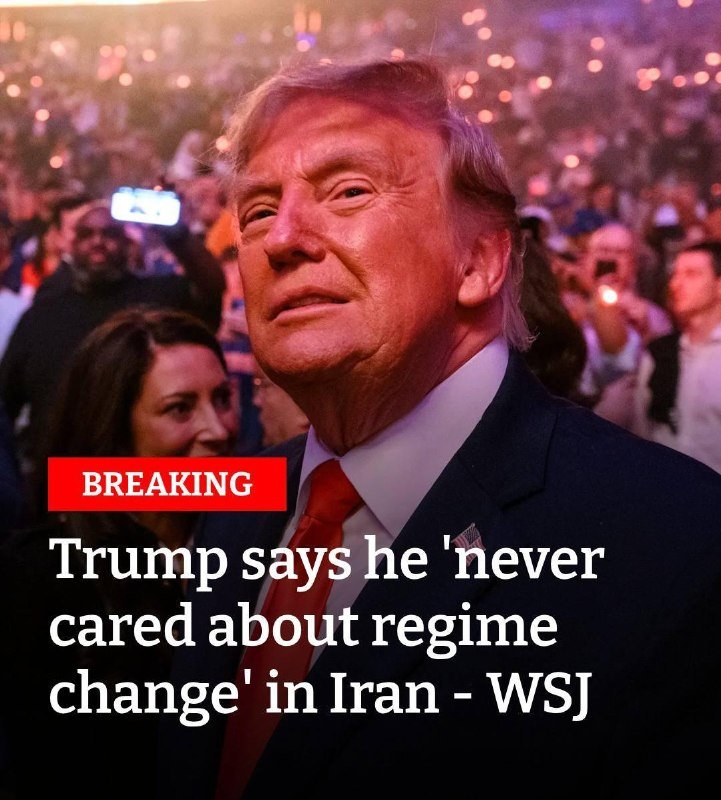
The White House said the deal would be signed on Sunday, then on Monday, then "in the coming days, but not 100% certain." Tehran said none of that was true. By the afternoon of 14 June 2026, the only verifiable fact about the US-Iran track is that the United States and the Islamic Republic are once again talking past each other in public, in real time, with a Polymarket contract sitting at 52 percent and a prediction market full of people betting on whether the next headline will be a signature or a strike.
That gap between announcement and signature is the actual story. It is also the story that the Obama quote now circulating on Iran-watch channels — "the notion that we can just bully our way or bomb our way to solutions may sometimes seem appealing … you'd think we would have learned" — is being deployed to make. Read in sequence, the 48 hours of signals look less like diplomacy and more like an auction. The administration is signalling resolve. Tehran is signalling that the signalling has not produced a deal. The press is treating the existence of a deal as a question of timing rather than a question of substance. The substance is the one thing no source in the public record has described in detail.
What was actually announced
On 13 June 2026, President Donald Trump told reporters that a memorandum of understanding between the United States and Iran would be signed the following day, and that the broader agreement could be wrapped up "over the weekend, or Monday, per Axios." He added a warning: the US holds the "ultimate alternative" if diplomacy fails, and contrasted any prospective deal with the 2015 JCPOA, claiming the Obama-era agreement would have let Iran acquire a nuclear weapon "six years ago." By the next morning, Iran's official line — relayed through Iranian-language accounts and framed by regional observers — was that no peace treaty had been signed and that negotiations were conditional on an interim deal being implemented first. A Telegram channel with substantial Iran-watcher reach posted a single, ominous sentence: "In Iran, the decision has been made."
The administration's own officials, separately, walked back the certainty. A statement carried on 12 June noted that a signing was "likely in coming days, but not '100%' certain." The Polymarket contract on a permanent peace deal by month-end sat at 52 percent at the time of writing, down from implied higher levels in the hours after Trump's remarks, as traders absorbed the Iranian denial. None of the reporting in the public record on 14 June describes the terms of the MoU, the verification architecture, the fate of Iran's stockpile of near-60-percent enriched uranium, or the sequencing of sanctions relief. The deal that is allegedly about to be signed exists, in the public record, only as a date.
The Obama cut, and what it is being asked to do
The Obama quotation making the rounds in 13-14 June is the cleanest version of an argument that has been waiting in the wings of US-Iran policy for a decade: that the choice between negotiation and force is a false one when one party is permanently unwilling to accept the other's red lines. The 2015 Joint Comprehensive Plan of Action was, on its own terms, an inspection regime that traded sanctions relief for limits on enrichment, plutonium reprocessing, and centrifuge deployment. Its critics argued, accurately, that the deal's sunset clauses allowed a slow drift toward a deliverable weapon once constraints expired. Its defenders argued, also accurately, that no successor arrangement has produced even the limited transparency the JCPOA delivered. The line now being clipped and recirculated is the latter argument in a single sentence, aimed at a present-tense question: what comes next if the MoU does not get signed.
The clip is being deployed in two directions at once. In one reading, it is a caution against the "ultimate alternative" Trump has been holding over the talks — a reminder that bombing a country the size of Iran, with the demographic, missile, and proxy depth it has demonstrated since October 2023, is not a closing move. In the other reading, the same words are being used by those who argue that the JCPOA framework was the most that an adversarial-but-rational Iran would ever accept, and that any replacement worth the name will have to give Tehran something durable in return for the verifiable, permanent, and intrusive constraints Trump has demanded. Both readings point in the same policy direction — away from the ultimatum register — and both are now competing for influence in the gap between the signing that was promised and the signing that did not happen.
The structural frame, without the theorist
What is actually being negotiated, beneath the choreography of dates and denials, is the architecture of an arms-control regime for a Middle East in which Iran's nuclear latency, Israel's undeclared capability, Saudi interest in a parallel pathway, and Turkish long-term ambitions all coexist without a regional security framework to manage them. The dollar politics of this are not subtle. Iran's sanctioned exports route through a tightening set of corridors — Chinese refineries, Indian discounts, Russian shadow logistics, and the UAE-based infrastructure that US Treasury has spent the last three years trying to thread. Any deal on the nuclear file in 2026 will, in practice, be a deal about which of those corridors survive and which close. The 2015 deal was not only about centrifuges; it was about reintegrating Iran into dollar-cleared energy markets. The 2026 version, if it exists, will be about how much of that re-integration is reversible, and who pays for the irreversibility.
A second structural fact, less remarked on, is that Iran is negotiating from a position of demonstrable strategic depth. The lesson of the last two years in the region is that Iran's ability to impose costs through partners, missile forces, and asymmetric tools has been a more reliable deterrent than its nuclear ambiguity ever was. The Israeli campaign of autumn 2023 and its aftermath reshaped the calculus of every foreign ministry in the Gulf. A US administration that wants a deal with Tehran is negotiating, in effect, with a country whose principal demonstration of leverage was delivered not by its centrifuges but by its allies. That is the structural reason the JCPOA's defenders have been unusually vocal this week: the alternative they are warning against is not merely military. It is the prospect of an Iran that decides — in the words of that 14 June Telegram post — that a particular kind of decision has been made, and that the world's oil markets learn the consequences.
What the sources do not tell us
The single most important thing the public record on 14 June does not contain is the text of the MoU. A second-order absence is any authoritative account of the interim deal that Iran is said to be demanding as a precondition for further talks. The Iranian denials are sourced to X accounts and to regional Telegram channels whose ties to official Tehran are not transparent. The Trump administration statements are sourced to the President's own remarks and to the reporting of Axios. The market signal — 52 percent on Polymarket for a permanent deal by 30 June — is the closest thing in the dataset to a real-time probability, and it is not confidence-inspiring. The deal is at once imminent, conditional, denied, and uncertain. The only thing every party agrees on is that it is being discussed.
If the MoU is signed in the next 72 hours, most of the commentary above will look like over-reading. If it is not, the 14 June quotation will acquire a different weight, and the question that "In Iran, the decision has been made" poses — to whom, about what, with what timetable — will move from the edge of the public conversation to its centre. The window for an answer is narrow. The market is not yet pricing war. It is not yet pricing peace, either.
Desk note: Monexus has framed this as a substance gap — a deal whose public shape is dates and denials rather than terms — rather than as a personality contest between the two US presidents whose names dominate the clip economy. The wire line is currently running on schedule; the structural read is that the schedule is the news.
Wire provenance
This editorial synthesis draws on the following public wire/social posts:
- https://t.me/ClashReport
- https://x.com/sprinterpress/status/
- https://t.me/Middle_East_Spectator
- https://x.com/polymarket/status/
- https://x.com/polymarket/status/
- https://x.com/unusual_whales/status/
- https://x.com/polymarket/status/
- https://x.com/polymarket/status/
- https://x.com/polymarket/status/
- https://x.com/unusual_whales/status/
- https://x.com/unusual_whales/status/
Follow the event.
These dated source records provide context. They do not retrospectively verify this archive article.
Separate what the nuclear watchdog reported from what it could not determine after the June 2025 strikes.
- https://t.me/ClashReport
- https://x.com/sprinterpress/status/
- https://t.me/Middle_East_Spectator
- https://x.com/polymarket/status/
- https://x.com/polymarket/status/
- https://x.com/unusual_whales/status/
- https://x.com/polymarket/status/
- https://x.com/polymarket/status/
- https://x.com/polymarket/status/
- https://x.com/unusual_whales/status/
- https://x.com/unusual_whales/status/