Iran's speaker reads US complicity into Beirut strike, threatening a fragile ceasefire
Mohammad Bagher Ghalibaf says an Israeli air strike on Beirut's southern suburbs proves Washington is unwilling or unable to restrain its ally, casting a shadow over the wider ceasefire framework.
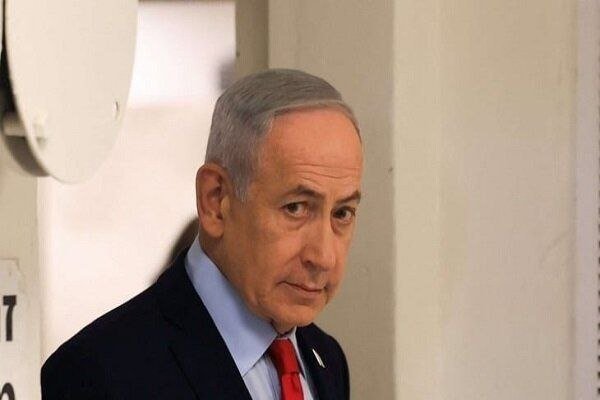
At 14:00 UTC on 14 June 2026, Iran's official IRNA news agency published a statement from Parliament Speaker Mohammad Bagher Ghalibaf that tied an Israeli air strike on Beirut's southern suburbs directly to the United States. The phrasing was not diplomatic. Ghalibaf said the strike on Dahiyeh, the Shia-majority district that has long functioned as Hezbollah's political and military heartland, demonstrated that the United States "is unwilling or unable to honour its commitments." The same line, almost word for word, was carried a few minutes later by The Cradle Media and by the Abu Ali Express channel, and at 12:38 UTC by Iran's Fars News International, which added the sharper claim that the strike was carried out "with the green light" of Washington and that the US had previously committed, in a ceasefire framework with Iran, that conflicts on "all fronts including Lebanon" would be contained.
The argument matters less for what it says about a single air strike than for what it implies about the framework that Israel and Iran have been observing since their most recent round of escalation ended. Ghalibaf is not a marginal voice. As Speaker he sits at the top of Iran's elected legislature; as chief negotiator he has been one of the public faces of the channel that has managed the de-escalation with Washington. When he frames a single strike as evidence that the guarantor of a deal is hollow, he is signalling that Tehran's confidence in the wider architecture has eroded — and doing so on the record, in English, through state-aligned media.
What was struck, and by whom
The target of the Israeli air strike, according to the statements carried by IRNA, The Cradle and Fars, was the southern suburbs of Beirut — Dahiyeh. None of the wire items published on 14 June specify a precise sub-locality, the identity of the immediate target, or a casualty count. The framing in all four Iranian-aligned channels is uniform: an act of "Zionist aggression" against a civilian district. Israeli authorities had not, at the time of the statements reviewed, issued a public confirmation of the strike or its objective that was captured in the source thread. The gap is worth flagging. Reporting that names a strike but not its target, the party struck, or the operational rationale is reporting at the level of political signalling rather than battlefield fact, and the distinction should be carried through any analysis that follows.
What is consistent across the Iranian and Iran-aligned sources is the assertion that the strike is incompatible with the ceasefire understandings reached with the United States. Fars frames that incompatibility in the strongest terms — American "green light" — while Ghalibaf's IRNA-cleared statement chooses a formulation the Iranian system has used before: that the United States is "unwilling or unable." The choice of words is calibrated. It is a direct echo of the language used about a sponsor of cross-border attacks, a formulation that assigns responsibility without yet demanding retaliation, and it leaves the door open to either Washington or Tehran having to explain what the deal was supposed to cover.
Reading the message in the messenger
Ghalibaf's dual role — Speaker and chief negotiator — is the tell. In Iran's constitutional order the Speaker is the second-in-line of presidential succession and the chair of the legislature; in the diplomatic track with Washington he has been the senior interlocutor in a negotiating process that has produced a partial de-escalation, a sequence of confidence-building steps, and an ongoing argument over the meaning of "all fronts." When the Speaker himself steps forward to characterise a single strike as a structural failure of American guarantees, he is doing more than commenting. He is preparing the political ground for an Iranian response, and signalling to partners in the axis of resistance that the framework can no longer be relied on as a restraint on Iran's options.
The Western-allied read, surfaced in the same news cycle by Fox News and carried at 12:52 UTC by the RNIntel channel, points the opposite way: that the strike on Dahiyeh is "a clear attempt by Israel to undermine the President's deal and pull the United States back into war." That framing — quoting a US diplomat via Fox — positions Israel as a saboteur of an American diplomatic enterprise and the White House as a reluctant party dragged toward escalation. It is, in effect, a Western confirmation of the Iranian complaint about a hollowed-out guarantee, even if the actors and the responsibilities are read very differently. The two framings converge on the diagnosis — the ceasefire architecture is failing — and diverge on the prescription and the culprit.
Why the language of guarantees matters
In the rhetoric of Middle East security, the phrase "willing or unable" is doing a particular kind of work. It frames the United States as the consequential party whose decision, not Israel Israel's, will determine whether the deal holds. That framing is convenient for Tehran, because it puts the burden of restraint on Washington rather than on the Iranian side. It is also a stress test of the architecture. The ceasefire — to the extent that it has been a written understanding rather than a publicised text — has rested on a set of mutual but unverifiable commitments: an end to direct exchanges between Iran and Israel, a freeze on proxy attacks on the northern and southern fronts, and an understanding, mediated quietly by Gulf and American interlocutors, that operations against Hezbollah infrastructure in Lebanon would be calibrated to avoid dragging the wider front back into war.
The complaint, as Tehran and its aligned press now present it, is that the calibration has failed. Fars's version — that the US had committed that "conflicts on all fronts including Lebanon" would be contained — is the strongest reading of what the deal was supposed to cover. The Cradle's version is the broadest, treating the strike as a violation of the framework. Ghalibaf's version is the most legally consequential, because it puts on the public record, in the Speaker's voice, the position that the United States is in breach. Once that is on the record, the Iranian side has acquired a domestic-political reason to act: a senior official has named a guarantor as having failed, and Tehran's own credibility requires a response of some kind.
What remains unclear, and what is at stake
Three things have not been established in the source material reviewed. First, the specific target inside Dahiyeh and the casualty count from the strike — neither of which the Iranian-aligned channels, or the single Western-allied channel in the thread, name. Second, whether the Israeli strike was a pre-planned operation that had been deferred during the ceasefire window or a response to a specific Hezbollah action in the days prior; the source thread does not contain that information. Third, whether the "deal" that Ghalibaf invokes is a single negotiated instrument or a set of parallel understandings held together by a back-channel. The phrasing in the Iranian sources — "the ceasefire agreement with Iran" — is more definite than what has been publicly confirmed, and the gap between the two will be the first thing diplomats test in the days ahead.
The stakes are concrete. If the Iranian reading prevails inside the Iranian system, the political space for the negotiating track that Ghalibaf himself has been leading will narrow; Iran's retaliatory options, including through Hezbollah's residual position in Lebanon and through Iraqi Shia militias, will be back on the table; and the United States will be forced to choose between restraining Israel publicly and accepting the slow erosion of the architecture it has been credited with building. If the Western-allied reading prevails, the strike will be absorbed as a single, contested incident, the diplomatic channel will survive, and the next test will be in the language of the next statement from Tehran. Both readings are internally coherent. The evidence available on 14 June does not yet adjudicate between them, and the trajectory will turn on what the next 72 hours of statements, strikes and back-channel contacts actually contain.
This publication frames the strike primarily through the Iranian and Iran-aligned source set available on 14 June, supplemented by the single Western-allied read in the thread. Where a casualty figure, target identity or operational rationale has not been stated in the available sources, this article has not supplied one.
Wire provenance
This editorial synthesis draws on the following public wire/social posts:
- https://t.me/Irna_en/
- https://t.me/thecradlemedia/
- https://t.me/englishabuali/
- https://t.me/rnintel/
- https://t.me/abualiexpress/
- https://t.me/FarsNewsInt/
Follow the event.
These dated source records provide context. They do not retrospectively verify this archive article.
Separate what the nuclear watchdog reported from what it could not determine after the June 2025 strikes.