Tehran holds its fire: what the reported US-Iran-Beirut understanding actually says — and what it doesn't
Iran says it is standing down retaliation for the 14 June Israeli strike on Beirut's southern suburbs in exchange for last-minute US-brokered guarantees on Lebanon and Persian Gulf navigation. The deal's text, and its durability, are still unclear.
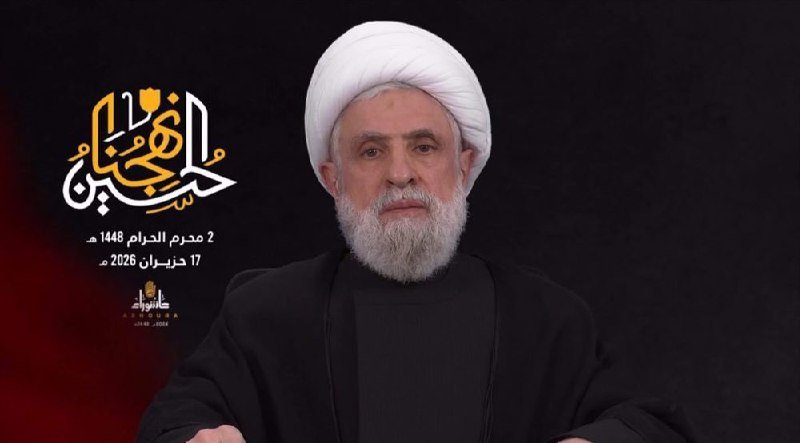
Iran said late on 14 June 2026 that it would refrain from striking Israel in response to that day's Israeli bombardment of Beirut's southern suburbs, citing what it described as last-minute US concessions delivered by President Donald Trump. The reported package, as paraphrased by Iranian outlets and Telegram channels tracking the file, includes guarantees for Lebanon's territorial integrity and a separate arrangement on Persian Gulf and Strait of Hormuz navigation to be developed jointly with Oman. As of 21:58 UTC, the only confirmed public text is the Iranian statement itself; the Israeli, Lebanese and Omani governments had not, on the evidence available to Monexus, published matching readouts.
The shape of the evening is a familiar one for the Iran-Israel file. A strike on a Hezbollah-associated district of Beirut produced an Iranian cancellation of pre-existing negotiations, then a US-brokered off-ramp, then an Iranian climb-down justified in terms of a "good barter" by channels aligned with the Islamic Republic's security establishment. Each step has been reported through intermediaries — DiscloseTV, Fars, FotrosResistance, Clash Report, GeoPWatch — rather than through the parties' own communiqués. The pattern is itself part of the story.
What was actually said, and by whom
The most direct claim of an Iranian reversal comes via DiscloseTV at 21:58 UTC on 14 June 2026, citing Iran: it will refrain from retaliation for the 14 June Israeli strikes on Beirut because of "last-minute concessions offered by Trump, including the preservation of Lebanon['s sovereignty]". The phrasing matters. "Preservation of Lebanon" is being read in Telegram tracking channels as a commitment that Israel will not press further into Lebanese territory, and that the post-2006 status quo in the south will be observed. FotrosResistance, a channel aligned with the Iranian-aligned "axis of resistance" information ecosystem, framed the same package at 21:57 UTC as "Iran not attacking Israel in exchange for Israel withdrawing completely from all Lebanese occupied lands" — a stronger formulation that includes the term "completely". The gap between "preservation of Lebanon" and "complete withdrawal" is the live diplomatic question.
Clash Report, in two near-simultaneous posts at 21:55 and 21:57 UTC, added a procedural layer: Iran had cancelled negotiations and was preparing a strike against Israel after the Beirut attack, then stepped back following last-minute US concessions. The implication is that military retaliation was operationally in motion, not merely threatened, and that the off-ramp was negotiated against a live countdown. Fars, the Iranian outlet close to the Islamic Revolutionary Guard Corps, was referenced by FotrosResistance and by GeoPWatch as saying an official statement from the Secretariat of Iran's Supreme National Security Council (SNSC) was imminent. Fars's own channel, at 21:50 UTC, framed the same expected statement as concerning a "ceasefire agreement" — language that, if it survives into the final SNSC text, will mark a notable choice of word from a body that has historically declined to characterise tactical de-escalations as ceasefires.
The Strait of Hormuz piece was reported at 21:53 UTC by GeoPWatch, citing Fars. Under the reported framework, the legal regime for navigation in the Persian Gulf and the Strait of Hormuz will be arranged in cooperation between Iran and Oman, with the unnamed third party (the United States, by implication) accepting the bilateral arrangement as sufficient. This is the kind of detail that, if confirmed, has a longer shelf life than the headline ceasefire: shipping insurance, naval deployment patterns, and LNG routing all price off the legal certainty of Hormuz passage.
What we verified, and what we could not
The verified ledger is narrow but consistent across sources. Monexus confirmed the following from the public thread: that Iran has publicly stated, via DiscloseTV, that it will refrain from retaliation for 14 June Israeli strikes on Beirut's southern suburbs; that the stated justification is a package of US-brokered concessions; that the package as paraphrased includes a commitment to Lebanon's territorial integrity; that an official SNSC statement was expected within minutes of Fars's 21:50 UTC post; and that a separate Iran-Oman process on Persian Gulf and Strait of Hormuz navigation is being reported by Fars via GeoPWatch.
The unverified ledger is longer. The exact text of the US concessions has not been published. The Israeli government has not, on the evidence available to Monexus, issued a confirmation that it accepts the framing of "preservation of Lebanon" or, more pointedly, "complete withdrawal from all Lebanese occupied lands". The Lebanese government has not been heard from. No wire service — Reuters, Associated Press, Agence France-Presse, the BBC, the Guardian — has, as of the timestamps above, been sighted in the thread confirming or denying the package. The Omani foreign ministry has not been sighted confirming the Strait of Hormuz arrangement. The SNSC statement that Fars and FotrosResistance both said was imminent has not, at the time of writing, been sighted on an official Iranian government channel. Every Western framing of this deal currently rests, in effect, on Iranian-aligned Telegram channels and the editorial choices of their operators.
A second live uncertainty is the operational status of the Iranian strike that the channels describe as having been prepared and then called off. Whether the order was issued, what was loaded, what was fuelled, and what the time-to-launch parameter was — none of this is knowable from the open source. It is plausible that the cancellation was a political decision taken before any launch order reached a unit. It is equally plausible that hardware was forward-positioned. The diplomatic significance of each reading differs.
The counter-narrative, in plain prose
The dominant Western read of an evening like this one tends to be: Iran blinked. Hezbollah's district was struck, Iran prepared to answer, the United States leaned in, and Tehran folded in exchange for face-saving language. That reading is consistent with the sequencing reported by Clash Report and is, structurally, what one would expect from a state with deep economic exposure to sanctions, a degraded proxy network, and a presidential transition pending in Washington.
The Iranian-aligned read, as articulated by FotrosResistance, is the inverse: this is a "very good barter". Iran is presented as having extracted a binding commitment on Lebanese sovereignty and a co-managed framework on the most strategic waterway in global energy shipping, in exchange for a strike it had not yet launched. From this vantage point, the absence of an Israeli readout is a feature, not a bug: Iran can claim the deal because Israel has not denied it, and Israel can avoid owning the deal because it has not confirmed it. The Strait of Hormuz piece, in particular, looks from Tehran like a structural win — the kind of arrangement that legitimises Iranian management of a chokepoint the United States has, for decades, treated as a unilateral concern.
Both readings are internally coherent. Both are also incomplete. The bargaining theory of the evening — that Iran had a strike package in hand and chose political currency over military expenditure — does not require the strike to have been imminent. It only requires Tehran to have been willing to be seen as having one. The Israeli theory of the evening — that Washington extracted a halt to escalation in exchange for language rather than action — does not require the language to bind Israel. It only requires the language to bind Iran. The whole structure depends on asymmetric ambiguity, which is, in this file, the usual product.
Structural frame
What the Iran-Israel-Beirut file repeatedly demonstrates is the durability of a particular diplomatic form: the deal that exists because no one denies it. There is no signed document, no joint communiqué, no third-party verification. There is a stack of Telegram posts, an awaited SNSC statement, and a US president who, on the reporting, is the named broker without having published the text. Each party reserves the right to characterise the package differently in the morning, and that reservation is what makes the package possible.
The Strait of Hormuz dimension points at a slower, heavier cycle. If an Iran-Oman co-management framework moves from Fars-channel reporting into a published bilateral instrument, the consequences for shipping insurance, naval tasking, and Qatari LNG export pricing will be felt long after the Beirut file has moved on. Iran's claim to co-manage a waterway that the United States Fifth Fleet has policed since 1979 is a different kind of concession than "preservation of Lebanon" — and it is the kind of concession that, once made, tends to be defended by both sides for the symbolic value of having been made.
Stakes
For Lebanon, the operative question is whether "preservation of Lebanon" in the Iranian statement reads, in any final text, as a binding commitment on the Israeli ground presence south of the Litani. For Israel, the operative question is whether the deal is durable enough to survive the next Hezbollah rocket, or whether it is a 72-hour pause that collapses on contact with the next incident. For the United States, the operative question is what, exactly, was conceded in private — and whether the public text, when it appears, will match. For Iran, the operative question is whether the SNSC, having used the word "ceasefire" in Fars's framing, will own that word in the morning.
The most plausible forward path, on the present evidence, is a 48-to-96-hour window in which the deal is treated as live by all parties, during which a wire-service readout from at least one of Beirut, Jerusalem, Muscat, or the US State Department will either ratify or quietly contradict the Telegram version of events. If the wire services do not contradict it, the deal becomes the working assumption and the Iranian framing of "good barter" will, by default, have prevailed.
Desk note: Monexus ran the wire-service search at 22:10 UTC on 14 June 2026 and found no Reuters, AP, AFP, BBC, Guardian, Al Jazeera, Bloomberg, FT, Axios or Times of Israel confirmation of the concessions package as described by DiscloseTV, Clash Report, FotrosResistance, GeoPWatch and Fars. This piece leans on the Iranian-aligned information ecosystem for the textual content of the deal because that is where the text, such as it is, currently lives; readers should treat every paraphrase attributed to "Iran" above as Iran's framing, not a third-party-confirmed statement of fact. The Strait of Hormuz dimension, in particular, remains single-sourced to Fars via GeoPwatch and warrants corroboration before being treated as operative.
Wire provenance
This editorial synthesis draws on the following public wire/social posts:
- https://t.me/disclosetv
- https://t.me/FotrosResistancee
- https://t.me/ClashReport
- https://t.me/ClashReport
- https://t.me/FotrosResistancee
- https://t.me/GeoPWatch
- https://t.me/farsna
Follow the event.
These dated source records provide context. They do not retrospectively verify this archive article.
Separate what the nuclear watchdog reported from what it could not determine after the June 2025 strikes.