Tehran's economic doctors and the message Pezeshkian is trying to send
A coordinated push by Iran's economic ministers to publicly rebut resignation rumours around President Pezeshkian reads less as palace intrigue than as a window onto the bind the administration is in: keep the cost-of-living reforms alive, or absorb the political bill alone.
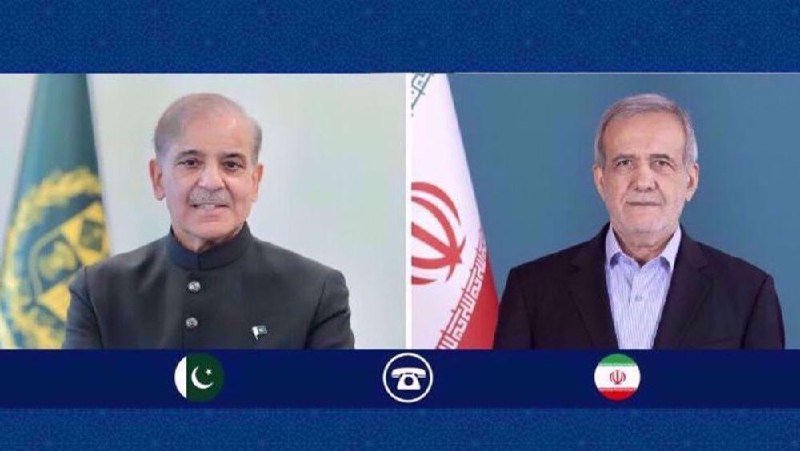
The first weekend of summer in Tehran, as ever, is an economic story. On 14 June 2026, a synchronised group of ministers known in Iranian cabinet shorthand as the "doctors" of the economic team went public to deny what their own social channels had spent 48 hours amplifying: that President Masoud Pezeshkian had quietly offered, or been pushed towards, his resignation. The denial, delivered through state-aligned outlets rather than from a podium, was unusually pointed. Pezeshkian himself, quoted by Tasnim, said he had "not given myself any doubts about working, striving and serving the people of the country." The ministers went further. They said the government had "never believed in shock treatment and imposing sudden costs on people," and warned, in the same breath, that "the continuation of some unfair procedures cannot be defended."
Strip out the choreography and the message is straightforward. The administration is trying to thread a needle it has been threading since it took office: protect living standards while finally dismantling the implicit-subsidy architecture that has priced fuel, bread and foreign exchange below the market-clearing rate for two generations. The cabinet wants credit for the latter and disavowal of the former. That is why the resignation rumour mattered — and why the response was louder than a routine denial usually is.
The "doctors" and the cost-of-living line they refuse to cross
Iranian political reporting often reduces cabinet factional fights to personality. The more durable story sits in the policy text. The economic ministers — among them the figures responsible for oil revenues, planning, and labour — used the denial cycle to restate three positions. First, that the administration will not impose "sudden costs" on households. Second, that it accepts the present configuration of energy subsidies, foreign-exchange subsidies and industrial-tariff protections is no longer defensible in its current form. Third, that any reform must be sequenced to avoid a shock.
The framing matters because it is the exact line Pezeshkian has tried to hold since his confirmation. Tasnim, the outlet most closely aligned with the government's pragmatic-conservative bloc, has carried the cabinet's economic message repeatedly in recent months — including the line, repeated on 14 June, that the government "uses bitter language to protect the interests of the country and its people." That is not a slogan. It is a warning: the next phase of reform will be defended in openly unpopular terms, and the ministers want it on the public record that they warned the country.
What the government is actually trying to reform
The structural backdrop is older than this cabinet. Iranian energy infrastructure has run on compressed-liquified-petroleum and heavily subsidised gasoline for decades. The 2019 fuel-price adjustment, and the unrest that followed it, set a hard ceiling on how fast any administration can move. Fars News Agency, which carries the line of the security-conservative wing, has run near-daily commentary since the spring arguing that reform of the subsidy regime is inevitable and that the political risk must be distributed, not concentrated in the presidency.
The ministers' statement on 14 June — that "damages to industrial and energy infrastructures, reduction of export and tax revenues, increased pressure on the labour market, and at the same time the need to increase the amount of livelihood" of households cannot be reconciled without policy change — is the cleanest version of that argument yet. It says, in effect, that Iran is paying for the subsidy regime twice: once in fiscal pressure, and once in deferred maintenance on the productive base.
The rumour as a tell
The resignation story is itself a signal. Cabinet-reshuffle rumours in Tehran usually surface from one of three places: a faction testing the waters for a replacement, a parallel power centre signalling displeasure, or a leak from the economic team itself designed to force the president's hand on a specific reform. The fact that the ministers chose to respond collectively, and that Pezeshkian chose to respond personally, suggests the third. The cabinet wanted a public reaffirmation of the reform line from the top, and used the rumour as the occasion to extract it.
That reading is consistent with how Iranian state media has covered the cycle. Tasnim, closer to the government, ran the denial and the reform defence. Fars, closer to the security establishment, ran the parallel message that the country needs "bitter" choices. The two outlets framing the same day differently is the Iranian press system working as designed: the reform is being floated through a controlled argument between allied outlets, with the resignation rumour as the catalyst.
Stakes, in plain terms
If the reform proceeds on the cabinet's stated terms, the winners are the treasury and the industrial base, which absorbs less of the implicit subsidy burden. The losers, in the near term, are households that have built expectations around subsidised fuel, bread and foreign exchange — a population large enough to determine the next parliamentary election. If the reform stalls, the fiscal squeeze continues, the rial comes under renewed pressure, and the cabinet's claim to be managing the transition is forfeit.
The genuinely uncertain part is the political coalition that has to hold. Pezeshkian's electoral base is real, but narrow. The economic ministers have so far spoken as a bloc. The security-aligned press has tolerated the reform framing, but has not endorsed it. The resignation rumour, and the unusually public rebuttal, is the early-warning signal of how brittle that alignment is — and of how exposed the president would be if it broke.
The Monexus desk note: Western wires have largely skipped the resignation cycle as a domestic political story, treating it instead as background colour. The economic substance — subsidy reform, the cost-of-living line, the cabinet's three-message sequence — is the more durable read, and the one this piece leans on.
Wire provenance
This editorial synthesis draws on the following public wire/social posts:
- https://t.me/tasnimnews_en/
- https://t.me/tasnimnews_en/
- https://t.me/tasnimnews_en/
- https://t.me/farsna/