Cash-for-restraint won't fly: Tehran's calculus in the hours after Trump's offer
Iran says it has turned down President Donald Trump's offer of additional economic incentives to forgo a response against Israel, setting up a tense few hours in which Washington is simultaneously projecting a deal and absorbing a public rebuff.
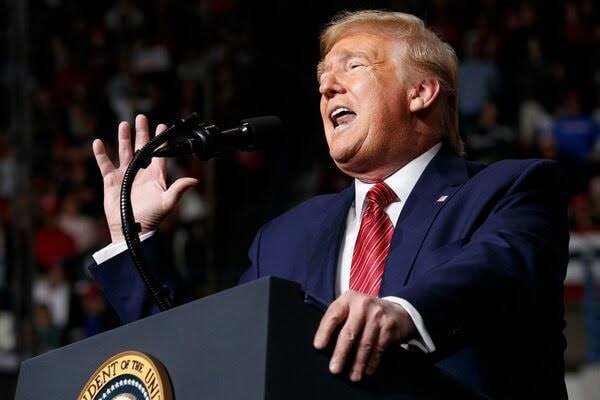
By 18:10 UTC on 14 June 2026, the diplomatic choreography that Donald Trump had spent the afternoon selling to markets and to the Israeli press had visibly collapsed. Iranian officials publicly rejected the additional economic incentives the US president had floated as the price of restraint, and announced that a response to Israel's attack on Dahieh — the southern suburb of Beirut that Iran and Hezbollah treat as a signature target set — was being prepared. The rebuff came four hours after Trump told reporters, at roughly 14:00 UTC and later amplified by Axios, that a US–Iran agreement would be signed "within hours," with the delay blamed on Israel.
The pattern is familiar, but the staging is not. Washington is once again trying to convert dollars into de-escalation in a Middle Eastern theatre that has stopped treating cash as a sufficient solvent. Tehran's reply — that its "allies are not for sale," carried by the Fotros Resistance channel and echoed in summary form by Middle East Spectator citing Israeli Channel 12 — is a deliberate echo of language that travelled well in 2024 and 2025. What is different is that the offer, the rejection, and the Israeli reaction are now all on the public record inside a single trading day.
The offer that wasn't, and the deal that nearly was
Channel 12 reported first, in mid-afternoon UTC, that Trump had proposed releasing additional funds to Iran in exchange for Iran not targeting Israel. The framing — money for restraint — travelled quickly through Israeli and Iranian-adjacent channels. Trump, for his part, publicly insisted the deal was hours away. Insider Paper's write-up of Axios's reporting put the timeline and the Israel-blame on the front page; the BRICS News wire and the War and Freedom witness channel pushed the same two beats into the broader ecosystem. By 17:10 UTC, the deal was described as imminent; by 17:28 UTC, Israeli officials were telling Channel 12 they expected Trump to "give something" to the Iranians in return for non-attack; by 18:06 UTC, Iran was on the record refusing the proposition.
That is a four-hour arc from announcement to refusal, and the speed matters. The Trump administration has spent the first half of 2026 arguing, in effect, that economic relief can substitute for the security guarantees Tehran has historically demanded. The premise is that Iran's exposure to sanctions, currency pressure, and the cumulative drag of isolation makes any dollar-denominated concession politically survivable on the Iranian side. Tehran's public reply suggests the administration has mispriced the political economy of the decision.
What Iran is actually saying
Two formulations are doing the work. The first — that Iran has rejected Trump's request not to strike Israel in exchange for money, and that "its allies are not for sale" — frames the question as one of sovereign choice over allied territory and personnel, not as a market transaction. The second, reported by the Resistance Axis-aligned channels and citing Iranian sources, is that a response to the Dahieh strike is being prepared. Read together, the Iranian position is not that money is unwelcome. It is that the specific transaction on offer — cash now in return for the political right to attack a target later — is the wrong shape. Tehran does not, in this telling, need permission to retaliate; it needs the United States to stop arming and shielding the party it intends to retaliate against.
That is a different ask from the one Washington has been bargaining over. It is also, structurally, an ask that cannot be settled in a single release of funds.
The Israeli read
Channel 12's framing, summarised in Telegram channels that monitor Israeli media, is that Israeli officials believe Trump will soon announce he is "giving something" to the Iranians in return for non-attack — and that the officials themselves are unsure what the something is. That uncertainty, in real time, is itself a piece of news: it implies that the Israeli security cabinet is reading the White House's intentions off a Telegram feed, not off a shared negotiating document. Israeli officials have not, on the public record available here, endorsed the proposed arrangement; they have, in the same reporting, accepted that the offer is being made and that it will be announced.
The Trump-Israel gap is the volatile variable. If the deal Washington is describing is the deal Tehran has rejected, then the next few hours will be defined by the distance between an announcement of an agreement and the absence of one. If the deal is something narrower — a single tranche, a humanitarian channel, an aviation licence — then Iran's public rejection is a bargaining posture rather than a hard refusal. The source material available in this window does not resolve which it is.
Structural frame: why cash-for-restraint is a hard sell
The dominant Western wire frame for this kind of exchange treats it as transactional: dollars in, strikes out, the ledger cleared. That frame has worked, intermittently, in negotiations with the Islamic Republic for two decades. What it cannot capture is that Iran's retaliatory doctrine has hardened around the principle of non-divisibility — that is, the response to an attack on an Iranian-aligned asset is not severable from the response to an attack on Iran itself. A deal that pays for the second class of response but normalises the first is, in Tehran's own framing, a deal that legitimises Israeli escalation at a discount.
There is also an internal Iranian political economy to consider. The same sanctions architecture that makes US dollars valuable to Tehran makes US-dollar deals politically costly to accept. The leadership has spent the last several years selling a posture of strategic independence; a visible cash-for-restraint package, however framed, undermines that posture in a way that a one-off sanctions waiver does not. The reading of the rejection as a function of regime-thruster politics, rather than a function of religious or ideological rigidity, sits more comfortably with how the Iranian state has actually behaved on previously negotiable files.
Stakes and what to watch
The immediate stakes are operational. A response is "being prepared," per the Iranian statement reported on 14 June 2026 at 18:10 UTC; its scope, timing, and target set are unknown on the public record available here. Israel's posture in the next 12 to 24 hours — the cadence of air-defence activity, the tone of official statements, the timing of any retaliation of its own — will be the leading indicator of whether the exchange is closing or opening. The US position is harder to read: a deal that has not been signed cannot be un-signed, but a deal that has been announced and then visibly does not arrive is its own kind of statement.
What remains genuinely uncertain is the size and the content of the package Tehran is alleged to have rejected. The Israeli reporting speaks of "something"; the Iranian reporting speaks of "additional funds"; the US reporting, as relayed through Axios, speaks of an agreement "within hours" blamed for delay on Israel. These are not three descriptions of the same artefact. The most plausible read is that an arrangement narrower than a comprehensive deal is on the table, that it was floated before its components were fully settled, and that Iran's public rejection of the cash-for-restraint framing is a way of forcing the conversation back onto the narrower, more durable structure. That is a read, not a confirmation. The next 24 hours will tell.
This article was framed by Monexus as a single-day event around the public record of 14 June 2026, prioritising Israeli wire reporting and Axios's reconstruction of the US position while treating Iranian and Iranian-aligned channels as legitimate primary sources rather than as noise.
Wire provenance
This editorial synthesis draws on the following public wire/social posts:
- https://t.me/Middle_East_Spectator
- https://t.me/FotrosResistancee
- https://t.me/rnintel
- https://t.me/wfwitness
- https://t.me/bricsnews
Follow the event.
These dated source records provide context. They do not retrospectively verify this archive article.
Separate what the nuclear watchdog reported from what it could not determine after the June 2025 strikes.