Tehran rejects cash-for-silence, and a quiet transaction over Beirut takes shape
Israeli reporting on 14 June 2026 describes an Iranian counter-offer to a US proposal: money in exchange for restraint after the Beirut strike. Tehran says no. The episode illuminates a transactional Middle East policy the public is only now being shown.
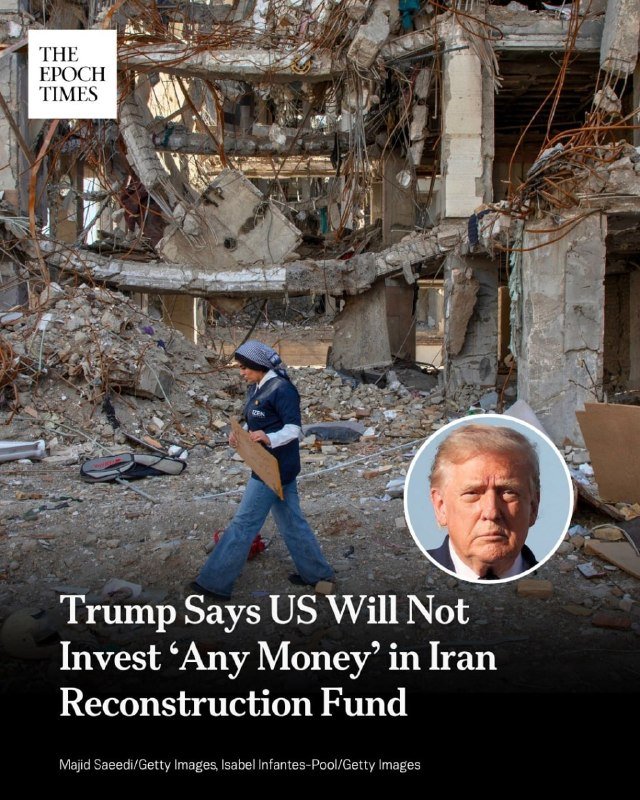
At 18:06 UTC on 14 June 2026, Israeli Channel 12 aired a report, relayed in summary by Telegram channels tracking the file, describing an Iranian counter-message to Washington: a senior Iranian official said the United States had offered money in exchange for Iranian silence over an earlier strike on Beirut, and that Tehran had rejected the offer. The Iranian side added, in the same framing, that a response would come. Three hours earlier, at roughly 15:00 UTC, the same Israeli assessments suggested that Donald Trump was preparing to announce he was "giving something" to Iran in return for Iranian restraint. By 18:17 UTC, a separate Israeli cabinet figure had distanced Jerusalem from the file, telling Channel 12: "As far as we are concerned, Iran is Trump's business." Three signals, one afternoon.
The shape of the deal — if deal it is — is now visible in outline. Washington proposes economic or political concessions. Tehran is asked, in return, to absorb a kinetic event on a Lebanese ally without an escalatory reply. The reporting describes the exchange in cash-for-restraint terms, which is itself a piece of news: it puts a price tag on what US diplomacy is currently willing to pay for de-escalation in the Levant. The Israeli government's instinct, by its own public account, is to keep its fingerprints off the transaction.
What the Channel 12 reporting actually says
The Israeli framing is transactional. According to the broadcast, the offer was made, declined, and is now being reworked. The Iranian position, as relayed, is that the proposal was insulting on its face — financial inducement in lieu of acknowledgement that a strike on Beirut demands a reply. The Israeli cabinet's "Trump's business" formulation is equally important. It is the public version of a long-standing Israeli argument that Washington has the latitude to cut regional deals that Jerusalem is obliged to live with, and that it would prefer not to be visibly attached to. The diplomatic intent, on all three sides, is to make the eventual arrangement deniable in stages.
Why a Beirut-triggered understanding matters
Lebanon is the proxy theatre most prone to inadvertent escalation. Any arrangement that conditions Iranian restraint on a third-country strike is fragile by design, because the strikes themselves are the product of separate calculations by the Israeli military and its operational planners, and by Hezbollah's rocket and drone units, not by a single command authority. A US-Iran understanding that depends on absorbing one specific incident can be undone by the next incident. The structural problem is not American bargaining skill or Iranian sincerity; it is the absence of a single switch that can guarantee a non-response from Tehran's regional network on demand.
The read in plain terms
What the public is being shown, piece by piece through Israeli relay, is a Middle East policy conducted in the language of side-payments rather than of stated principles. The transactional idiom is not new — the United States has long used sanctions relief, frozen-funds releases, and deconfliction channels as instruments. What is striking here is the openness of the framing, and the speed at which the Israeli side has moved to disclaim ownership of the outcome. Jerusalem wants the file to belong to Washington; Washington, by the same logic, would like Iran to treat the offer as one Trump is making personally rather than as a US government position with allied backing. The diplomatic effect is to keep the political cost of failure concentrated on a single principal.
What remains uncertain
Three things are not yet established on the public record. First, the substance of the "something" Trump is preparing to announce: the Israeli reporting does not specify whether the concession is financial, sanctions-related, or political recognition. Second, the Iranian counter-offer, if there is one beyond refusal, has not been put in writing in any source consulted here. Third, the operational status of Hezbollah and other Iranian-aligned formations in Lebanon is independent of any single Iranian decision, and no reporting in the thread establishes that those formations have been consulted, or would comply if they were not. The deal that is being described is, at this point, an announcement in search of a counterpart. The Iranian public line — rejection, with a promised response — suggests the counterpart is not yet on board.
Stakes
If an arrangement is reached, the immediate winners are the governments that prefer the current Lebanon equilibrium, and any actor in the region who treats de-escalation as a tradable commodity. The losers are the Lebanese civilians whose political ceiling is set by a deal struck over their heads, the Israeli public for whom "Trump's business" is also a description of the security guarantee, and the Iranian domestic audience being told to accept a kinetic event in exchange for a quiet cheque. If the arrangement collapses, the more familiar path reasserts itself: a measured Iranian reply, an Israeli cycle, and a Washington scramble to reset the terms. The Israeli framing on 14 June is unusual only in how candidly it describes the game it is declining to play.
Desk note: Monexus has tracked this thread through Israeli relay rather than through direct Iranian or US confirmation; the underlying Channel 12 broadcast is the load-bearing source, and the report is treated accordingly until corroborated by a primary spokesperson or document.
Wire provenance
This editorial synthesis draws on the following public wire/social posts:
- https://t.me/osintlive
- https://t.me/GeoPWatch
- https://t.me/GeoPWatch
Follow the event.
These dated source records provide context. They do not retrospectively verify this archive article.
Separate what the nuclear watchdog reported from what it could not determine after the June 2025 strikes.