Iranian lawmaker frames post-strike diplomacy as contingent on 'taming' Israel
A spokesperson for Iran's parliamentary security commission has cast any future understanding with Washington as running through pressure on Israel, sharpening the rhetorical stakes around the latest strike on Dahieh.
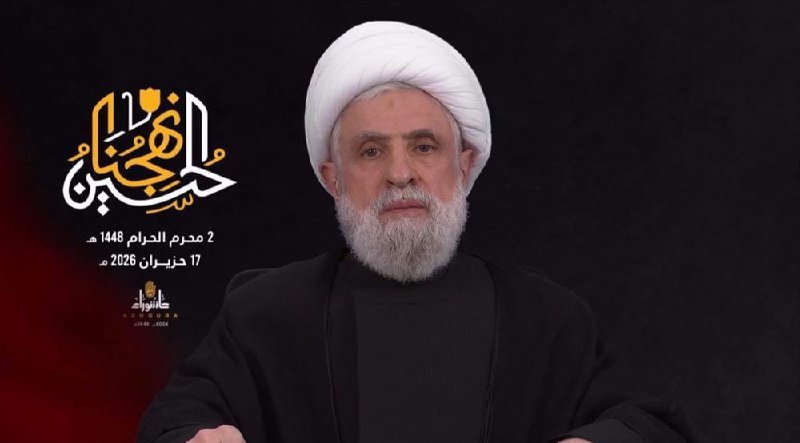
Ebrahim Rezaei, the spokesperson for the National Security and Foreign Policy Commission of the Iranian parliament, used the morning of 14 June 2026 to set a condition for any future deal with Washington. Reacting to a strike on Dahieh — the densely populated southern suburb of Beirut associated with Hezbollah — Rezaei argued that even those who seek an "agreement or MoU" with the United States must accept that the path to it runs through "disciplining the Zionist regime." The remark, posted in English by the Telegram channel Open Source Intel at 11:41 UTC and echoed by channels including Middle East Spectator, Fotros Resistance and abualiexpress, is the clearest formulation yet from a sitting Iranian lawmaker that Tehran is not separating the nuclear-or-regional file from the question of pressure on Israel.
The line matters because it collapses a distinction Western diplomats have been trying to preserve. For more than a year, the working assumption in several Gulf and European capitals has been that the Iran file and the Israel-Hezbollah file can be sequenced — de-escalation in Lebanon, a narrower nuclear understanding, and the longer Middle Eastern architecture dealt with separately. Rezaei is publicly arguing the opposite: that the regional question is upstream, not downstream, and that any Tehran that walks away from "taming" Israel walks away from a deal.
The statement, in context
Rezaei's intervention lands the morning after an Israeli strike on Dahieh, the Shi'a-majority southern suburb of Beirut that has been repeatedly hit since the 2023-24 war and again in the exchanges that opened 2026. The exact casualty and damage figures from the 13 June strike were not in the source material reviewed; the framing in the channel traffic is that an attack of some weight occurred, and that the Iranian parliamentary commission chose to respond by elevating the political cost of any future accommodation.
The wording is also telling. Rezaei does not speak for the foreign ministry, nor for the office of the supreme national security council that handles the dossier day-to-day. He speaks for a parliamentary commission — a body that has, in recent years, asserted itself more visibly on foreign-policy and defence questions, partly because the hardline-dominated parliament has been a useful megaphone for messaging that the executive branch prefers to keep ambiguous. That does not make Rezaei's line government policy. It does make it a calibrated leak about the limits inside the Iranian system, and about the political price any deal-maker would pay at home.
What Rezaei is actually saying
Read carefully, the message contains three nested propositions. First, that "miscalculation" — the risk Tehran is now flagging — is a function of the Israel track, not the US track. Second, that even those inside the system who want an understanding with Washington accept that the precondition is pressure on Israel. Third, and most pointedly, that anyone pushing a softer line is being told, in effect, that they cannot deliver.
That third proposition is the one Western analysts should note. The Iranian negotiating system does not collapse the moment a spokesperson speaks; it absorbs contradictions. But the repeated appearance of this formulation across multiple Telegram channels within roughly an hour — a sign of deliberate distribution rather than spontaneous reaction — is consistent with a message that is meant to travel. The audience is at least dual: a domestic one, in which any accommodationist faction is being pre-positioned as weak, and an external one, in which Washington and intermediaries are being told what an acceptable price looks like.
Why Dahieh is the pressure point
Dahieh is the cleanest test case for whether the sequencing assumption holds. If the strike pattern of the past several weeks continues, the argument that Iran and Hezbollah can be managed on parallel tracks gets harder to sustain. Each round of Israeli action inside Dahieh raises the cost, inside Lebanon and inside the Iranian system, of being the politician or cleric who is seen as having traded the suburb for a deal. Rezaei's statement is the parliamentary version of that pressure: a public reminder that the bill for any agreement will be denominated, in part, in what Israel is asked to give up.
The structural point is straightforward. Regional powers with deep Lebanese portfolios do not separate files that the other side insists are connected. The Iranian argument, in plain terms, is that the regional order cannot be reset on one axis while leaving another axis burning. The Western argument, also in plain terms, is that the United States cannot deliver a comprehensive regional settlement in the near term and that partial progress is better than none. The two positions are not symmetric; one requires a much bigger swing from the other than vice versa.
The counter-read and what remains uncertain
There is a plausible alternative reading that this publication does not endorse but registers. It runs as follows: hardline parliamentarians in Iran benefit politically from a maximalist line, regardless of what is happening in the nuclear channel. The appearance of restraint at the negotiating table can be sold at home only if the surrounding rhetoric is loud. Under that reading, Rezaei's language is theatre aimed at Tehran's own factions — a price-of-admission posture — rather than a real veto on diplomacy. It is the kind of statement that allows the foreign ministry to negotiate while the commission performs the cost of negotiating.
What the available reporting does not resolve is whether that read is the correct one, or whether the line has hardened enough that the foreign ministry's room to manoeuvre has genuinely narrowed. The source material is uniform in transmitting the message, and uniform in not carrying any immediate response from the Iranian foreign ministry, the office of the president, or the Supreme National Security Council. That silence is itself information, but it is information the public record cannot yet decode.
A second uncertainty is the strike itself. The source material confirms an attack on Dahieh and a reaction from Tehran, but does not provide independently verified casualty figures, the specific target hit, or a confirmation from Israeli authorities of what was struck. Until that picture fills in, the political weight of the response is being carried largely by the rhetoric around it, and rhetoric is a notoriously soft-edged instrument to calibrate against.
The stakes over the next weeks
If the line holds, expect three things. First, the next round of messaging from Iranian officials about the nuclear or regional track will be hedged in language that protects the "taming Israel" precondition. Second, any leak about progress in back-channel talks will be met with renewed public emphasis that no deal is possible without a shift on the regional question. Third, intermediaries who try to keep the tracks separate will be told, in increasingly blunt terms, that they are wasting their time.
The audience for that message is not just Washington. It includes the Gulf states, which have been more publicly insistent in 2026 that escalation with Iran is not in their interest; it includes European negotiators who have invested political capital in keeping the file alive; and it includes the Iranian negotiating team itself, which needs domestic cover to make concessions if it is to make them at all. Rezaei's statement is, in that sense, a piece of choreography. The question that will be answered in the weeks ahead is whether it is the opening of a new sequence or the closing argument of the old one.
Monexus framed this as a parliamentary signal, not a government position. Western wires, where they have covered the post-strike reaction, have tended to treat the Iranian response as a single voice; we treat the parliamentary commission and the foreign ministry as distinct actors, with distinct audiences and distinct constraints.
Wire provenance
This editorial synthesis draws on the following public wire/social posts:
- https://t.me/englishabuali/
- https://t.me/Middle_East_Spectator/
- https://t.me/osintlive/
- https://twitter.com/michaelh992/status/2066118361969
- https://t.me/abualiexpress/
- https://t.me/FotrosResistancee/
Follow the event.
These dated source records provide context. They do not retrospectively verify this archive article.
Separate what the nuclear watchdog reported from what it could not determine after the June 2025 strikes.