Iran's Steadfastness Narrative and the Limits of Reading a War From Its Loudest Voice
Foreign Minister Araqchi's victory-lap remarks tell a story Iran wants told. Reading them as data on what actually changed requires a different instrument.
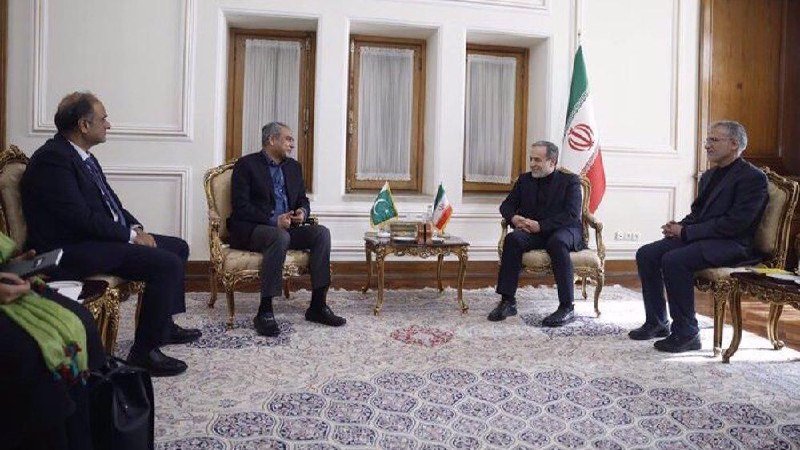
It is the morning after a war that did not end with a surrender, and Tehran's messaging apparatus is performing the only victory it can credibly claim. Within the space of an hour on 14 June 2026, Iran's foreign minister laid out a four-point script in near-identical phrasing across state-aligned channels: that the country emerged from the war stronger and more cohesive; that its "steadfastness" shattered enemy narratives about Iranian decline; that the Iranian people had secured "valuable strategic achievements" now visible in regional and global equations; and that national cohesion, popular resistance, and street presence are the basic pillar of Iranian strength at the negotiating table. Each of those lines, circulated by Al-Alam Arabic, is the kind of statement a foreign minister makes when his government's first job is internal, not external. Read in isolation, they look like bombast. Read against the same hour's signal from Middle East Spectator — that Araqchi and parliament speaker Qalibaf had spent weeks insisting "diplomacy is an extension of the battlefield" and that a response to an attack is essential — they begin to look like the operating doctrine of a state that has decided what posture to hold before the ink on the next communiqué is dry.
The instinct, in Western commentary, is to treat statements like these as a foreign minister talking to a domestic audience and move on. That instinct is half right, and half wrong, and the half-wrong half is the one doing damage to analysis.
What the script is doing
A victory narrative after a war that left infrastructure damaged, regional proxies weaker, and a nuclear file reopened is not optional equipment for Tehran. It is the price of internal cohesion through a sanctions-scarred reconstruction. When Araqchi tells audiences that "Iran emerged from the war stronger," he is not making a claim verifiable on satellite imagery. He is making a claim about the political meaning of the war — that the state held, that the system absorbed the shock, and that the cost was not delegitimising. In any government that survived a major war, somebody, somewhere, has to make this argument, and the louder the argument is made, the thinner the ground usually is beneath it. The fact that the four messages went out within roughly twenty minutes of each other, in near-identical phrasing, suggests a coordinated talking-points push rather than an off-the-cuff assessment. That is itself the story: the foreign ministry is the instrument chosen to deliver it.
Why the louder frame, not the only frame
The temptation in Western analysis is to take the loudest version of the Iranian position and let it stand as the Iranian position. That is exactly the move a centralised messaging operation is designed to invite, and it is exactly the move this publication should refuse. Three things are missing from the script. First, the cost. The statements do not name the infrastructure struck, the civilians killed, the reconstruction bill, or the sanctions architecture that is now the inheritance of whatever comes next. If the war left Iran "stronger," the regime has not yet told its citizens in concrete terms what stronger is buying them. Second, the agency question. Araqchi frames the achievement as belonging to "the Iranian people" and their "presence in the squares." That is a deliberate redistribution of credit away from the institutions that ordered the war, fought it, and will manage the peace. Third, the regional environment. The reference to "regional and global equations" is the one line that gestures outward, and it is the one line that is most under-evidenced. Which equations have shifted, in whose favour, and measured against what baseline — the picture from the four messages does not say.
The structural point, in plain language
There is a broader pattern in how defeated-or-draw states narrate their wars back to themselves, and it is recognisable enough to be worth naming without reference to any particular theorist. The first move is to redefine the objective. The war is no longer about the territory or the program that triggered it; it is about the will of the people. The second move is to relocate the victory in time: not on the battlefield, where the record is contested, but in the future, where the strategic consequences are said to be accumulating. The third move is to make the narrative itself the deliverable — to treat the act of telling the story at the right tempo, in the right outlets, in the right sequence, as a form of statecraft equal to the war that preceded it. Araqchi's four messages, dispatched in sequence on the morning of 14 June 2026, fit that template closely enough that they should be read as a coordinated exercise in that third category: a delivery system for a story, aimed as much at Tehran's negotiating partners as at its own public.
What remains uncertain
The sources do not specify what "attack" Middle East Spectator is referring to in its framing of Araqchi's and Qalibaf's earlier remarks, nor do they provide a casualty count, a damage assessment, or a date for the end of the war they describe. They do not identify which "regional and global equations" have shifted, or in what direction. They do not include any independent verification — from Western wire, IAEA, or UN agency reporting — of the strategic achievements Araqchi names. Until those data points exist outside the messaging, the narrative is the only evidence on offer, and a narrative that arrives in a coordinated burst from a single ministry is a narrative this publication will read as data about the ministry, not as data about the country.
The serious bit
The stakes of taking this script at face value are concrete. Diplomats meeting an Iranian counterpart across a table in the coming months will be negotiating with a government that has, on the record, defined its war as a strategic win and its postwar period as an opening, not a closing. Anyone walking into that room with the assumption that Tehran is reconciling itself to a weaker position is walking in with the wrong map. The opposite mistake — assuming the script is the whole story — is just as dangerous. The truth is the boring middle: a state that survived, that paid a price it has not yet disclosed, and that is now trying to convert survival into leverage. The four messages from the morning of 14 June 2026 are the second half of that conversion, and the appropriate response is to read them carefully, source by source, and not to mistake the volume for the verdict.
*This publication reads Tehran's coordinated post-war messaging as a primary-source object in its own right — one that tells us how the foreign ministry wants the war remembered before any external verdict has had a chance to set.
Wire provenance
This editorial synthesis draws on the following public wire/social posts:
- https://t.me/middleeastspectator
- https://t.me/alalamarabic
- https://t.me/alalamarabic
- https://t.me/alalamarabic
- https://t.me/alalamarabic
Follow the event.
These dated source records provide context. They do not retrospectively verify this archive article.
Separate what the nuclear watchdog reported from what it could not determine after the June 2025 strikes.