Tehran's unity script goes public as Pezeshkian binds cabinet to the Supreme National Security Council
A 15:25 UTC statement from Tehran has the cabinet publicly subordinate to the Supreme National Security Council. The message is unity — but the audience is not only domestic.
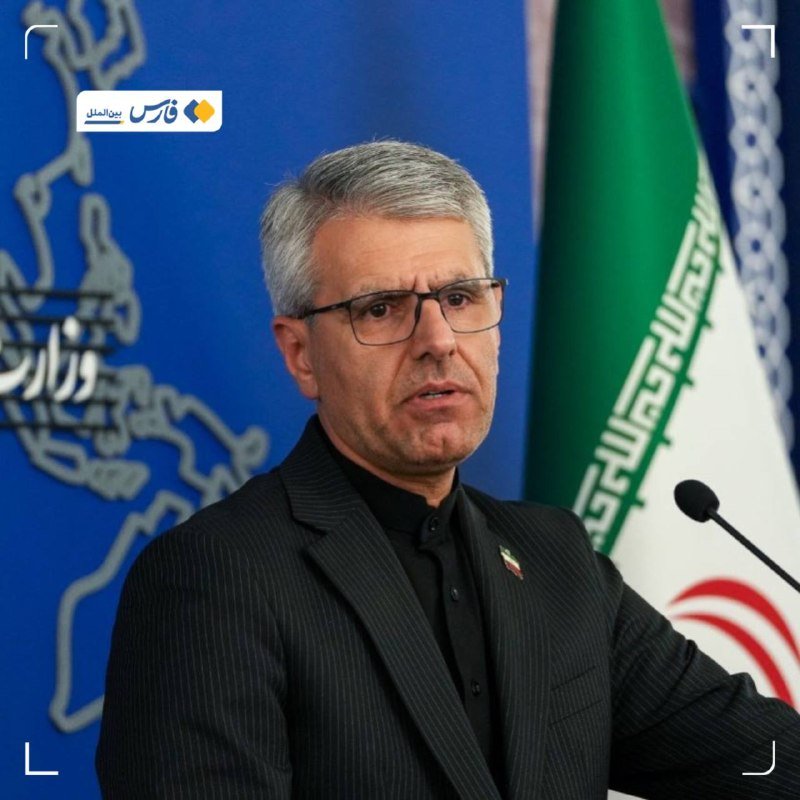
At 15:25 UTC on 14 June 2026, Iranian President Masoud Pezeshkian's office put out a one-line statement: the government "fully" stands behind the decisions of the Supreme National Security Council and the directives of the Supreme Leader. Eleven minutes later, a second wire from Iranian state-linked media reported that the Council itself, in a session chaired by Pezeshkian, had concluded that "the path of dialogue" must continue. By 15:36 UTC, a third dispatch — this one from a meeting with the country's media managers — carried the political temperature of the moment in a single phrase: preserving unity is "the most important priority of the country."
The choreography is the story. Three messages, one afternoon, all pointing the same direction. The cabinet, the security council, and the state-aligned press are being told to read from the same page, and to do so visibly. This publication reads that as a signal that Tehran is preparing for a phase in which internal cohesion matters more than the previous month's signalling — that negotiations, or the threat of negotiations, have become the central political fact of the moment.
What was actually said
The Pezeshkian statement, distributed via state media at 15:25 UTC, commits the elected government to two higher authorities — the Council, which sets national-security policy, and the Supreme Leader, who sets the boundaries inside which the Council operates. The phrasing leaves no daylight: decisions are not merely respected, they are binding. The 15:26 UTC follow-up, attributed to the Council's own deliberations under Pezeshkian's chairmanship, narrows the policy meaning: the "necessity of continuing the path of dialogue." Taken together, the two lines define a posture — talking continues, the executive is not freelancing, and the political cost of breaking ranks has just risen.
The 15:36 UTC message, framed as guidance to media managers, extends the same logic to the information environment. "Preserving unity" is the explicit editorial instruction. Decision-making about war and negotiation, the President added, is the responsibility of the leadership — not of newsrooms.
Why the timing matters
Iranian messaging of this kind typically clusters around three triggers: an imminent diplomatic round, an external shock, or a contested moment inside the system. The 14 June cluster lands during a period in which Tehran has been managing a multi-track conversation with Western capitals — directly and indirectly — about the nuclear file, regional de-escalation, and the sanctions architecture that surrounds both. A single public line from the Council endorsing "dialogue" is, in this context, a deliberate signal to outside audiences that the door is not closing. The unity directive to media managers is the domestic mirror of the same message: do not undermine the negotiating position from inside the press.
The structural point is worth stating plainly. In the Islamic Republic, the elected presidency is the visible interlocutor; the Supreme National Security Council, and behind it the Supreme Leader's office, are the actual authors of the line. When the president publicly subordinates himself to the Council, he is doing two things at once. He is reassuring foreign partners that any commitment he makes will hold, and he is reassuring domestic power centres that he will not improvise. The unusual feature of this round is that the reassurance is being staged in public, on the same day, across three different platforms.
The counter-read — and why it doesn't quite land
The plausible alternative reading is that the unity language is a face-saving device, covering internal disagreement about whether to talk at all. Hardliners inside the security and judicial apparatus have historically been sceptical of engagement with the United States, and the Council is not a monolith. On that reading, the public subordination of the cabinet to the Council is a warning shot at any minister who might be tempted to negotiate above his authority.
The counter to that counter is the deliberate inclusion of "dialogue" in the Council's own conclusion. A leadership that wanted to shut the door would not have used that word, and would not have put the phrase in a public summary attributed to the Council's session. The line could have been written as "preserving national interests" or "maintaining defensive readiness." It was not. That is not a slam-dunk — Iranian communiqué language is famously over-determined — but the weight of the wording points toward authorisation of continued contact rather than its suspension.
Stakes and what to watch next
If the unity posture holds, the next visible moves will come from the negotiating side: a confirmed date, a venue, or a more substantive Iranian counter-proposal on the technical file. If it does not hold, the first crack will appear not in a statement but in a leak — a hardliner briefing, an unaligned outlet amplifying dissent, or a sudden rearrangement inside the Council's working-level staff. For Western capitals reading the wires on Sunday afternoon, the operative question is whether the 14 June messages constrain or enable the next round. The text of those messages, read carefully, says they are meant to enable it.
What remains genuinely uncertain is the cost. A public unity directive tells the foreign audience that Tehran is cohesive; it tells the domestic audience that cohesion is being enforced. Both audiences are now watching to see whether the next phase produces a deliverable — or whether the unity script was, in the end, the product on offer.
Desk note: Monexus is reading the 14 June cluster as a single coordinated message rather than three separate items, on the strength of the eleven-minute spacing and the consistent vocabulary across the wires. We have weighted the Iranian state-linked sources as primary on the text of the statements, and treated Western-wire speculation about the underlying motives as secondary until corroborated.
Wire provenance
This editorial synthesis draws on the following public wire/social posts:
- https://t.me/tasnimnews_en
- https://t.me/alalamarabic
- https://t.me/alalamarabic