Tehran's $12bn ask: how a frozen-funds dispute became the new centre of gravity in the US-Iran track
Tehran is reportedly demanding up to $12bn in released funds as the price of staying in nuclear talks with Washington — a number that recasts the negotiation as much about liquidity as about enrichment.
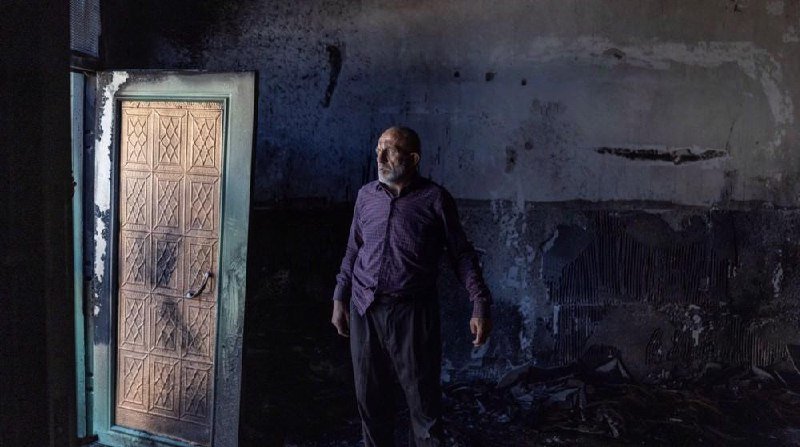
The negotiations that were supposed to crown the weekend ended, on 14 June 2026 at 16:14 UTC, with a single number doing the work of a thousand communiqués: Iran is reportedly demanding up to $12,000,000,000 in frozen funds from the United States as the precondition for continued talks [Source 1]. An hour earlier, the same channel reported that Tehran was threatening to pull out of the talks altogether [Source 2]. The whiplash is the story.
For most of the past week the dominant line from Washington was optimism. On 13 June at 17:40 UTC, the X account @unusual_whales relayed a claim that President Donald Trump said an Iran peace deal would be signed on Sunday [Source 4]. A day earlier, @polymarket put the odds of a permanent US-Iran deal by month-end at 52%, treating the question, for the first time in years, as a coin-flip rather than a long shot [Source 5]. The market has been more honest than the messaging. Beneath the public choreography, the negotiating room is no longer a chamber of grand bargains; it is a vault.
The $12bn question — and what is actually being bought
Frozen Iranian funds are not a footnote in this file. They are the file. Successive rounds of US and allied sanctions — codified across Treasury's SDN list, secondary measures on buyers of Iranian crude, and the post-2018 reimposition architecture after Washington withdrew from the Joint Comprehensive Plan of Action — have left Tehran with significant sums trapped in escrow accounts, principally in escrow facilities tied to oil pre-export sales in countries including Iraq, South Korea, Japan, and Oman, where diplomatic arrangements have historically been used to release tranches in exchange for humanitarian guarantees.
The reported $12bn figure [Source 1], if confirmed in the negotiating room, would not be a goodwill gesture. It would be working capital: a mechanism for the Islamic Republic to monetise sanctions relief against deliverables, and a mechanism for Washington to claim that the deal is extracting real concessions. Both sides can call it a victory. That is the point. A structured-release escrow with verified delivery milestones is, in the vocabulary of these talks, the closest thing to a peace dividend that either side can sign.
Counter-narrative: the people saying this is a mistake
The opposition is not abstract. On 12 June at 19:59 UTC, Tehran publicly conditioned the continuation of negotiations on the implementation of a proposed interim deal [Source 6] — a posture the Iranian side has used before to signal that diplomatic patience is conditional, not open-ended. The same day, Axios's reporting, relayed by @unusual_whales, framed the timeline as weekend-or-Monday [Source 7], which left no room for the kind of technical haggling that $12bn of structured releases actually requires. A figure that size does not clear escrow in 72 hours. It clears escrow on a schedule.
Inside Washington the criticism cuts the other way. Trump's characterisation, on 13 June at 21:14 UTC, of the 2015 Obama-era nuclear deal as something that would have let Iran acquire a nuclear weapon "six years ago" [Source 3] is the rhetorical frame his base is most likely to hear. The argument, in plain terms: any deal that releases $12bn to Tehran, that does not dismantle enrichment, and that does not produce an irreversible accounting of weaponisation work, is a deal that buys time for a regime that intends to use it. That critique is structurally reasonable; it is also structurally the critique that, in 2015, was directed at the JCPOA itself, and that the JCPOA's supporters answered by pointing to inspections. The next answer will have to be inspections-plus, or it will not hold.
What the pattern looks like from above
Strip the personalities and the news cycle and the structure is legible. The United States is trying to convert a decades-old sanctions architecture into a release valve — using the same financial choke-points that built leverage as the levers of a settlement. Iran, for its part, is trying to convert diplomatic engagement into hard currency on a timeline that makes the engagement difficult to reverse. Both strategies are rational. Both can fail at the same time if the escrow schedule slips, if a single kinetic incident in the Gulf freezes the chain, or if either side concludes that the domestic cost of being seen to make the next concession exceeds the cost of walking away.
This is the kind of negotiation where the negotiating room and the financial room are the same room. The $12bn is not a price tag; it is a clock. Each week that the funds sit in escrow is a week in which Tehran's incentive to escalate rises and Washington's incentive to declare victory in advance rises in equal measure. The market is pricing this honestly: a 52% chance of a deal by month-end [Source 5] is not a probability — it is an argument that the parties are roughly evenly matched and the outcome is genuinely in the balance.
Stakes, and the week ahead
If a deal clears, the immediate beneficiaries are Tehran's balance of payments, regional importers of Iranian oil operating under waivers, and the political cover each leader needs to claim that confrontation was avoided. The immediate losers are the credibility of the post-2018 sanctions architecture as a tool for permanent denial, and the negotiating position of any future US administration that will inherit a precedent in which structured release is the closing instrument of choice. If the talks collapse, the most likely next move is not a public rupture but a slow descent: partial interim implementation, an Iranian demand for a new round, a Trump statement that progress is being made, and a $12bn figure that quietly drifts upward. The pattern is already visible in the 72 hours between "signed Sunday" [Source 4] and "pulling out of talks" [Source 2].
The honest reading is that nobody is bluffing and nobody is in control. A market that prices a permanent deal at 52% is, in effect, saying that the next move is down to whether escrow engineering can move faster than escalation. That is not a prediction. It is a description of what is left to play for.
Desk note: this piece leads with the Iranian ask rather than the Western timetable because the $12bn figure [Source 1] — not the Sunday signing language [Source 4] — is the element that most precisely constrains the next 72 hours.
Wire provenance
This editorial synthesis draws on the following public wire/social posts:
- https://x.com/polymarket/status/
- https://x.com/polymarket/status/
- https://x.com/polymarket/status/
- https://x.com/unusual_whales/status/
- https://x.com/polymarket/status/
- https://x.com/polymarket/status/
- https://x.com/unusual_whales/status/
Follow the event.
These dated source records provide context. They do not retrospectively verify this archive article.
Separate what the nuclear watchdog reported from what it could not determine after the June 2025 strikes.