Iran's Mehr drops 14-point US-Iran draft: what the clauses say, and what they don't
Iran's Mehr News has published a 14-point US-Iran draft. Markets have priced it as a near-certain thaw; governments in Jerusalem, Beirut, and Vienna have not yet confirmed the substance. Friday at Buergenstock is the test.
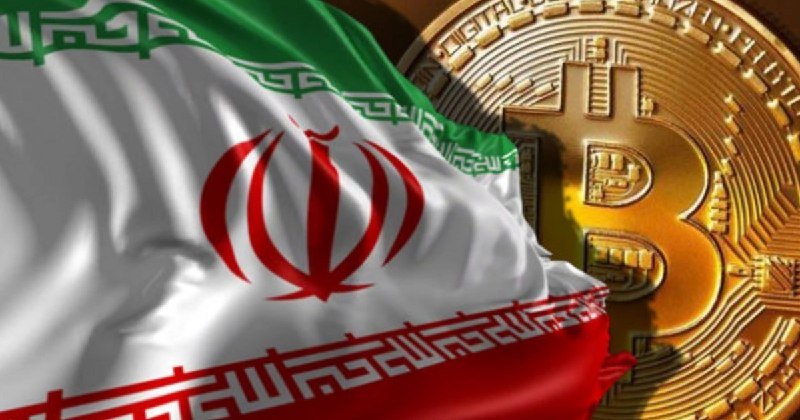
A fourteen-point draft of a proposed US-Iran understanding, circulated on 14 June 2026 by Iran's Mehr News Agency, sets out a granular architecture for sanctions relief, nuclear constraints, and a sequenced regional de-escalation. The document is being read in three very different ways. In Tehran it is being framed as evidence that diplomacy is working. In Western financial markets it has been priced as a near-certain thaw. And in the chancelleries of Israel, Lebanon, and several Gulf capitals it is, for the moment, treated as a draft that nobody outside the negotiating room has confirmed in substance. Friday is the date that now does the heavy lifting: Switzerland has said publicly that a signing at the Buergenstock mountaintop resort is possible, and the Polymarket contract on whether Trump unfreezes Iranian assets has crossed above 84 per cent.
What is striking about the Mehr text is not its ambition but its asymmetry. The clauses Tehran is releasing in advance read, on inspection, as a description of what Iran wants from a deal rather than what it is offering. That is not necessarily a criticism of the document. Negotiating drafts are routinely one-sided in their early circulation, and the act of publishing a draft is itself a form of leverage. The question is whether the substance underneath the symbolism can bear the weight that markets, and several governments, have already placed on it.
What the fourteen points actually say
The text running across Iranian channels and picked up by Fotros Resistance and the WarMonitors and DDGeopolitics telegrams bundles together four strands that have, until now, been negotiated separately. The first is the nuclear file: limits on enrichment, the fate of stockpiled material, and the conditions under which IAEA inspectors regain access. The second is the sanctions architecture: which designations are lifted, on what timetable, and what verification protocol is attached. The third is the financial settlement, with the now-familiar reference to roughly $300 billion in frozen Iranian assets and the question of how and when those funds become accessible. The fourth, and most contested, is a regional security annex that touches on Hezbollah, the Houthi file, and Iraqi militia activity.
Two economic data points have done most of the public framing. A widely circulated summary, repeated on CryptoBriefing's channel, claims that Iran would receive immediate oil waivers and access to a $300 billion fund under the draft. The Polymarket feed has internalised the same number, reporting an 84 per cent implied probability that Trump moves to unfreeze Iranian assets by the end of June. The Polymarket line is not a forecast, but a price of a binary contract, and that distinction matters. A market price tells you what traders are willing to underwrite, not what governments have committed to do.
The financial clauses are also where the most consequential ambiguity sits. Reporting attributed to JD Vance and circulated via AngelList holds that the $300 billion headline number refers to reconstruction access rather than a direct cash transfer to Tehran. If that reading is correct, the dollar flow is contingent, phased, and tied to verifiable Iranian behaviour. If it is not, the figure is roughly the size of Iran's annual non-oil GDP and would represent a structural shift in the sanctions regime.
The market is already positioned for the optimistic read
Indian equities have reacted first and loudest. The Sensex extended a bull run to a third consecutive session on the US-Iran peace narrative, adding 540 points on 16 June, according to LiveMint's market wrap. Bitcoin joined oil in the same correlation regime: BTC dipped to $66,000 while Brent slipped under $78 a barrel, a configuration traders read as a quick end to the risk-off move that had priced an Iranian closure of the Strait of Hormuz. Cointelegraph's coverage captured the divergence cleanly: equities and crypto gained on peace momentum while oil gave back its risk premium.
Barclays has been more circumspect. The bank's energy desk is holding its $100-a-barrel Brent forecast on the view that any US-Iran agreement is unlikely to resolve oil supply issues overnight. That is the institutional counterweight to the social-media reading. Markets can price a thaw in a day; oil supply chains cannot reprice the loss of roughly 1.5 million barrels a day of sanctioned Iranian crude, plus the second-order effects on Venezuelan and Russian flows, in the same window. Trump's own characterisation, reported on Polymarket's feed, is that the deal includes "99.9 per cent of what he wants." That is a comment on a draft, not a signed instrument.
What the regional players are saying, and not saying
The silence from several governments is the most informative signal in the public record. No Israeli spokesperson has confirmed the substance of any of the fourteen points. No Lebanese official has acknowledged the regional security annex. The IAEA has not, as of the Mehr publication, commented on the verification clauses. The US State Department has, characteristically for a negotiation still in flight, declined to confirm the text.
This is consistent with how major nuclear negotiations have always been reported: the leaks are strategic, and they are usually calibrated. Iran releasing a draft through a domestic outlet serves Tehran's internal audience and gives its negotiators a published floor to defend. Western governments stay quiet to preserve room to walk back, harden, or amend. The middle ground, where the actual deal will be hammered out, is deliberately invisible.
Israel's concerns are likely to cluster on two clauses: the disposition of enriched material and any reference to a regional security architecture that touches on Iran's proxy network. Lebanon has institutional reasons to be cautious about any annex that names Hezbollah. Saudi Arabia and the UAE, which were not at the table in the early stages, have their own red lines around any normalisation that appears to entrench rather than constrain Iranian regional posture.
The clauses nobody is talking about
Three areas of the draft are conspicuously under-discussed. The first is the disposition of Iran's stockpile of 60 per cent-enriched uranium, which is the technical pivot of the entire file. Reporting on the text has focused on access, on waivers, on dollar figures. It has not, in the public record we have, walked through what happens to the material that is already in Iran's possession. That is the question that determines whether the deal extends the breakout window by a meaningful amount or by a few months.
The second is the verification regime. The IAEA reference in the Mehr text is, on its face, more permissive than the Additional Protocol. Whether that reading survives the negotiation is unclear. Western governments will not sign a deal whose verification architecture is weaker than the one they have already rejected once.
The third is the regional security annex itself. If Hezbollah is named, and if there is an explicit sequencing of Iranian proxy de-escalation tied to sanctions relief, that is the clause that will determine whether the deal survives its first month in any Israeli or Lebanese government. The published leaks do not specify the sequencing. That is where the next week of reporting will be focused.
Friday is the test, not the verdict
Switzerland's public indication that a signing at Buergenstock is possible has set a soft deadline. If the document is initialled on Friday, the financial clauses will move from contingent to binding, and the markets that have already priced a thaw will need to defend or extend that move. If Friday slips, the Polymarket contract will reprice, the oil complex will rebuild its risk premium, and the diplomatic timetable resets.
The honest reading of the public record is that we have a draft. We have an asymmetric draft, published by one party, with financial figures that are large enough to move a sovereign bond market and verification language light enough to draw objection from the agency whose job is to enforce it. We have a US president describing it in terms of near-total agreement and a major bank holding its oil forecast on the view that supply will not normalise quickly. We have, in other words, a market that has decided what it wants to believe, and a document that has not yet decided what it actually is.
Until Friday, every clause is a claimed position, not a settled fact.
Sources
- Mehr News Agency (via Telegram aggregators): 14-point US-Iran draft text, 14 June 2026. warMonitors, osintlive, DDGeopolitics, FotrosResistance Telegram channels.
- Polymarket: Trump unfreezes Iranian assets contract, 84 per cent implied probability, 16 June 2026 22:40 UTC. https://polymarket.com/event/what-iranian-demands-will-trump-agree-to-by-june-30
- Polymarket: Trump characterisation, "99.9 per cent of what he wants," 16 June 2026 15:18 UTC.
- Polymarket: Buergenstock signing indication from Switzerland, 16 June 2026 15:52 UTC.
- CryptoBriefing (Telegram): Iran set to receive oil waivers and $300 billion fund under draft US deal, 16 June 2026 18:39 UTC.
- AngelList (Telegram): reconstruction-access framing attributed to JD Vance, 16 June 2026 11:03 UTC.
- Cointelegraph: Barclays $100 Brent forecast; BTC and oil price action, 16 June 2026 14:18 UTC and 18:15 UTC.
- LiveMint: Sensex up 540 points on US-Iran peace momentum, 16 June 2026 10:11 UTC.
Desk note: Monexus is running the Iranian-published 14-clause text as a primary source, with explicit sourcing caveats, while flagging that no Western government, the IAEA, or the governments of Lebanon and Israel have confirmed the substance. The framing, in the body and in the choice of caution over triumphalism, is closer to a Reuters wire posture than to the Iranian state-media framing on which the document is sourced. Readers should treat every clause as a claimed position, not a settled fact, until Friday.
Follow the event.
These dated source records provide context. They do not retrospectively verify this archive article.
Separate what the nuclear watchdog reported from what it could not determine after the June 2025 strikes.