Trump says the deal is signed. Iran says it isn't. The gap tells you everything.
On 14 June 2026, Washington announced a signing and Tehran announced a walkout. The contradiction is the story — and the $12 billion price tag is the tell.
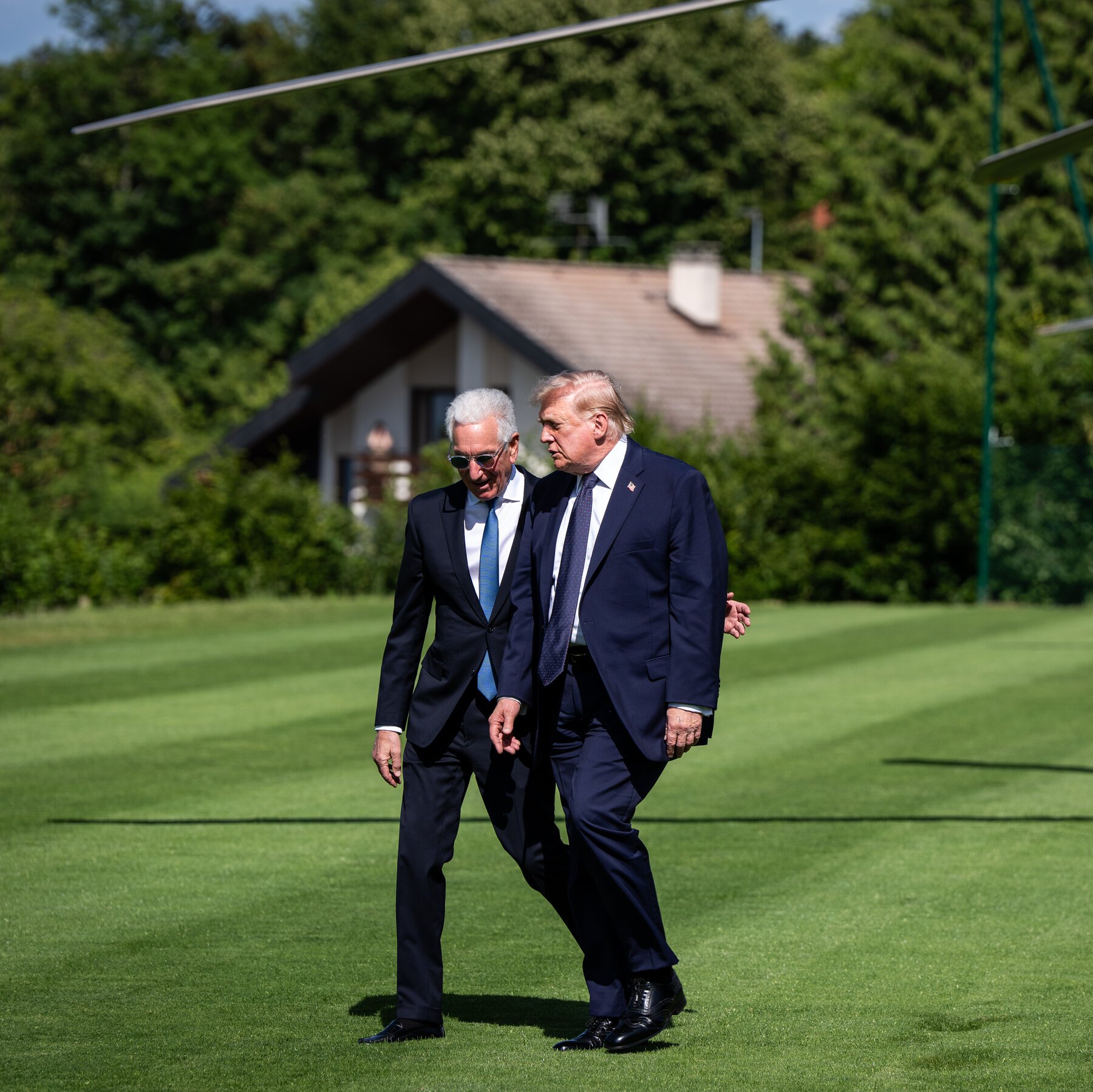
At 16:15 UTC on 14 June 2026, two statements landed within minutes of each other and pointed in opposite directions. US President Donald Trump told reporters a deal with Iran would be signed "today." Twenty-nine minutes earlier, at 15:46 UTC, an Iranian counter-statement — carried by the BRICS News wire — said no deal would be signed today. The contradiction is not a translation hiccup. It is the negotiating position made visible.
What is actually on the table is a price. According to a wire flash from the Polymarket news desk at 16:14 UTC, Iran is "reportedly demanding up to $12,000,000,000.00 in frozen funds from the U.S." That is the figure Tehran wants released in exchange for whatever nuclear constraint it is willing to accept. Until that number moves, or until Washington stops treating the announcement as the product, the two governments will keep talking past each other in the same news cycle.
The Obama frame, recycled as a pressure tool
A day earlier, on 13 June at 21:14 UTC, Trump argued that the Obama-era Iran deal would have let Tehran acquire a nuclear weapon "six years ago." That is the rhetorical floor beneath the present talks: the prior agreement is being held up as a cautionary tale, and the new one has to outperform it on inspection, on sunset clauses, and on the dollar question of how much Iranian money comes home. The argument is not really about 2015. It is about whether any written arrangement survives the next change of administration — a memory the 2018 US withdrawal from the Joint Comprehensive Plan of Action has burned into the file.
The second lever is the threat. On 13 June at 17:53 UTC, Trump warned Iran that the United States holds the "ultimate alternative" if diplomacy fails. The phrase carries an airstrike connotation without saying so. Tehran hears it as a deadline. Its response, delivered on 14 June at 15:30 UTC via the Polymarket wire, was to threaten a walkout from the talks entirely. Two ultimata, one news cycle.
Why the frozen-funds number is the real story
Of every figure floating around this round, $12 billion is the one that maps onto something verifiable: the tranche of Iranian central-bank reserves held in restricted accounts abroad, largely in South Korea, Japan, and Iraq, that have been the central economic ask of every Iranian negotiating team since 2018. If a deal is signed and that money moves, the Islamic Republic can pay for imports outside the US dollar system, ease the rial's collapse, and reward the political constituency that has argued for engagement. If the money stays frozen, the hardliners who argue that talks are a trap have their evidence ready-made.
The dollar mechanic matters beyond Iran. Releasing $12 billion through a tightly controlled Swiss-channel or third-country escrow is, structurally, a permission slip — a US decision about how much of its own sanctions architecture it is willing to unwind in a single transaction. It is also a precedent any future sanctioned state will study. That is why a $12 billion line in a press flash is not a footnote.
What both sides get, and what neither is admitting
Trump gets a deliverable he can put next to the Abraham Accords and the 2020 Taliban agreement in his "I made a deal" ledger, useful ahead of the midterm cycle. Iran gets cash and a partial exit from financial isolation. What neither side is saying out loud is that a signed document on 14 June does not solve the underlying disagreement about enrichment, about missile development, or about the regional proxy network that has defined the relationship since 1979. A deal that releases the $12 billion and defers the harder questions is a deal that will need re-negotiating in eighteen months — exactly the failure mode the Obama-era agreement was accused of.
There is also a quieter counter-read worth taking seriously. The Iranian denial could be calibrated, not categorical. Tehran has a history of walking back domestic hardliners after maximalist public statements, especially when the money on the table is real. The "no deal today" line is compatible with "a deal in a week, with last-minute changes to the annexes." Treating it as a collapse would mistake theatre for outcome.
Stakes, and what remains genuinely unclear
If the trajectory continues — public signing, partial fund release, deferred structural questions — the winner is the middle-class Iranian merchant who can again import medicine and machine parts, and the American president who can claim a foreign-policy win without a war. The loser is the inspection regime, which will live with whatever sunset clause survives the legal drafting. Over a five-year horizon, the loser is also the credibility of non-proliferation architecture: a deal that looks strong in June 2026 and weak in 2028 is the worst possible outcome for the next IAEA director.
What the public sources do not yet specify: whether the $12 billion figure includes the funds held in Iraq, whether the release is tied to verified dismantlement of specific centrifuges, and whether the "ultimate alternative" warning has been delivered privately as a concrete strike list. The sources also do not specify which third country would channel the escrow. Until those three answers land, the 14 June contradiction is a snapshot of a negotiation in motion — not a verdict on it. The gap between Washington's "signed today" and Tehran's "not today" is, for now, the deal itself.
Wire provenance
This editorial synthesis draws on the following public wire/social posts:
- https://t.me/bricsnews
- https://t.me/bricsnews
Follow the event.
These dated source records provide context. They do not retrospectively verify this archive article.
Separate what the nuclear watchdog reported from what it could not determine after the June 2025 strikes.