What the Iran–U.S. MoU Tells Us, and What It Doesn't
An MoU has been signed. The text has not. The gap between those two facts explains most of what comes next in the Gulf.
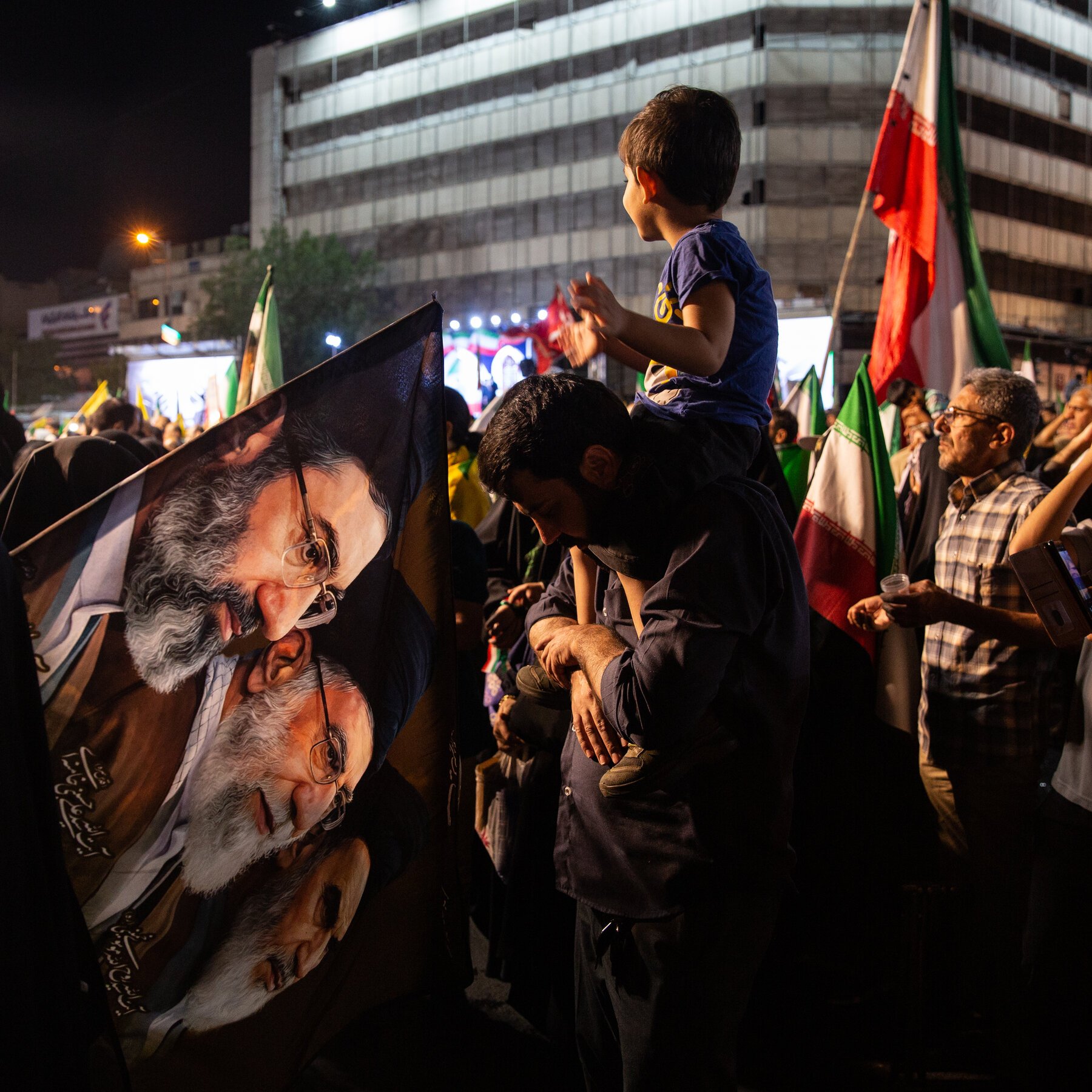
At 22:54 UTC on 14 June 2026, the Telegram channel of Iran's Tasnim News Agency posted an urgent header: the Secretariat of the Supreme National Security Council had issued a statement, in the name of Allah the Merciful, addressed to the noble nation of Iran, announcing that an agreement to end the war between Iran and the United States had been reached. Within ten minutes, the same text — or a version of it — appeared in English on PressTV, The Cradle, Middle East Spectator, and a cluster of Tehran-aligned accounts. By 23:05, British Prime Minister Keir Starmer's office was on the wire welcoming the deal. A memorandum of understanding, the Supreme National Security Council confirmed, had been finalised in the so-called Islamabad negotiations.
None of the wire items circulating in the first hour contained the actual text of the memorandum. The most that can be said with confidence is that both governments have stopped firing long enough to put a binding document on paper in principle, and that a third-party capital — Islamabad, according to Iran's account — hosted the talks. Beyond that, the claim that this constitutes an "end of war" rests almost entirely on Tehran's own read of what was signed. That asymmetry is the story.
What Tehran says it won
The Supreme National Security Council statement frames the outcome in the language of victory. Iran, the text runs, has "completed its superiority" over what it calls the "American-Zionist enemy" and has, under that posture, signed the MoU. State and state-adjacent channels amplified the framing within minutes: Tasnim, PressTV, The Cradle, Middle East Spectator, Fotros Resistance. The repetition matters less for its content than for the audience it is signalling to — a domestic Iranian public that has spent weeks absorbing reports of strikes, blackouts, and casualty counts, and a regional audience that watches Iranian state media for cues on whether escalation is over.
Britain's response, distributed via Telegram channel wfwitness on the same evening, was warmer than Washington's. Starmer called the agreement "a major step towards ending the war, restoring regional stability and reopening the Strait of Hormuz." That wording — "reopening" — implies the strait has been functionally closed during the conflict, a fact that, if accurate, has been doing more economic damage by the week. Reuters, the BBC and Bloomberg have not, in the source materials reviewed for this piece, confirmed the closing or the reopening. The Western wire line is, at the time of writing, conspicuously silent on substance.
What the MoU does not yet say
A memorandum of understanding is, by long diplomatic convention, a statement of intent rather than a treaty. It binds the parties to negotiate further, and in some cases binds them to behave in defined ways while they negotiate, but it does not require ratification and is generally treated as reversible. The Supreme National Security Council's own framing — that Iran has "finalised the text" — is a stronger claim than the document type would normally carry. Either the MoU includes unusually specific commitments, in which case the question of why its text is not circulating is a real one, or the framing is doing political work domestically that the legal document will not be asked to do. Both possibilities deserve to be on the table.
Three other gaps deserve flagging. First, no neutral readout from a third-party mediator has been published; the source materials name only the Iranian side's account of who hosted. Second, no Israeli statement appears in the materials reviewed, and the phrase "American-Zionist enemy" in the Iranian text leaves a direct ambiguity about whether the agreement binds only Washington, or whether it touches the wider front that opened during the war. Third, no casualty figures, no humanitarian access terms, and no enforcement mechanism are described. Anyone treating the Telegram traffic as confirmation of peace is reading ahead of the text.
The framing fight that has already begun
Both sides have reason to claim a win, and the next forty-eight hours will be a fight about which framing takes hold in the global press. Tehran's narrative — victory first, agreement second — is built to be re-broadcast as fact through sympathetic channels. Washington's eventual readout, once it lands, will almost certainly read in a flatter register: an arrangement, de-escalation, a return to a diplomatic track. Neither version is, on its own, a full account of the document; readers should hold both until the text is public and a credible translation is available from at least one outlet without a stake in the outcome.
The structural pattern is familiar: when an agreement lands in the middle of an active war, the first twenty-four hours belong to the parties, the second twenty-four hours belong to the wire services, and the third belongs to the lawyers and the fact-checkers. We are still in the first window. Reporting that runs ahead of the text — on either side — is, at best, a forecast.
What stays contested
The Strait of Hormuz question is the variable that will decide whether this MoU becomes a settlement or a pause. If shipping is, in fact, returning to normal patterns in the next week, the economic pressure that made the deal possible is still doing its work, and both sides have a strong reason to keep the strait open. If the closure is a negotiating posture rather than a physical reality, the deal may collapse under its own vagueness the first time a tanker is approached. The sources do not resolve this. Neither, yet, does anyone outside the negotiating rooms.
The other live question is the chain of related files: the nuclear question, the prisoner question, the regional proxy files. A MoU that touches only the most kinetic elements — stop the shooting, reopen the waterway — is a real but narrow achievement. A MoU that touches the deeper architecture is a different animal entirely. The text, once it appears, will answer that question in a sentence. Until it does, the responsible line is the dull one: an agreement has been announced, its contents have not, and the difference between those two facts is the entire story.
This publication reviewed the original Persian-language statement and its English re-postings on Tasnim, PressTV, The Cradle, Middle East Spectator, Fotros Resistance, and Jahan Tasnim, alongside the British readout distributed via wfwitness. Where the Iranian text and the British readout align, we have reported both; where they diverge, we have flagged the gap rather than resolved it.
Wire provenance
This editorial synthesis draws on the following public wire/social posts:
- https://t.me/s/Tasnimnews_en
- https://t.me/s/presstv
- https://t.me/s/thecradlemedia
- https://t.me/s/Middle_East_Spectator
- https://t.me/s/JahanTasnim
- https://t.me/s/wfwitness
Follow the event.
These dated source records provide context. They do not retrospectively verify this archive article.
Separate what the nuclear watchdog reported from what it could not determine after the June 2025 strikes.