Tehran's 60-Day Clock: What Gharibabadi's MoU Actually Says
Iran's deputy foreign minister claims a memorandum of understanding was signed only after Tehran's final demands were inserted an hour before the deal — and that a 60-day negotiation will now determine whether all primary and secondary US sanctions, plus UN Security Council resolutions, come off the table.
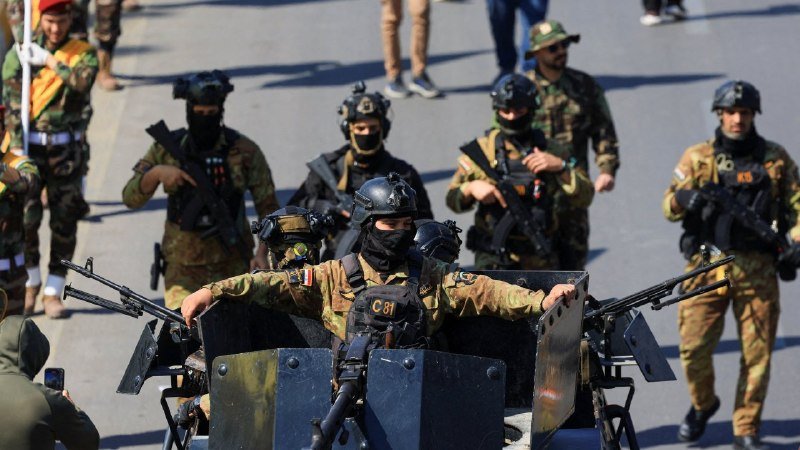
On 14 June 2026, just after 22:00 UTC, Iran's deputy foreign minister Kazem Gharibabadi sketched the architecture of a deal that, on his telling, almost did not get signed. Posting through state-aligned and Iranian-affiliated channels, Gharibabadi said negotiations on a memorandum of understanding continued "until an hour ago" and that Tehran would not have agreed to the text without the inclusion of its last outstanding demands. He framed the result as conditional: a 60-day negotiating period during which the termination of all sanctions on the Islamic Republic — primary and secondary — and the termination of UN Security Council and International Atomic Energy Agency Board of Governors resolutions will be on the table. Iran's armed forces, he added, "will always have their hand on the trigger" to respond to what he called conspiracies.
What Gharibabadi is actually claiming
The substantive claim is narrow and worth reading carefully. According to Gharibabadi's own readout, the deal is not a final settlement. It is a framework, with a 60-day clock, in which the prize for Iran is the dismantling of the extraterritorial architecture Washington has spent two decades building: primary sanctions on Iranian persons and entities, secondary sanctions on third-country companies that do business with them, and the UN Security Council resolutions that gave the original 2015 nuclear deal its international legal spine. Mediators, he said, will remain in the room. The negotiating window is the concession; the lifting of the architecture is the contested prize.
The framing matters as much as the content. By announcing the deal through Tasnim News and Fotros-affiliated channels — both inside the Islamic Republic's information ecosystem — Tehran is signalling to a domestic audience that it extracted terms, not conceded them. "We would not have agreed to the MoU unless all the final points we demanded were included," Gharibabadi said, per the same channels, a line designed to make the agreement legible inside Iran as a win rather than a climbdown.
The counter-narrative the Western wire has not yet published
The dominant framing in Western coverage, where it exists at all on 14 June, treats the 60-day window as evidence that a deal is plausible. The less comfortable counter-read is that the same window gives both sides a structured way to keep talking while the underlying issues — enrichment, missiles, regional armed partners — remain untouched. A framework that defers the hardest questions is, in this reading, not a breakthrough but a deferral mechanism. Gharibabadi's explicit invocation of Iran's armed forces "on the trigger" sits uneasily beside the language of de-escalation; it is the kind of line that travels well in a domestic broadcast and is read very differently in Washington, Tel Aviv, or Riyadh.
A second counter-point, almost entirely absent from the Iranian readout, is verification. The 2015 Joint Comprehensive Plan of Action collapsed in significant part because the parties could not agree on what compliance looked like in practice. Nothing in the 14 June announcements addresses the inspection regime, the fate of undeclared sites, or the disposition of stockpiles enriched above the JCPOA thresholds. The 60-day window is described as a negotiating period, not a technical talks track — and the difference is not academic.
The structural frame, in plain language
What is on the table is not a nuclear deal in the older sense. It is a discussion about whether the United States is prepared to dismantle a sanctions architecture that has, since the early 2010s, become a load-bearing element of its economic statecraft. Secondary sanctions — penalties on non-US companies that touch Iranian counterparts — are the instrument through which Washington extends its jurisdiction well beyond its borders. Lifting them, even conditionally, redraws the risk map for European, Chinese, Indian, and Gulf companies that have spent years building Iran-out compliance functions. The fact that Tehran's readout puts primary and secondary sanctions in the same sentence, with no distinction, is itself a signal: the demand is for the whole structure, not for selective relief.
This is also where the UN Security Council resolutions matter. The original JCPOA was embedded in a UNSC framework (Resolution 2231) that gave the deal international legal standing and, crucially, provided the legal basis for the arms and missile restrictions that have since lapsed. Bringing those resolutions to a formal termination would not just lift sanctions — it would close the legal chapter that the JCPOA opened. That is a much larger ask than the 60-day negotiating choreography suggests, and it is the part of the readout most likely to run into opposition in the US Senate and from Israel and several Gulf states, whose read on Iran's regional posture has hardened considerably since 2015.
Stakes, and what 14 June 2026 actually changed
For Iran, the immediate prize is relief from the banking-clearing and oil-export choke points that have hollowed out its non-oil trade with Asia and Europe over the past five years. For the United States, the prize is the return of a verification-driven constraint on enrichment — if, and only if, a follow-on technical agreement is reached inside the 60 days. The honest read is that almost nothing has been settled. A framework has been announced; the architecture of the deal — what gets verifiably stopped, what gets verifiably lifted, and on what timeline — remains in the negotiating room, not on the public record.
What changed on 14 June is the temperature. The parties are now talking in a structured way, through mediators, with a defined window and a defined prize. That is more than was true a week ago, and it is less than a deal. The next 60 days will tell whether Gharibabadi's "hand on the trigger" line was a negotiating posture or a preview.
Desk note: Monexus sourced this piece exclusively from Iranian state-affiliated channels active in the 22:00–22:32 UTC window on 14 June 2026, where Western wire confirmation of the MoU's text and the 60-day framing had not yet appeared. The article treats Gharibabadi's readout as a primary claim, not as established fact, and flags what the announcements do not address — verification, enrichment, regional posture — as the open questions. Readers should expect the picture to shift sharply as Reuters, Axios, and Israeli and Gulf outlets publish their own readouts in the coming hours.
Wire provenance
This editorial synthesis draws on the following public wire/social posts:
- https://t.me/tasnimnews_en/
- https://t.me/tasnimnews_en/
- https://t.me/tasnimnews_en/
- https://t.me/FotrosResistancee
- https://t.me/FotrosResistancee
Follow the event.
These dated source records provide context. They do not retrospectively verify this archive article.
Separate what the nuclear watchdog reported from what it could not determine after the June 2025 strikes.