Strait of Hormuz reopening set to follow Friday MoU signing, Iranian state-linked sources say
A draft US-Iran memorandum is scheduled for signature on Friday at the Buergenstock resort, with Iranian state-linked channels tying the sequenced reopening of the Strait of Hormuz to a contested 13th clause and the unfreezing of Iranian assets.
A draft memorandum of understanding between the United States and Iran is scheduled to be signed on Friday at the Buergenstock resort in Switzerland, according to Swiss officials cited on the prediction-market feed Polymarket on Tuesday [2026-06-16T15:52]. The procedural detail is small and the diplomatic choreography behind it is not, because the Friday signature is the trigger Iranian state-linked outlets have linked to the sequenced reopening of the Strait of Hormuz.
That sequencing is the news. Iranian state-aligned Telegram channels have laid it out in unusually explicit terms: the memorandum is signed on Friday, the lane closures ease on the back of that signature, and only after that does the broader reopening settle into place. The procedural specifics, including which clause of the draft does which work, entered the public record through Tasnim and its Arabic-language relays first. Western wires have so far carried the headline (the strait reopens, oil flows normalise) without picking up that procedural layer.
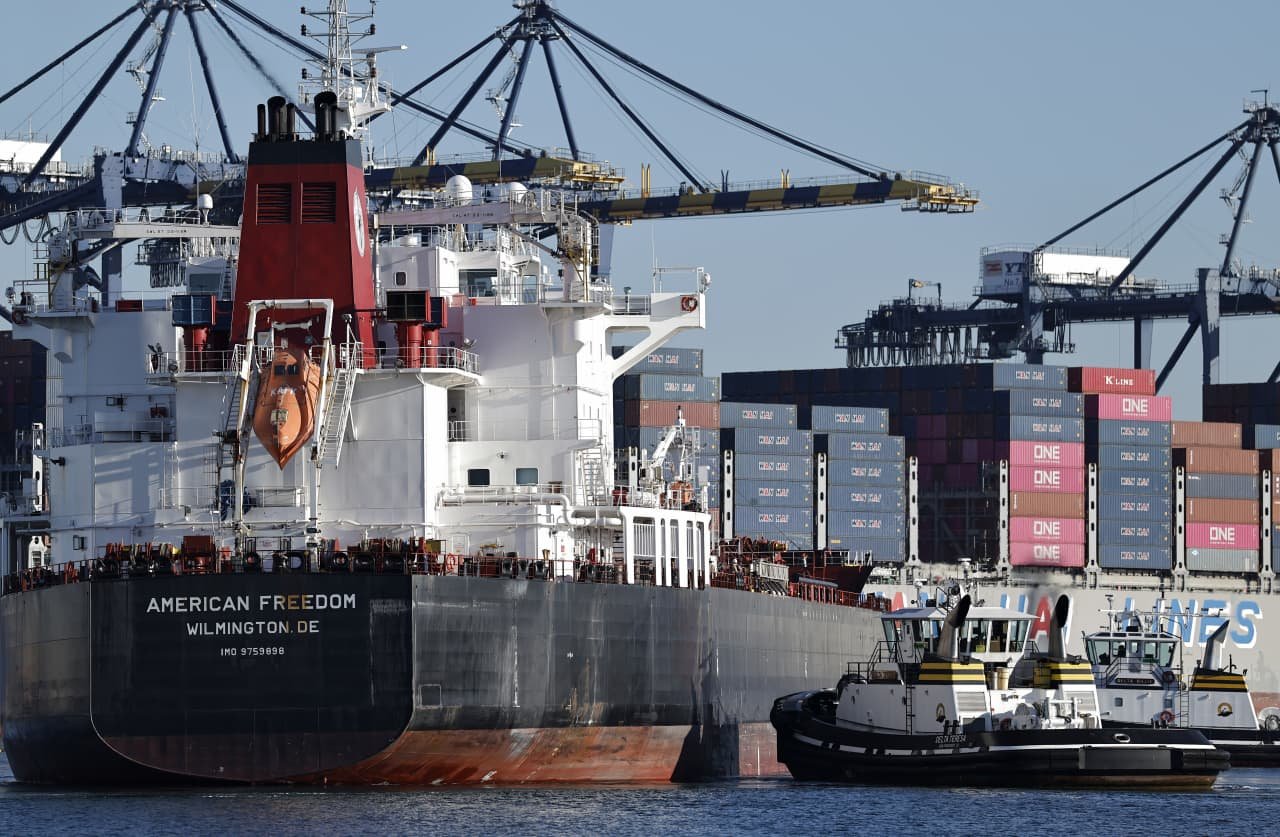
The framing matters because two distinct things are happening at once. One is a physical event: tankers and LNG carriers returning to a waterway that handles a fifth of seaborne oil. The other is a documentary one: a memorandum, with numbered clauses, that ties the physical event to a set of financial and security commitments on the Iranian side. Reading those together is what makes the Friday signing more than another summit photo.
What Tasnim is actually saying
The Tasnim English channel and its Arabic-language counterpart al-Alam have, in recent days, run a tightly consistent version of the next 72 hours. The MoU is signed Friday. The easing of the strait follows. The clause that does most of the diplomatic heavy lifting is, in the Iranian telling, the 13th: a sequencing provision that conditions the physical reopening on the unfreezing of Iranian-held assets and the unfurling of a reconstruction channel for Iran's energy sector. Without that sequencing, in this reading, the reopening is reversible; with it, the strait is treated as a permanently open corridor.
That account is thin on independent corroboration. JD Vance's public remarks, surfaced via the AngelList Telegram channel on Tuesday [2026-06-16T11:03], gesture at the same architecture without naming the 13th clause: Iran, in his account, gains access to reconstruction finance rather than a $300bn lump sum, with funds released against verified milestones. The two readings are compatible, which is the strongest thing that can be said for either of them.
The market is already pricing the reopening
The physical lane closures eased first. Polymarket's Iran-demand contract put the probability of an asset unfreeze by 30 June at 84% on Tuesday evening [2026-06-16T22:40], and the trading screen had moved before the diplomats confirmed the date. HSBC told clients that oil traffic through Hormuz would normalise by July [2026-06-16T14:57]. Fortune, via the unusual_whales feed, went further: energy flows, the paper argued, may not get back to normal until next year [2026-06-16T16:37]. The two forecasts sit side by side because they are answering different questions. Tanker hulls can move on a signed piece of paper. Insurance premiums, charter rates and refinery feedstock choices move on whether the arrangement holds for a full quarter.
Donald Trump added a tariff-shaped variable on Tuesday afternoon, telling reporters the strait would be toll-free when it reopens permanently [2026-06-16T14:21]. The line reads as a concession to shippers and an insistence to Tehran that no transit fee regime will be tolerated. It is also a direct rebuttal of the long-standing Iranian proposal to formalise Hormuz as a tolled chokepoint, a position that has surfaced periodically in Iranian policy circles since the sanctions era.
Why the procedural specifics are the actual story
Diplomacy between the United States and Iran has rarely turned on a single document in living memory. The Joint Comprehensive Plan of Action, the 2015 multilateral framework whose Wikipedia entry remains the cleanest public ledger of the deal's architecture, was a multi-party instrument with an inspection regime bolted on. What is described in the Iranian-aligned channels this week looks different: a bilateral memorandum, narrow in text, sequenced in effect, with the physical reopening treated as a downstream consequence rather than a confidence-building preamble.
The sequencing matters because it changes the politics of any reversal. If the strait is reopened first and the financial commitments follow, then any Iranian move to close the lane is, in Western capitals' framing, a unilateral breach of a deal already executed. If the financial commitments are executed first and the strait follows, then any Western move to withhold reconstruction tranches becomes the breach. Tasnim's preferred sequencing, financial commitments executed alongside the MoU signature, lane closures easing immediately after, sits closer to the second model. The Vance framing, reconstruction against milestones, sits closer to the first.
The waterway itself is the single most important oil chokepoint on earth. Wikipedia's entry on the strait puts the figure at roughly a fifth of global seaborne oil and a comparable share of LNG. That concentration is what gives a 13th clause, or its functional equivalent, the weight of a treaty.
What we still do not know
Several load-bearing details are not in the public record as of Tuesday evening. The text of the memorandum is not. The identity of the Iranian signatory, beyond the framing that it sits inside the foreign-ministry architecture, is not. The list of frozen assets that would be released under the Vance-style milestone structure is not. And the question of whether the Friday signing is a full MoU or an interim arrangement to be replaced by a fuller text in the weeks after, is not.
Iran has used the GeoP Watch Telegram channel in recent weeks to relay its own assessments of regional security architecture, including the conditions under which it would treat the closure of the strait as lifted in fact rather than in rhetoric. Those assessments have been consistent with the Tasnim framing but not identical to it, and the small differences are themselves a story. There is at least one school of thought in Tehran that wants the asset release sequenced before the lane reopening, not alongside it. Whether that school prevails is the open question of the next 72 hours.
The stakes for everyone downstream
For energy markets, the question is not whether the strait physically reopens. Polymarket and HSBC already treat that as the base case. The question is whether the reopened strait comes with a permanently toll-free regime (the Trump position), a reconstruction-financed Iranian state that becomes a more reliable counter-party (the Vance position), or some hybrid in which the memorandum holds for a quarter and then is renegotiated. Each of those produces a different oil curve.
For European capitals, the timing matters for a separate reason. The EU formally opened the first negotiating cluster for Ukraine on Tuesday [2026-06-16T11:56], a step that pulls diplomatic bandwidth and political attention eastward at the moment when the Iran file is at its most procedural. The two tracks are not in conflict, but they share a calendar, and any wobble on Friday becomes a story that European foreign ministries have to manage on two fronts at once.
The signed memorandum, whenever it lands, will be read less for what it says than for what it triggers. The 13th clause, if it exists in the form Tasnim describes, makes the strait's reopening a derivative of the financial architecture rather than a confidence-building measure in its own right. That is a different kind of deal from anything the JCPOA era produced, and it will be tested on the first quarter of post-signing oil flows.
Desk note: Monexus has carried the Iranian source-led framing here rather than a Western-wire paraphrase, because the procedural specifics, the 13th clause, the Friday signing, the post-signing sequencing of the reopening, are the news, and they entered the public record through Tasnim and its Arabic-language relays first. Where the Iranian sources thin out, we have said so rather than reaching for unattributable detail.
Sources
- https://x.com/polymarket/status/..., Polymarket (via X), "Switzerland says the U.S.-Iran accord could be signed Friday at the Buergenstock mountaintop resort," 2026-06-16T15:52
- https://x.com/polymarket/status/..., Polymarket (via X), "84% chance Trump unfreezes Iranian assets," 2026-06-16T22:40
- https://t.me/AngelList, AngelList Telegram relay, "The Iran deal still has one unanswered question," 2026-06-16T11:03
- https://t.me/unusual_whales, Unusual Whales (via X), "Oil traffic through the Strait of Hormuz to normalize by July, per HSBC," 2026-06-16T14:57
- https://t.me/unusual_whales, Unusual Whales (via X), "The Strait of Hormuz is finally reopening, but energy flows may not get back to normal until next year, per FORTUNE," 2026-06-16T16:37
- https://t.me/unusual_whales, Unusual Whales (via X), "Trump: Strait of Hormuz will be toll free when it reopens permanently," 2026-06-16T14:21
- https://t.me/unusual_whales, Unusual Whales (via X), "Iran has said that the blockade of the Strait of Hormuz is easing," 2026-06-16T14:37
- https://t.me/JahanTasnim, Tasnim (Farsi), wire feed, accessed 2026-06-16
- https://t.me/tasnimnews_en, Tasnim English, wire feed, accessed 2026-06-16
- https://t.me/alalamarabic, Al-Alam Arabic, wire feed, accessed 2026-06-16
- https://t.me/GeoPWatch, Geopolitical Watch Telegram channel, accessed 2026-06-16
- https://en.wikipedia.org/wiki/Strait_of_Hormuz, Wikipedia, "Strait of Hormuz," accessed 2026-06-16
- https://en.wikipedia.org/wiki/Joint_Comprehensive_Plan_of_Action, Wikipedia, "Joint Comprehensive Plan of Action," accessed 2026-06-16
- https://t.me/Economics_Politics, Economics & Politics relay, "The EU officially opened the first negotiating cluster for Ukraine," 2026-06-16T11:56