Iran's security chief signals retaliation as 'unity of fronts' rhetoric returns to Tehran's vocabulary
Mohammad Baqer Zolghadr, secretary of Iran's Supreme National Security Council, said a response by 'Islamic fighters' is on the way — language that ties Hezbollah's posture directly to Tehran's command of the regional axis.
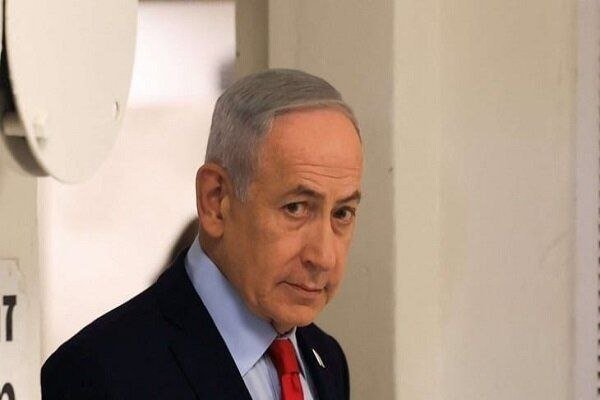
On the afternoon of 14 June 2026, the language coming out of Tehran hardened into a recognisable pattern. Mohammad Baqer Zolghadr, the secretary of Iran's Supreme National Security Council, declared that "the response of the Islamic fighters will come" and warned that "any crossing of the Islamic Republic's red lines will not be tolerated." The remarks, distributed by multiple open-source Telegram channels in near-identical wording within a roughly one-hour window beginning at 17:58 UTC, framed the threat as a coordinated posture across the regional axis rather than a Hezbollah-specific escalation. Telegram channels including Intelslava, WarFront Witness, Open Source Intel and the English-language account englishabuali each carried variants of the same statement, attributing it directly to Zolghadr in his capacity as SNSC secretary and referencing his recent elevation to the post previously held by Ali Larijani.
The signal matters less for what it says about any single incident than for what it says about command architecture. By speaking of a unified "chain" of fronts, the SNSC secretary is binding the messaging of the Iran–Iraq–Syria–Lebanon axis into a single declaratory voice. For Tehran, that wording is a deliberate hedge: it preserves deniability for any specific retaliatory act by attributing agency to a diffuse "front," while signalling to adversaries — and to domestic audiences — that the response will not be a solo Hezbollah operation if it comes.
A familiar playbook, with a new signaller
The substance of the threat is not new. Iran's security establishment has used the "unity of the fronts" formulation repeatedly since the 12-day war of June 2025, when direct strikes between Israel and Iran exposed how thin the buffer between escalation and full regional conflagration had become. The novelty here is personnel. Zolghadr's elevation to the SNSC secretaryship — succeeding Ali Larijani, the long-serving conservative power-broker — was reported earlier in 2026 and represents a generational and ideological shift in how Tehran coordinates its regional posture. Larijani was a political insider who treated the SNSC as a venue for managed signalling. Zolghadr, by contrast, has been associated with a more explicit security-first framing of Iran's external policy.
For that reason, the choice of Zolghadr as the messenger is itself the message. When a political figure speaks of red lines, adversaries discount. When the country's top security coordinator does — and uses vocabulary that explicitly weaves in Iraq, Syria and Lebanon as a single defensive chain — Western and Israeli intelligence services are obliged to take the threat seriously even if the operational follow-through is uncertain.
The 'Lebanon is our life' frame
The line that travelled furthest in the 14 June 2026 cluster of statements was the SNSC secretary's assertion that "Lebanon is our life." The phrase is not a throwaway. It echoes a formulation Tehran has used periodically since the early 2000s to define the upper limit of its tolerance for perceived threats to Hezbollah's position. Read alongside the reference to the "chain" of fronts, it implies that any action against Hezbollah — whether a high-profile strike, an assassination of a senior figure, or a sustained campaign against the group's infrastructure in southern Lebanon — would be classified in Tehran as a strike on Iran itself.
That framing imposes a particular kind of pressure on decision-makers in Jerusalem and Washington. It raises the cost of limited action without guaranteeing the follow-through of full action. The pattern is consistent with what analysts have, in plain language, called "deterrence by ambiguity": reserve the right to respond, without committing to a specific threshold or timeline, and keep the adversary permanently uncertain about the cost of the next move.
What the open-source record actually shows
The statements circulated through four Telegram channels between 17:58 and 19:02 UTC on 14 June 2026. The convergence is itself a finding. Intelslava, WarFront Witness, Open Source Intel and englishabuali all carried the same core quotation within a 64-minute window, with minor variations in translation and punctuation. That synchronisation is consistent with either a single official release distributed through Iranian state-aligned media, or a coordinated wave of posts by channels that source directly from Iranian state media feeds. None of the carrying channels is an Iranian state outlet — they are third-party OSINT and pro-axis aggregators — but the simultaneity suggests a single upstream origin rather than independent reporting.
The Telegram record is not, on its own, confirmation that the SNSC secretary gave these remarks in the form reported. Iranian state media outlets including IRNA, Tasnim and PressTV — the outlets that would normally carry a verbatim SNSC statement — are not represented in the available open-source material for this event. That absence is notable. It could indicate that the statement was made on a closed platform, that it was leaked, or that the official version has not yet been published and the circulating text is a draft or summary. For the moment, the safest read is: a senior Iranian security official has been quoted across multiple open-source channels warning of retaliation, but the primary Iranian-state attribution has not, in the open sources consulted, been independently verified.
What this leaves open
The threshold question is what, specifically, would trigger the response Zolghadr describes. The statements do not name an incident. They do not specify a timeline. They do not state whether the trigger would be a kinetic strike on Iranian soil, an action against Hezbollah, a wider regional event, or a political signal from Washington. The phrase "unity of the fronts has created a security chain" reads as declaratory positioning rather than a contingency plan with a named fuse.
The plausible counter-read is that the statement is preventive rhetoric designed to deter an action that has not yet occurred, and that the operational reality is more cautious than the language suggests. Iranian decision-making in the past year has been characterised by calibrated responses — deniable, proportional and timed to maximise signalling value — rather than by full-spectrum retaliation. The dominant framing, that Tehran has bound itself to retaliate, holds for now mainly because the language says so; the actual threshold remains opaque, and that opacity is the point.
What is verifiable, and what matters, is that the SNSC secretary has now entered the public messaging layer alongside the foreign minister, the IRGC spokesperson and the supreme national security adviser. The proliferation of voices saying similar things in similar vocabulary is itself a coordinated posture, regardless of whether any specific retaliatory act materialises.
This publication treats Iranian security-establishment statements as declarative positioning rather than as operational fact, and pairs them with the explicit caveat that the open-source record of attribution runs through OSINT and pro-axis Telegram channels rather than primary Iranian-state outlets.
Wire provenance
This editorial synthesis draws on the following public wire/social posts:
- https://t.me/englishabuali
- https://t.me/osintlive
- https://t.me/wfwitness
- https://t.me/intelslava
Follow the event.
These dated source records provide context. They do not retrospectively verify this archive article.
Separate what the nuclear watchdog reported from what it could not determine after the June 2025 strikes.