Israel hits Beirut as US–Iran deal hangs in the balance
An Israeli strike in Beirut landed in the hours before the US–Iran memorandum was read in public, and the political weight of the attack now sits on the deal rather than on the city.
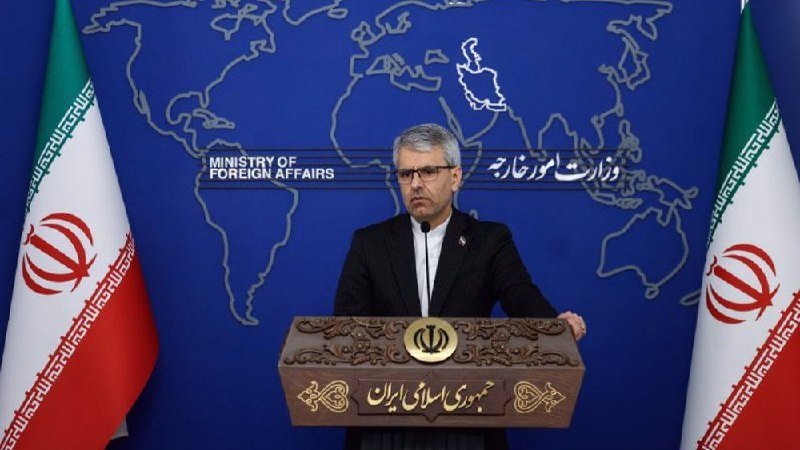
On Sunday night, with the deal not yet public, Iran and the United States announced a memorandum of understanding that, in roughly one and a half pages, sets the terms for a longer negotiation neither side has yet named. By Wednesday morning, Israel had carried out a strike in Beirut and was openly arguing it had not been shown the text. The headline that follows is the strike. The story is the timing.
The MOU was signed in the small hours of Sunday and walked back into the open on Monday. According to reporting by Middle East Eye citing Bloomberg, the framework commits Washington to supporting a $300 billion reconstruction fund tied to Iran and to considering pulling US forces out of areas near Iran as part of a final settlement. A separate briefing, carried on Telegram by Megatron and confirmed by US officials, added that Iran will also gain full access to roughly $100 billion in frozen funds, with implementation set to begin shortly. CNN, relayed via the War and Freedom witness channel, characterised the text as "intentionally broad and designed to create conditions for further negotiations," written so each side can sell it at home without admitting what it conceded. Reuters, for its part, reported that members of Congress had not been shown the document even as President Trump said he would send it to them.
The strike that came hours before the text
Israel's hit in Beirut landed in the window between the MOU's signing and the moment its terms started leaking. The battlefield specifics are still thin in the public record. What is on the page is the political sequence: a strike on a city inside a country whose principal armed movement, Hezbollah, is the implicit subject of the deal, signed by a government that is now publicly complaining it has not been read in.
Iran's Khatam al-Anbiya Central Headquarters, reported by Press TV, said the Israeli strike was part of 84 ceasefire violations in southern Lebanon since the agreement was announced on Sunday and warned of a "harsh response." Iran-regime outlets are not neutral recorders of fact, but the ceasefire-violation count they cite is the kind of figure Israeli and Western wire reporters normally corroborate within hours. The IRGC's separate conduct in the Strait of Hormuz is harder to dismiss. NBC News, picked up by lookner on X, reported that Iran has fired multiple drones at commercial ships in the strait since the MOU was agreed on Sunday, a posture that sits awkwardly beside a deal premised on regional de-escalation.
What the MOU does to Hezbollah
The most pointed critique of the deal is not coming from Tehran. It is coming from analysts reading the text and concluding that, by design or by omission, it shields Hezbollah from Israeli action. The Open Source Intel channel, citing Katie Pavlich, summarised the argument bluntly: if the deal's premise is that Iran "stops developing terrorism," the text in circulation appears to do the opposite, because it effectively limits Israel's ability to strike Hezbollah and gives the movement room to rebuild. That reading has been picked up by the same networks that usually carry Iranian complaints, but its loudest English-language voices are American.
Mike Huckabee, John Bolton and Hillary Clinton have, in different registers, attacked the deal in the last 24 hours. Bolton told Mehr News that "the Iranians played Trump like a violin" and called the agreement "very bad for America." Clinton, recorded by Sprinter Press, argued that Prime Minister Netanyahu benefits from war for political survival and that a deal on these terms could be the end of him. Huckabee, per the same feed, has been trying to rip up the agreement "in real time." All three are credible Western voices on the issue, and all three are lining up against the same text.
The trust problem, on paper
Two layers of distrust are now stacked on top of each other. The first is the gap between Washington and Jerusalem. A Zionist source, cited by Fars and Tasnim from a CNN report, said Washington rejected an Israeli request to see the MOU. Both are Iranian state outlets and the framing is pointed; the underlying claim, that Tel Aviv asked to be shown the text and was refused, has not been independently confirmed in the Western wire reporting available here. But the fact that Israeli officials are said to have asked is itself the story, because it implies a working assumption in Jerusalem that whatever is in the deal affects Israeli security directly.
The second is the gap between the White House and its own legislature. Reuters reports lawmakers were in the dark as the president said he would send the deal to Congress. German Chancellor Friedrich Merz, per Middle East Eye, said Berlin was prepared to help with regional stability after the interim agreement, a notable European endorsement arriving while the American political class has not yet read what it is endorsing. The MOU's own architecture, broad by design per CNN, gives each side room to claim what they like and to deny what costs them.
The wire tells two stories at once
The contrast between the two readings available in the public record is sharp. Press TV and Tasnim frame Israel as the violator, the deal as a regional stabilisation, and Iran as the aggrieved party. The Open Source Intel feed and Sprinter Press frame the deal as a strategic giveaway that disarms Israel's deterrent against Hezbollah and exposes American troops to risk. Both can be true in their own way. They cannot both be true about the same one-and-a-half-page text.
The reconciliation, if there is one, is that the MOU is not yet a treaty. It is a posture. And the strike in Beirut is the first test of whether the posture holds.
What to watch
Three near-term markers will determine whether the timing was coincidence or choreography. First, whether the Israeli strike produces a written US response beyond the routine, and whether Jerusalem is shown the MOU text within the week. Second, whether Congress receives the document before any reconstruction funds move, given Trump's stated intention to send it up. Third, whether the IRGC's drone activity in the Strait of Hormuz continues at the cadence NBC reported; shipping insurance markets in Fujairah and through the strait will price that answer before any foreign ministry does. Until then, the headline about Beirut is not about Beirut. It is about the 90 minutes of text no one outside the two negotiating rooms has yet read.
Sources
- Open Source Intel (Telegram), citing Katie Pavlich on the US–Iran MOU and Lebanon framing, 2026-06-16. https://t.me/intelslava
- Open Source Intel (Telegram), analysis on Hezbollah protection under the deal, 2026-06-16. https://t.me/intelslava
- Tasnim News (Telegram, English), CNN report on US rejection of Israeli request to view MOU text, 2026-06-16. https://t.me/tasnimnews_en
- Fars News International (Telegram), CNN report on US refusal to share MOU with Israel, 2026-06-16. https://t.me/FarsNewsInt
- Mehr News (Telegram), John Bolton on Trump and the Iran deal, 2026-06-16. https://t.me/mehrnews
- Reuters (X), lawmakers in the dark as Trump says deal heads to Congress, 2026-06-16. https://x.com/reuters
- Megatron (Telegram), US officials briefing on $100bn frozen funds and $300bn reconstruction fund, 2026-06-16. https://t.me/megatron_ron
- Middle East Eye (X), Bloomberg report on US force posture and $300bn reconstruction fund, 2026-06-16. https://x.com/middleeasteye
- Middle East Eye (X), Germany's Merz on supporting Middle East stability after interim deal, 2026-06-16. https://x.com/middleeasteye
- Press TV (Telegram), Iran's Khatam al-Anbiya on 84 Israeli ceasefire violations in Lebanon, 2026-06-16. https://t.me/presstv
- Open Source Intel (Telegram), NBC News on IRGC drone activity in Strait of Hormuz, 2026-06-16. https://t.me/intelslava
- Sprinter Press (X), Hillary Clinton on Netanyahu and the Iran deal, 2026-06-16. https://x.com/sprinterpress
- War and Freedom Witness (Telegram), CNN characterisation of the MOU text, 2026-06-16. https://t.me/wfwitness
Desk note: Monexus framed this as a single story about the strike's effect on the deal rather than a two-track story about the strike and the deal. The wire sources include Iranian state outlets (Press TV, Tasnim, Fars, Mehr), which appear here with explicit caveats as counter-claim material; the Israeli-side reporting on the strike itself remains thin in the public record we surveyed, and that gap is itself part of the story.
Follow the event.
These dated source records provide context. They do not retrospectively verify this archive article.
Separate what the nuclear watchdog reported from what it could not determine after the June 2025 strikes.