Israel Braces for Iranian Retaliation After Beirut Strike — and the Assumption That Tehran Would Stay Quiet Is Already Proving Costly
Israeli media report a nationwide alert and a working assessment that Iran will fire missiles at Israeli territory in response to the 14 June strike on Beirut's southern suburbs — the same suburbs Israel struck on the working assumption that Tehran would not respond.
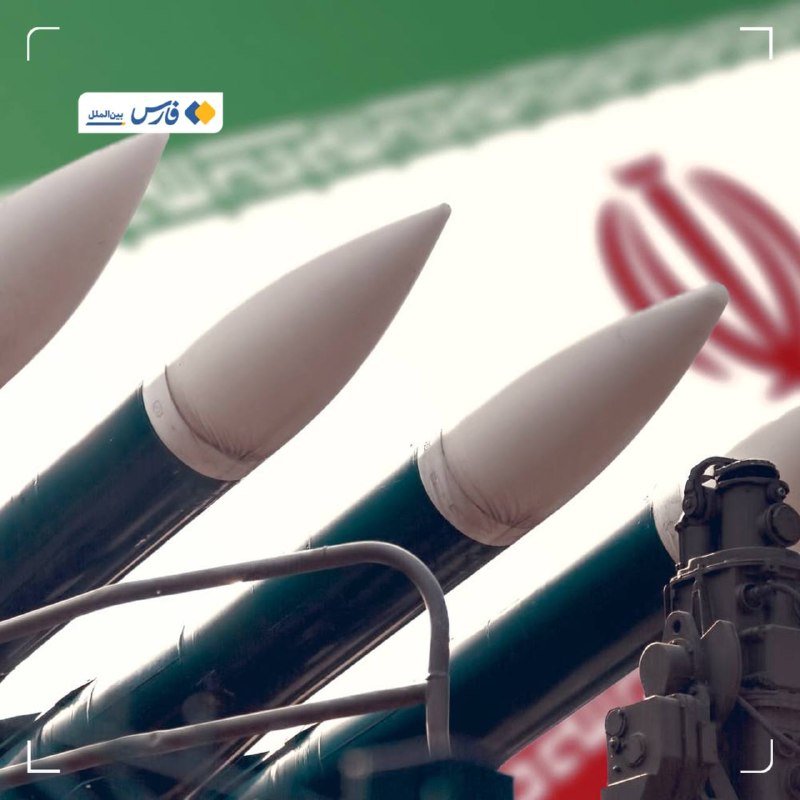
On the afternoon of 14 June 2026, Israeli television went into the kind of programming that signals something is moving at speed. Channel 14 and i24NEWS both reported, in the space of ten minutes, that Israel had formally assessed Iran would carry out a missile attack on Israeli territory in retaliation for an Israeli airstrike earlier in the day on Beirut's southern suburbs, the Dahiyeh — the same Hezbollah-stronghold district that has been a fixed feature of Israeli targeting for two decades. Israeli officials, according to the same reporting, raised the nationwide alert level and instructed senior security figures to heighten readiness for an incoming barrage from Iran.[^1][^2][^3]
The Israeli army's working assumption going into the Beirut strike, as reported by Army Radio, was that Iran would not respond. That assumption, in plain language, has aged badly inside a single news cycle.[^4][^5]
What is actually known
The factual spine of the afternoon is narrow but solid. On 14 June 2026, the Israel Defense Forces carried out a strike in the Dahiyeh, the southern suburb of Beirut that has functioned as Hezbollah's political and military headquarters since the 1990s. Israeli Army Radio reported, in framing picked up by open-source intelligence accounts, that the strike was authorised on the assessment that Iran would not strike back. Within hours, Israeli Channel 14 reported the opposite: that Iran was now expected to launch missiles at Israel. i24NEWS — Channel 15 in Israeli numbering — confirmed a raised alert level across the country.[^6][^7][^8]
Tasnim News, an Iranian state-affiliated outlet, reported that Israeli officials had moved to a heightened military and security posture, the kind of public-facing alert that doubles as a deterrent signal back toward Tehran.[^9]
That is the state of play as of 14 June 2026, 14:00 UTC. It is a snapshot, not a conclusion.
The assumption that broke
The most striking element of the reporting is not the strike itself. The Dahiyeh has been struck repeatedly since the start of the current conflict cycle. What stands out is the framing inside the Israeli security debate: that the strike proceeded on a calculation that Iran's restraint could be relied upon, and that within hours the same news channels were reporting that the calculation had been reversed.
This is a recurring failure mode in escalation management. When a state believes its adversary will absorb a blow without replying, the political cost of striking falls. When that belief proves wrong, the cost of striking rises sharply — and falls on civilians, not on the officials who made the bet. Beirut's southern suburbs are densely populated. The strike's downstream consequences are not abstract.
There is also a question of evidence. The claim that Iran will retaliate is currently sourced to Israeli media reporting on Israeli security assessments, not to any direct Iranian statement of intent. Iranian state outlets have framed the situation as a defensive posture on the Israeli side, not as a confirmation of an impending Iranian attack. The honest read is that an Israeli expectation of retaliation is now itself a fact on the ground — alert levels have been raised, populations in parts of Israel have been told to expect sirens — but the actual firing decision in Tehran has not been confirmed.
The Hezbollah variable
The Dahiyeh strike must be read against the longer Hezbollah-Israel exchange that has been running since 8 October 2023. Strikes in the southern suburbs have repeatedly been followed by cross-border fire into northern Israel; cross-border fire has repeatedly been followed by strikes in the southern suburbs. The escalatory ratchet has been visible for months. What today's reporting adds is the direct Iranian overhang: not just the Hezbollah-Israel local track, but the prospect of a direct Iranian-Israeli exchange, which would be qualitatively different from anything since April 2024.
Iranian messaging on the strike has so far been calibrated. Tasnim's framing — that Israel is the party in a state of alert — is the kind of language a state uses when it wants to keep its options open without committing to a specific response. That ambiguity is itself a signal: it leaves space for either a retaliatory strike, a Hezbollah-mediated response, or continued restraint, with the choice made at the moment that maximises political cost to Israel.
What is not yet known
Three things remain genuinely unclear. The first is the size and nature of any Iranian response — symbolic, calibrated, or full. The second is whether Hezbollah's role will be to act as Iran's forward line, as it has historically, or to step back and let any retaliation come directly from Iranian soil. The third is whether the United States, which has spent much of the past year trying to keep the Israel-Hezbollah front from being subsumed into a wider Israel-Iran war, will now become directly engaged in intercepting or deterring an Iranian launch.
The available reporting does not resolve any of these. What it does confirm is that the assumption of Iranian restraint, on which the Beirut strike was authorised, is no longer operative inside the Israeli decision-making process itself.
Desk note: Monexus has framed the strike and the alert as a single connected episode, with explicit sourcing caveats on the Iranian retaliation expectation. The Iranian state outlet Tasnim is cited for what it reports about Israeli posture, not as confirmation of Iranian intent. Western wire services have not yet been cited in the available thread reporting; the wire provenance for this article is Israeli and Iranian media, used symmetrically.
[^1]: Telegram / ClashReport, 14 June 2026, 14:08 UTC — reporting on Israeli Channel 14's assessment. [^2]: Telegram / Tasnim (English), 14 June 2026, 14:07 UTC — full-alert reporting. [^3]: Telegram / Intel Report (rnintel), 14 June 2026, 14:06 UTC — Israeli assessment of an imminent Iranian missile attack. [^4]: Telegram / GeoPolitics Watch, 14 June 2026, 13:49 UTC — Army Radio framing that Israel struck on the assumption Iran would not respond. [^5]: Telegram / Intel Report (rnintel), 14 June 2026, 12:50 UTC — same Army Radio framing. [^6]: Telegram / Intel Report (rnintel), 14 June 2026, 14:04 UTC — i24 alert-level reporting. [^7]: Telegram / Intel Report (rnintel), 14 June 2026, 14:05 UTC — i24 alert-level reporting. [^8]: Telegram / Intel Report (rnintel), 14 June 2026, 14:06 UTC — Channel 14 retaliation assessment. [^9]: Telegram / Tasnim (English), 14 June 2026, 14:07 UTC — framing of Israeli officials' heightened military and security posture.
Wire provenance
This editorial synthesis draws on the following public wire/social posts:
- https://t.me/ClashReport
- https://t.me/tasnimnews_en
- https://t.me/rnintel
- https://t.me/GeoPWatch
- https://t.me/rnintel
