Beirut strike, US-brokered pause: how the Israel-Iran frontier held for one weekend
An Israeli strike on Beirut's southern suburbs on 14 June 2026 was met not with an Iranian missile salvo but with a Trump-engineered de-escalation — and a quiet Netanyahu signal that the IDF has no plans to leave Lebanon.
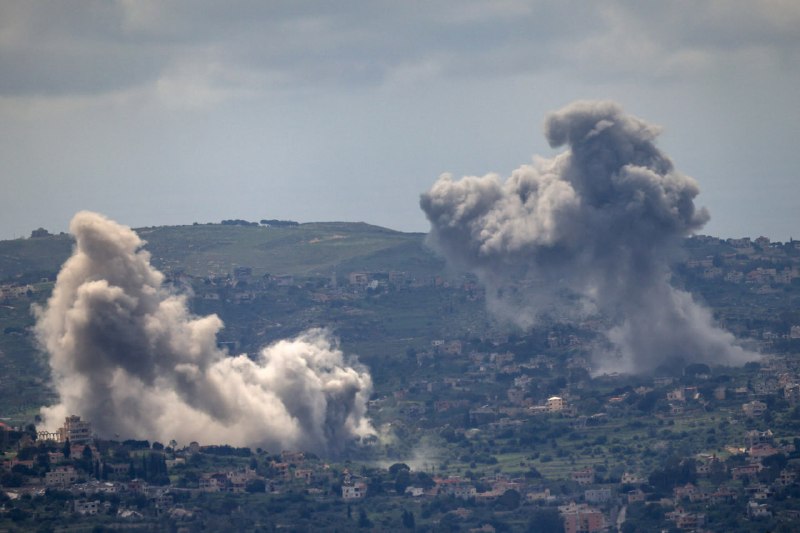
On the evening of 14 June 2026, a familiar pattern almost repeated itself. Israel struck targets in Beirut's southern suburbs, the densely populated Dahieh district that has served for two decades as the operational heart of Hezbollah's political-military machine. Within hours, Iranian state-aligned channels signalled that a retaliatory barrage was being readied. By 22:00 UTC, however, the picture had changed: Tehran announced it would hold its fire, citing last-minute US concessions — including, by multiple accounts, guarantees that Lebanon would be preserved as a separate item in the US-Iran arrangement currently being negotiated, insulated from any wider Israeli operation.
The episode, assembled in real time from wire channelling on Telegram, is best read as the first serious test of the diplomatic architecture the Trump administration has been quietly building with Iran since the spring. It is also a reminder that the war the headlines keep describing is not a single war but a stack of overlapping fronts — Gaza, Lebanon, the Iranian homeland, the Red Sea, the Iraqi militias — each with its own escalatory logic and its own off-ramp. The Israeli government, according to Hebrew-language reporting surfaced by Open Source Intel from Maariv, has signalled to Washington that the IDF will not be withdrawing from Lebanese territory and does not regard itself as bound by any Lebanon clause in the bilateral US-Iran understanding. That is the political fault line the next seventy-two hours will run along.
What actually happened on 14 June
The Israeli strike on Beirut's southern suburbs was the operative trigger. The Disclose.tv wire, replicating an initial X post at 21:58 UTC, summarised Iran's position in unusually explicit terms: Tehran would refrain from carrying out retaliation for the day's Israeli strikes in Beirut because of "last-minute concessions offered by Trump, including the preservation of Lebanon" — language that points to a face-saving formulation drafted in the gap between the strike and the Iranian response. The ClashReport channel carried a parallel framing at 21:55 UTC, noting that Iran had in fact cancelled negotiations and was preparing a strike against Israel in the immediate aftermath of the Beirut raid, before US engagement pulled the trajectory back from the edge.
The sequence matters. An Iranian retaliatory cycle was not merely threatened — it was, by the ClashReport account, actively stood down. That is a different category of restraint than a leader talking tough in public while doing nothing in private. It implies a working channel between Washington and Tehran that is sufficiently operational to deliver a specific concession (the Lebanon carve-out) in the hours between a strike and a counter-strike. The Open Source Intel channel, citing Maariv reporting relayed over X, added the second half of the picture: Prime Minister Benjamin Netanyahu informed President Donald Trump that Israel would not pull IDF forces from Lebanon and does not consider itself bound by the Lebanon clause in the US-Iran agreement. The two statements, read together, describe a deal that one of the principal local actors does not accept.
The Lebanon clause, and why Israel is uneasy
What the "Lebanon clause" actually contains remains opaque in the public reporting available on 14 June. The shape that can be inferred from the wire language is narrow: a US-brokered understanding that preserves Lebanese state sovereignty and territorial integrity as a separate negotiating item, distinct from the broader file on Iran's nuclear programme, missile inventory, and proxy network. For Tehran, the clause is a hedge. It allows the Islamic Republic to climb down from the Beirut escalatory cycle without appearing to abandon a frontline ally; the framing becomes "we de-escalated to protect Lebanon," not "we were deterred."
For Israel, the same clause is read as a ceiling. Israeli security planners have spent eighteen months systematically degrading Hezbollah's capacity to project conventional firepower into northern Israel. A US-Iran understanding that effectively freezes the IDF in place in southern Lebanon, even temporarily, undoes the strategic dividend of that campaign. The Netanyahu signal to Trump — "not bound" — is therefore not a tactical quibble. It is a public marker that Jerusalem reserves the right to continue kinetic operations inside Lebanon regardless of what Washington and Tehran agree.
Why Tehran held its fire
The structural explanation for Iranian restraint is straightforward. The Islamic Republic entered the June 2026 cycle materially weaker than it was a year ago. Its proxy ring has thinned: Hezbollah's command structure has been hit, the Iraqi militia corridor has been compressed by repeated Israeli operations, and the Houthi deterrent in the Red Sea, while persistent, has not produced the strategic leverage Tehran needs in a nuclear negotiation. Striking Israel in response to a Beirut strike would have produced a guaranteed second Israeli cycle, almost certainly inside Iran itself, and the regime's calculus under those conditions is to consolidate rather than to escalate.
The second explanation is the diplomatic one. The US-Iran track has been moving. A retaliatory strike would have ended it, at least for the duration of the cycle. By holding fire in exchange for a written or verbal Lebanon concession, Tehran keeps the channel with Washington open and gives the Iranian negotiating team a tangible deliverable to show the Supreme National Security Council. Both explanations probably hold simultaneously; the regime is acting on multiple motives at once.
The structural frame: a managed frontier, not a peace
What the 14 June episode reveals, when stripped of its wire drama, is a managed frontier rather than a settlement. Three structural features are worth naming in plain terms. First, the United States has re-established itself as the indispensable escalatory manager on the Israel-Iran axis. The leverage that produced the Lebanese pause was not Israeli, not Iranian, and not Lebanese; it was American. The pattern — strike, threatened counter-strike, US de-escalation call, last-minute concession, public face-saving formulation — is the same one that ran through the April-May 2026 negotiations over the Strait of Hormuz and the earlier exchange over the Fordow enrichment facility.
Second, the local parties retain wide freedom of action within the managed frame. Israel is signalling that it will continue to operate inside Lebanon. Iran is signalling that it retains the option to retaliate, and that any future restraint will again require a specific concession. Lebanon itself is the absent actor in the public record; Beirut is the site of the strike and the subject of the concession, but its government has no documented role in the diplomacy that decided its airspace. That asymmetry is the deepest source of fragility in the arrangement.
Third, the Iran file and the Lebanon file have been formally separated in this round, and that separation is itself a concession to Tehran. The Iranian negotiating position has long been that the proxy network is not a bargaining chip but a strategic asset. By moving Lebanon out of the main deal and into a side understanding, Washington has effectively conceded the framing Tehran wanted: Lebanese sovereignty is a stand-alone item, not collateral in a nuclear negotiation.
What remains contested, and what to watch
Three uncertainties will define the next seventy-two hours. The first is whether Israel acts on its stated refusal to be bound. A further IDF operation inside Lebanon — even a limited one — would invalidate the Iranian climb-down in real time, and Tehran would then face the choice between honouring its public restraint or matching the Israeli escalation. The second is whether the Trump administration can convert the verbal Lebanon concession into a written, verifiable arrangement. Verbal understandings between Washington and Tehran have a poor survival record; the question is whether this one gets the institutional weight of a side letter, a UN Security Council reference, or a Qatari-Omani guarantorship. The third is the Hezbollah response. The Iranian announcement speaks for the Islamic Republic, not for the party that actually absorbed the Beirut strike; the political-military calculus in Dahieh is its own.
The reader should also hold a measured view of the evidence itself. The reporting assembled on 14 June comes primarily from channels that aggregate wire, X posts, and Telegram traffic. The Iranian statement of restraint is paraphrased, not on the record from a named spokesperson. The Netanyahu signal to Trump is reported by Maariv via Open Source Intel, with the usual aggregation lag. None of the three — the Iranian statement, the Israeli rejection, the US concession list — has yet been confirmed in a primary on-the-record press conference by the principals. The shape of the day is real; the precise wording is provisional.
The stake
The 14 June pause is not a peace. It is a deferral purchased at a specific price — Lebanese sovereignty written into the US-Iran text, Israeli operational freedom rhetorically preserved, Iranian dignity publicly intact. Each of those three prices will be contested in the days ahead. The structural risk is that the managed frontier holds just long enough to deliver a wider US-Iran framework, at which point Israel will face the choice of accepting constraints it has already publicly rejected, or of acting unilaterally and forcing Washington to choose between its Iranian negotiation and its Israeli partner. That is the choice the next round of strikes — whenever they come — will be aimed at producing.
For now, the line held. The history of this corridor is that lines hold until they don't, and the people who live under them pay the cost of the holding. The wire channelling of 14 June captured a moment of restraint. Whether it is the start of a process or merely the pause between two rounds is a question the next seventy-two hours will answer.
How Monexus framed this: the wire carried a strike, a threatened counter-strike, and a US-brokered de-escalation. We treated the Israeli signal of non-acceptance and the Iranian statement of restraint as two halves of the same story, and held the Lebanese government — the absent actor — in the frame throughout.
Wire provenance
This editorial synthesis draws on the following public wire/social posts:
- https://t.me/osintlive
- https://t.me/ClashReport
- https://t.me/ClashReport
- https://t.me/disclosetv
- https://t.me/disclosetv
- https://t.me/osintlive
- https://t.me/disclosetv
Follow the event.
These dated source records provide context. They do not retrospectively verify this archive article.
Separate what the nuclear watchdog reported from what it could not determine after the June 2025 strikes.