Israel strikes Beirut's Dahieh after Hezbollah rocket fire into northern Israel
Israeli warplanes hit a building in Beirut's southern suburbs on 14 June 2026 hours after Hezbollah rocket fire struck northern Israel, in the sharpest round of cross-border escalation in months.
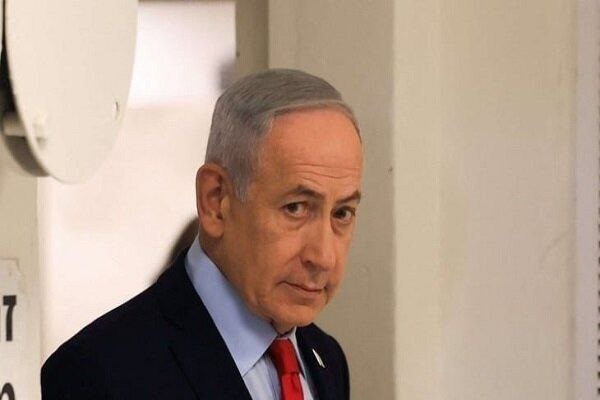
The Israeli Air Force struck a building in the southern suburbs of Beirut on the morning of 14 June 2026, hours after Hezbollah fired rockets into northern Israel. The exchange marks the most serious round of cross-border fire between Israel and the Iranian-backed Lebanese group in months, and it pulls a tinderbox that has been smouldering since the November 2024 ceasefire back into open kinetic action.
What is unfolding in Dahieh is not a single strike but a sequence: rocket launches from south Lebanon into Israeli territory, an Israeli cabinet statement framing the response, and an air campaign against what the IDF says are Hezbollah infrastructure targets in the densely populated suburb that serves as the group's main urban stronghold. The escalation is being narrated by both sides as defensive. The civilians on the receiving end of either narrative have no leverage over which one prevails.
The sequence on the ground
The cross-border fire began in the morning of 14 June 2026. According to Israeli-aligned geopolitical channels tracking the exchange, the Israeli Air Force carried out an airstrike on a building in the southern suburbs of Beirut in direct response to Hezbollah rocket launches into northern Israel earlier the same day. Israeli Prime Minister Benjamin Netanyahu's office publicly framed the Beirut operation as a response to "Hezbollah's firing toward Israeli territory," language echoed across official and semi-official Israeli channels.
The IDF subsequently released footage it said showed the strike, with the target described as "Hezbollah infrastructure." Israeli Channel 12, cited in Telegram traffic from the GeoPWatch account, added further operational detail, though specifics of which unit was struck, and the identity of any casualties, had not been independently verified by the time of writing. The suburb struck — Dahieh — is the same district that absorbed the bulk of Israeli firepower during the 2024 campaign, and its reconstruction since the ceasefire has been widely viewed as a stress test of the November 2024 arrangement brokered under United States and French auspices.
The Hezbollah framing
Hezbollah's own messaging, distributed through the group's al-Manar television and aligned outlets, presents the rocket fire as a duty owed to the broader "axis of resistance" rather than as a unilateral provocation. The framing ties the launches to the war in Gaza, to periodic exchanges of fire at the Lebanon-Israel frontier, and to what the group describes as unfinished Israeli violations of Lebanese sovereignty. None of that is original; it is the standard Hezbollah script when its arsenal is activated.
What is notable is the timing. The November 2024 ceasefire was premised on the disarmament of Hezbollah positions south of the Litani River and on a quiet, calibrated deterrent posture north of it. Each round of rocket fire since has tested that arrangement, and each Israeli response has been calibrated in turn — a kinetic tit-for-tat that has, until now, stopped short of the kind of urban strike the IDF has now conducted in Dahieh. The fact that the Israeli cabinet chose to escalate into the southern suburbs suggests that the threshold for what Tel Aviv considers proportionate has shifted.
The structural pressure
Cross-border exchanges between Israel and Hezbollah do not occur in a vacuum. Three structural pressures are bearing on the 14 June sequence, and they help explain why a single morning's rocket fire produced an airstrike on a Beirut suburb rather than the more usual artillery exchange along the frontier.
The first is the slow-motion collapse of the deterrence equation that the 2024 ceasefire tried to install. Hezbollah's claimed reconstituted rocket and drone production has, according to Israeli intelligence officials speaking in background briefings to wire services over recent months, restored the group to a posture closer to its pre-war arsenal than to the disarmed south-of-Litani posture the agreement envisaged. Israel, on its side, has refused to withdraw from positions it has held in southern Lebanon since the 2024 campaign ended. The November deal is being honoured more in form than in substance, and the friction that creates shows up first at the border.
The second is the regional weather. Hezbollah's political and military patrons in Tehran are absorbed by their own confrontation with Israel and the United States, and the Lebanese group has limited room to escalate without dragging its patron into a wider war. That calculation cuts both ways: it also reduces the cost to Israel of a sharp response, because the odds of a full Iranian intervention in defence of Dahieh are judged, in Tel Aviv, to be lower than at any point since October 2023.
The third is the Lebanese state. Beirut's army and internal security services are not in a position to assert control over Dahieh, and the country's caretaker government is, at the time of writing, still navigating a presidential vacuum. A strike on Hezbollah infrastructure in a Beirut suburb is, in effect, a strike on territory the Lebanese state cannot defend and cannot be expected to police.
What is not yet known
The most important caveat is the one the wire services are already flagging: casualty figures, the identity of the building struck, and the operational purpose attributed to it by each side have not been independently verified. Initial reporting on Israeli strikes inside Dahieh has, in past rounds, been overtaken within hours by the IDF's own readouts and by Lebanese civil defence figures. The pattern of this exchange — Israeli official statements, Channel 12's operational details, and the IDF's release of strike footage — is consistent with an Israeli message-discipline effort rather than with full transparency.
Three things are worth watching over the next 24 to 72 hours. First, whether Hezbollah responds with a second salvo. The group's standing doctrine is to escalate, not absorb, and a quiet afternoon in northern Israel after a Dahieh strike would be the surprise. Second, whether the UN Special Coordinator for Lebanon and the ceasefire monitoring mechanism, which has been largely dormant since the November 2024 deal, is reconvened in any form. Third, whether the Lebanese government issues more than a perfunctory condemnation. The political space for Beirut to do more than protest is, given the country's paralysis, extremely narrow.
The structural picture is straightforward, even if the immediate one is not. The 2024 ceasefire was always a holding pattern, not a settlement, and the pattern it has held is the one that produced 14 June: a steady drumbeat of probe-and-response that occasionally, when one side judges the cost of escalation to be tolerable and the cost of restraint to be higher, breaks into open fire. Sunday's exchange fits that pattern. The harder question is whether it ends there.
This article will be updated as the IDF publishes further operational detail and as casualty figures from Lebanese civil defence become available.
Wire provenance
This editorial synthesis draws on the following public wire/social posts:
- https://t.me/AMK_Mapping
- https://t.me/DDGeopolitics
- https://t.me/osintlive
- https://t.me/GeoPWatch
- https://twitter.com/Faytuks/status/2066109495516754064
Follow the event.
These dated source records provide context. They do not retrospectively verify this archive article.
Separate what the nuclear watchdog reported from what it could not determine after the June 2025 strikes.