Jordan's two-minute scare: what an unexplained siren tells us about the region's information disorder
On 14 June 2026, sirens sounded in Jordan for roughly ten minutes. The cause was never explained, the alarm was declared false, and the silence afterwards is the real story.
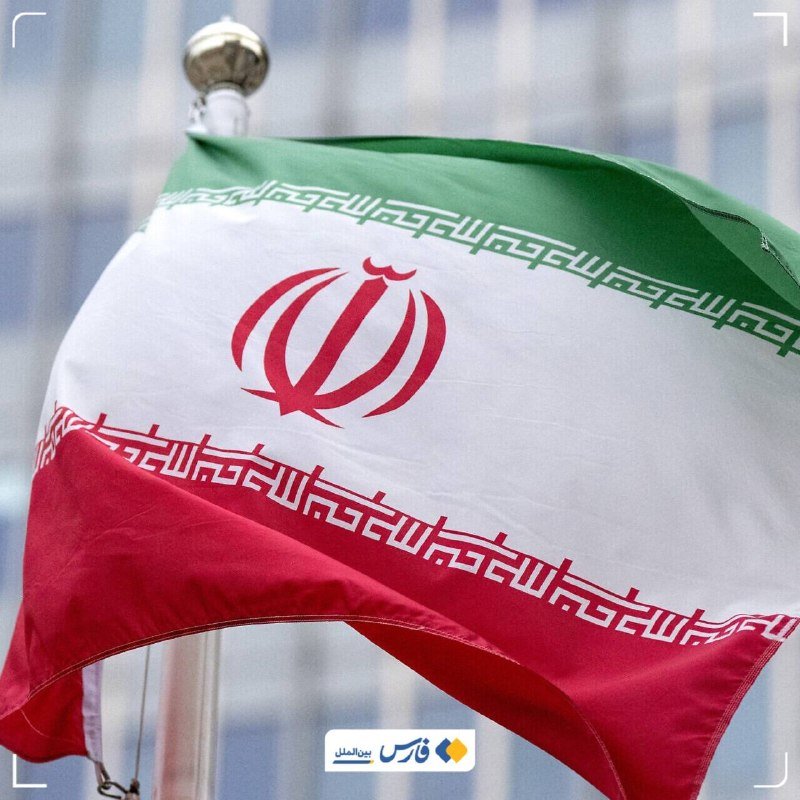
At 02:35 UTC on 14 June 2026, two Telegram channels in the Middle East monitoring beat reported a near-simultaneous event: sirens sounding somewhere in Jordan, with no immediate explanation. Within roughly ten minutes, one of those channels — Middle East Spectator — had retracted, posting a follow-up that read, in full: "It was a false alarm." The original alert from Al-Alam Arabic, citing Reuters on Jordanian television, had been more emphatic: "🔴 Urgent | Sirens sound in Jordan." The Iranian outlet Jahan Tasnim, writing in English around the same moment, hedged — "The cause is unclear," it noted, while attributing the underlying report to Reuters and the Russian state agency Sputnik, both of which were said to be quoting Jordanian TV.
That is the entire factual record this publication can verify, and it is worth stating plainly: a country-wide alert infrastructure fired for about ten minutes, the cause was not disclosed, the retraction was made through social-media channels rather than an official Jordanian statement we can cite, and the international wires named as original sources — Reuters and Sputnik — have not, on the public record we can see, published standalone stories confirming the initial activation. The story, in other words, is less about a siren and more about the pipeline that carried the siren to a global audience before anyone knew whether it was real.
The shape of the ten minutes
Reading the three Telegram items in sequence is itself a study in how an unverified event moves. The Al-Alam Arabic post, timestamped 02:45 UTC, is the loudest — the red "Urgent" tag, the claim attributed to Reuters, the implicit suggestion that something is happening that the reader needs to act on. Middle East Spectator's post, four minutes earlier at 02:35 UTC, is the most cautious: it notes the sirens, flags the cause as unclear, and then — crucially — appends a correction in the same thread identifying the event as a false alarm. Jahan Tasnim, the Iranian outlet, sits in between, picking up the Reuters-and-Sputnik framing and reproducing it with the same uncertainty language Middle East Spectator had already moved past.
What this sequence shows is that the first version of a regional security event in 2026 is rarely the version produced by a wire service with a bylined correspondent on the ground. It is produced by partisan or state-adjacent channels that repackage each other's reporting, often within minutes. The wire names — Reuters, Sputnik — function less as citations than as legitimacy tokens attached to an underlying claim that may or may not have been independently verified.
What the wires did and did not say
The middle thread, Jahan Tasnim's, is the most revealing on this point. It attributes the siren report to "Reuters and Sputnik news agency, quoting Jordanian TV." Neither agency has, in the public-facing English-language coverage we can locate as of this article's publication, posted a story confirming that Jordanian state television broadcast an initial report of sirens. The two named sources may well have done so on their Arabic-language or Russian-language wires — Reuters operates a substantial Arabic service, and Sputnik's regional feeds are a routine vector for this kind of aggregation. But the absence of an English-language byline means the most-cited "primary sources" in the chain are themselves citing, not reporting.
This is the structural feature worth naming. When a Middle East event breaks on a weekend overnight, the English-language wire ecosystem is thin, the Arabic-language and Russian-language wires are more active, and the Telegram channels that consume them operate on a speed curve that outruns verification. The result is that a ten-minute false alarm in Jordan can briefly look, to a reader skimming Telegram at 02:40 UTC, like a regional security crisis — with all the reflexive escalation that implies.
The pattern underneath
Three things are notable about how this episode fits into a longer arc. First, the Jordanian state — a monarchy with a sophisticated public-communications apparatus and a well-developed civil-defence system — is conspicuous by its absence from the thread. The retraction came not from Amman but from a Telegram channel (Middle East Spectator) that, while credible, is not an official source. Second, the Iranian state-adjacent channel (Jahan Tasnim) is the only one in the trio that did not bother to update its initial post with a false-alarm note within the window of the thread. Third, the channels most inclined to lead with the most alarming version of an event are, in this case, the channels with the thinnest editorial verification process — Telegram aggregators repackaging each other's repackaging of a wire quote.
This is not a uniquely Middle Eastern problem. It is the texture of crisis reporting in 2026, where the marginal cost of publishing is zero, the marginal cost of correcting is non-trivial, and the audience for the alarming version is structurally larger than the audience for the correction. Jordan's two-minute scare is too small to count as a crisis. It is large enough to count as a diagnostic.
What remains uncertain
The thread context does not specify where in Jordan the sirens sounded. It does not identify the civil-defence authority involved. It does not give a cause, even a tentative one (malfunction, drill, Israeli-airspace overflight triggering a cross-border alert, regional spillover from another theatre). It does not confirm or deny whether Jordanian state television ever carried the initial report attributed to it. Each of those gaps is, in itself, unremarkable for a ten-minute false alarm in the middle of the night. Taken together, they are the reason the event is a story at all.
Desk note: Monexus has chosen to lead this piece on the information ecosystem rather than on the sirens themselves because the only verifiable facts — the timestamps, the false-alarm retraction, the wire-aggregation chain — are about how the event travelled, not about what happened on the ground. The sources for any further detail are the Jordanian Public Security directorate and Reuters's Amman bureau, neither of which has, on the public record available at publication, released a stand-alone statement.
Wire provenance
This editorial synthesis draws on the following public wire/social posts:
- https://t.me/alalamarabic
- https://t.me/Middle_East_Spectator
- https://t.me/JahanTasnim