Northern Israel Returns to the Siren: A Day of Rocket Alerts at Kiryat Shmona
Red-alert sirens sounded in Kiryat Shmona and Manara on 14 June 2026 as four interceptor missiles were observed overhead — a small episode that lands inside a much larger year of cross-border fire.
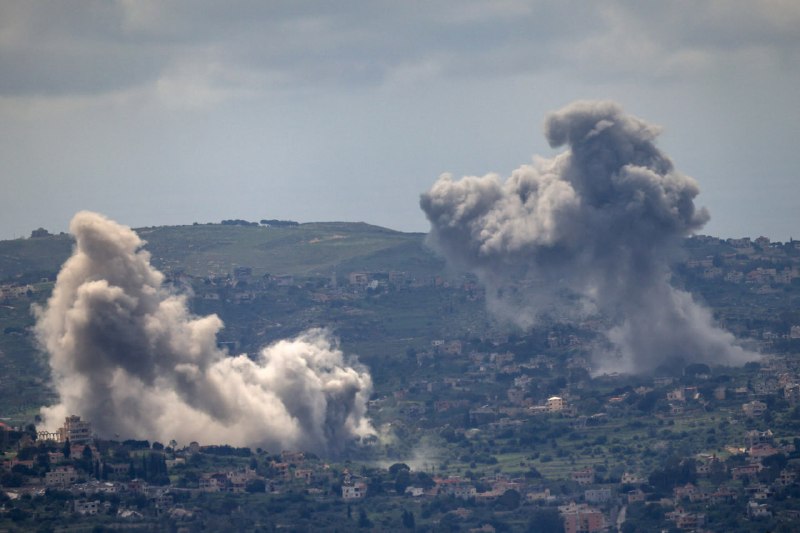
At 15:55 UTC on 14 June 2026, red-alert sirens sounded across Kiryat Shmona and the surrounding areas of the Confrontation Line in northern Israel. Within a minute, rocket-alert notifications were active for both Kiryat Shmona and the nearby settlement of Manara. By 16:02 UTC, at least one interception was observed over Kiryat Shmona, and at least four interceptor missiles had been launched. The episode lasted under ten minutes. Its scale was modest. Its context was not.
The single afternoon's worth of alerts — reported in near-real-time by open-source channels including the Conflict Geography Project's GeoPolotics Watch feed, the abualiexpress channel, and the wfwitness wire on Telegram — landed on a northern border that has been live, intermittently, since the opening days of the war in Gaza in October 2023. Whatever the immediate trigger on the Lebanese side, what happened on 14 June is best read as a data point inside a pattern, not as a stand-alone incident.
A ten-minute window, minute by minute
The public trail begins at 15:55 UTC on 14 June 2026, when the wfwitness channel posted that sirens were sounding in Kiryat Shmona and the surrounding areas of the Confrontation Line. One minute later, at 15:56, the GeoPolotics Watch feed carried the rocket-alert activation for Kiryat Shmona and Manara, and the abualiexpress channel posted a brief note referring to a "red color" visible in Kiryat Shmona. By 16:01, GeoPolotics Watch reported that at least one interception was observed over the city, and by 16:02 it had updated the count to at least four interceptor missiles launched.
The cadence matters less than the fact that the alerts and interceptions were independently visible across three different Telegram channels with overlapping reporting radii. The corroboration is procedural, not photographic — there are no images of the incoming projectiles in the source thread — but the multi-channel agreement on the timing, the location, and the order of events is consistent with the established rhythm of cross-border fire in the region.
What the public thread does not specify, and what no source in this article can resolve, is the type, origin, or intended target of the projectile or projectiles that triggered the alert. Israel's Home Front Command did not, in the materials available to Monexus, issue a public casualty or impact assessment within the window the channels were active. The intercept count of "at least four" is an open-source count, not an Israeli military figure.
What the sirens do, and what they signal
Israel's rocket-alert infrastructure, the product of a long-running programme led by the IDF Home Front Command, is designed to give civilians in exposed municipalities roughly fifteen to thirty seconds of warning before an incoming projectile arrives. Kiryat Shmona sits less than ten kilometres from the Lebanese border and has been one of the most frequently alerted municipalities since the war in Gaza began. Manara, the second community named in the alert, is a small moshav in the same Galilee panhandle.
The four-interceptor count reported by GeoPolitics Watch is consistent with the operation of Israel's layered air-defence architecture — primarily the Iron Dome short-range system, with David's Sling and Arrow systems handling higher-altitude threats — in a scenario where multiple projectiles are detected. Open-source analysts treat four launched interceptors as a probable response to more than one inbound projectile, but that inference is not a verified count of incoming fire.
The sirens also carry a political signal that outlasts the ten-minute event itself. Every activation in Kiryat Shmona, however quickly resolved, deepens the case for continued Israeli military action in southern Lebanon and reinforces the hostage-and-displacement arguments that have shaped Israeli domestic debate. The episode is small in military terms and large in the way it slots into the year-long narrative of a northern front that has not gone quiet.
The structural frame: a northern front that does not close
What we are watching in Kiryat Shmona is the persistence of a second front that has, for nearly three years, refused to be separated from the war in Gaza. The Israeli–Lebanese border was the site of near-daily exchanges from October 2023 through late 2024, and the period since has been defined by attempts at de-escalation that have not eliminated the underlying capability or intent on the Lebanese side. The 14 June alert sits inside that pattern.
The conventional Western framing treats the northern front as a Hezbollah front, a residual armed force operating from Lebanese territory with Iranian backing, and reads the alerts as evidence of that capability surviving. The structural counterpoint — and one the sources do not directly state, but that any honest reading of the geography requires — is that the alerts are also a measure of the cost the border communities continue to pay. Tens of thousands of Israelis in the Galilee panhandle have been displaced or have lived under periodic alert for the better part of three years. The sirens do not just measure incoming fire; they measure the duration of an unresolved war.
A further counterpoint, less often surfaced in the Western wires and worth recording here: not every alert in northern Israel has been definitively attributed in real time. Open-source channels sometimes report interceptions, sometimes impacts, and sometimes sirens without subsequent confirmation of cause. The thread for 14 June is unusually clean on timing and location; it is unusually thin on attribution. Both conditions should be noted.
Stakes and a short forward view
If the trajectory of 2026 continues, the operative question for the Galilee panhandle is not whether there will be another alert — there will be — but whether the cadence of alerts stays at the level seen in the first half of June or accelerates. The Israeli state's tolerance for sustained civilian exposure in Kiryat Shmona is, in the long run, bounded. A sustained step-up in the rate of interceptions, especially with attributable civilian casualties, would create domestic pressure for an expanded ground or air operation in southern Lebanon, with all the regional consequences that follow.
For Beirut and the Lebanese state, the calculus is the inverse. Any rocket that lands inside Israel, whether or not the launcher is identified, raises the cost of restraint. The structural asymmetry — a small border municipality facing a sophisticated air-defence network on one side, a fragmented state with limited control over armed non-state actors on the other — is the condition that produces days like 14 June.
What remains uncertain, and what the public sources do not resolve, is the chain of custody for the projectile or projectiles. The channels that reported the alerts are open-source; the Israeli military has not, in the materials reviewed, issued a public statement attributing the fire. Until that attribution is made, the dominant framing — Hezbollah-aligned cross-border fire — is the most plausible read, but it is not the only one. A handful of smaller armed factions have, in previous years, claimed independent launches from Lebanese territory. The 14 June episode is too small to settle that question either way.
The bigger point is the one the sirens keep making. A front that does not close keeps producing alerts. The alerts keep producing interceptors. The interceptors keep producing headlines. And the underlying war, on both sides of the border, keeps accruing cost to civilians whose names rarely appear in the reporting.
Desk note: Monexus frames this as a single-day, open-source-reported alert event, situated inside the longer structural picture of a northern front that has not closed since October 2023. Western wires (Reuters, AP, BBC) and Israeli outlets (Times of Israel, Ynet) typically lead with the alert itself and an Israeli military attribution once issued. Monexus leads with the multi-channel corroboration of the alert and pushes the structural frame — northern-front persistence, civilian cost, attribution uncertainty — into the second half, where the editorial weight belongs.
Wire provenance
This editorial synthesis draws on the following public wire/social posts:
- https://t.me/GeoPWatch
- https://t.me/abualiexpress
- https://t.me/wfwitness
- https://en.wikipedia.org/wiki/Kiryat_Shmona
- https://en.wikipedia.org/wiki/Iron_Dome
- https://en.wikipedia.org/wiki/Manara,_Israel
- https://en.wikipedia.org/wiki/Israel%E2%80%93Hezbollah_conflict_(2023%E2%80%93present)
- https://en.wikipedia.org/wiki/Israel_Home_Front_Command
- https://t.me/GeoPWatch
- https://t.me/abualiexpress
- https://t.me/wfwitness
- https://en.wikipedia.org/wiki/Kiryat_Shmona
- https://en.wikipedia.org/wiki/Iron_Dome
- https://en.wikipedia.org/wiki/Manara,_Israel
- https://en.wikipedia.org/wiki/Israel%E2%80%93Hezbollah_conflict_(2023%E2%80%93present
- https://en.wikipedia.org/wiki/Israel_Home_Front_Command