Kyiv under ballistic fire: what a single Saturday-night barrage tells us about the trajectory of Russia's strike campaign
Six Telegram posts from the evening of 14 June 2026 show nine ballistic projectiles converging on Kyiv from Crimea. The pattern — not the count — is the story.
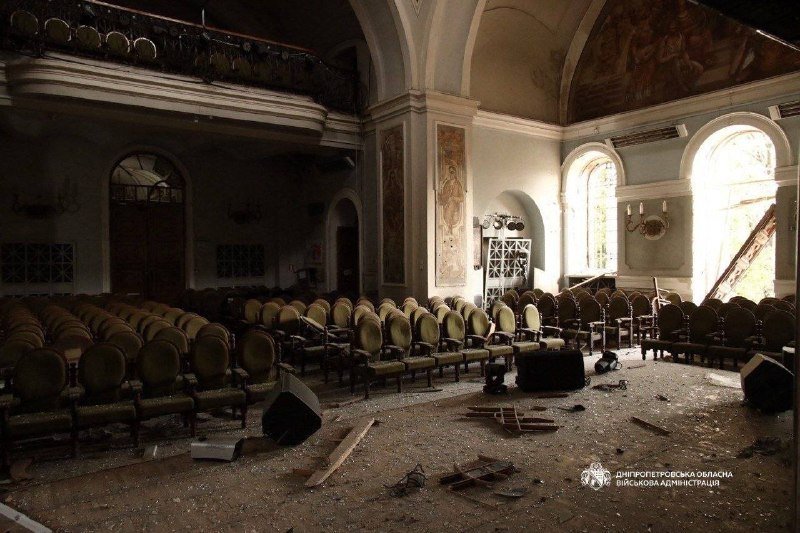
The first Telegram alert landed at 22:23 UTC on 14 June 2026. A channel that monitors Ukrainian air-defence chatter warned of incoming ballistic missiles bound for Kyiv. A second followed within a minute, then a third, then a fourth. By 23:09 UTC, the same network of channels was reporting that projectiles had reached sixteen locations inside the capital, with follow-on salvos — described as Zircon-type cruise missiles launched from occupied Crimea — still in the air. Across roughly forty-six minutes, the city's defenders had to engage what the open-source record now describes as nine distinct ballistic arrivals, with cruise missiles on approach.
This is the new normal. The salient fact is not the count of a single night but the cadence and the geography: launches from Crimea, an azimuth over southern Ukraine, an inbound profile that ends in the capital. Kyiv's defenders have been here before, often within the same week, but the consolidation of a Crimean launch axis onto a single metropolitan target is a tactical pattern worth naming — and worth pushing back against the loose Western habit of treating each barrage as an isolated news event.
What the open-source record actually shows
Five of the six items in the cluster under review are from channels that track Ukrainian air-defence activity in near-real-time: TSN's economic bulletin, war_monitor, vanek_nikolaev, and the Unian-affiliated network. The sequence is unusually dense. At 22:23 UTC a ballistic-missile warning is issued for Kyiv. At 22:24 UTC a second alert follows from the same direction. At 23:03 UTC a separate channel reports the descent of what it calls the ninth ballistic projectile of the night onto the capital. At 23:05 UTC two more launches are recorded from Crimea, this time described as Zircon-class cruise missiles, with the same flight corridor as the earlier salvos. At 23:09 UTC the consolidating alert — arrivals confirmed at sixteen points in Kyiv, more on the way — closes the window. The sixth item in the cluster, a TSN economic bulletin about Kyiv salaries, is not about the strikes at all; it merely shares the timestamp. That detail matters: the city's routines, including its labour market, are continuing underneath the barrage, not paused because of it.
The channels doing the reporting are not official sources. They are volunteer trackers whose credibility varies, and whose location claims, location counts, and weapon-type labels are best treated as a real-time sensor network rather than as a definitive accounting. The Ukrainian Air Force, the country's military intelligence directorate, and Western wire services had not, as of the cluster's last timestamp, published a corroborated count of impacts, intercepts, or launch platforms. The information environment of an active air campaign is precisely the environment in which the most disciplined caveat work is most needed.
The pattern underneath the pattern
The Western wire default for a night like this is to count projectiles, to source a casualty or damage figure, and to file it. That is not wrong, but it is incomplete. Three structural features deserve equal weight.
First, the launch axis. Crimea gives the Russian air force and navy a forward operating base within a few hundred kilometres of Kyiv — closer, in the case of the hypersonic-class Zircon, than almost any other missile in the inventory to almost any other Ukrainian target. The Crimea-to-Kyiv azimuth is the cheapest shot the Russian side can take at the country's political centre, and the cheapest shot is the one most often taken. The open-source record, even in a single-night snapshot, supports the broader Western and Ukrainian intelligence assessment that the bulk of Russian deep strikes on Kyiv are now originating from the peninsula, not from ships in the Black Sea or from long-range aviation.
Second, the mixed salvo. Ballistic missiles and cruise missiles in the same air-defence engagement is no longer unusual. It is a designed tactic, and it is the reason Ukrainian air-defence commanders and their Western suppliers keep talking about layered interception rather than single-system miracles. Ballistic projectiles arrive on a steep, fast trajectory; cruise missiles arrive low, slow, and manoeuvre. Defending a metropolitan airspace against both in a single night taxes every available system, including the mobile groups that operate the IRIS-T, NASAMS, and Patriot batteries that European and American taxpayers have funded. The trackers' record from 14 June reads less like one attack and more like an integrated exercise.
Third, the duration. Forty-six minutes of repeated alerts is not a one-off; it is a stress test. It is also the kind of night on which a single miscalculation, a single failed intercept, a single late siren can produce the casualty toll that will define the next news cycle. Russian doctrine appears to be converging on a model in which volume, variety, and repetition are intended to exhaust the defender faster than the defender can be resupplied. The Ukrainian and Western policy response — accelerating interceptor production, funding European equivalents of Patriot, and integrating F-16 contributions into the air-policing picture — is, in effect, an argument about how sustainable that doctrine is on the Russian side.
The framing Ukraine is not getting
There is a second, less comfortable story underneath. Western coverage of nights like this tends to treat the strikes as weather — an atmospheric event to be reported and moved past. The more honest framing is that the people sleeping in the sixteen locations that the trackers identified on 14 June, and the people sleeping in the locations the trackers will identify the next time this happens, are paying a cost that is not captured in the casualty ledger when no one is hurt. The strikes on Kyiv's energy grid in earlier phases of the war produced a domestic and international vocabulary for that cost; the strikes on Kyiv itself, with conventional high-explosive warheads, are producing a quieter one. A city that has to keep working, that has to keep running an economy sophisticated enough for an economist to be invited onto prime-time news to discuss real wages, is also a city that has to keep doing both of those things while the next ballistic warning sounds. The economic bulletin sharing the timestamp with the strike alerts is, in that sense, the most informative data point in the entire cluster.
There is also a counter-frame that deserves airing. The argument inside some Western and Russian-aligned commentary that Kyiv's air-defence performance is degrading, and that these salvos are evidence of attrition, is one reading. The argument inside the Ukrainian general staff and its Western partners is the opposite: that the city's defences are absorbing salvos that, a year ago, would have produced many more confirmed impacts, and that the percentage of projectiles intercepted, while not public, is high enough to justify continued investment. Both readings rest on evidence the open-source record cannot fully resolve. The honest position is to name both, and to say which one the trend data, in the public domain, most supports.
What the next forty-six minutes will look like
The forward view is uncomfortable and is best stated plainly. The Crimean launch axis is not going away. The mixed salvo is the doctrine the Russian general staff has settled on for the foreseeable future. The Ukrainian air-defence picture will continue to depend on the cadence of Western resupply, on the integration of new interceptor lines, and on the tolerance of European publics for funding a defence-of-Kyiv effort that produces more nights like 14 June than fewer. Kyiv's economy, the city's routines, the salaries the TSN bulletin was reporting on — all of that continues. So does the barrage. The news cycle will move on; the city will not.
What the sources do not specify, and what the open record cannot resolve, is the exact composition of the salvo, the precise launch platform for the Zircon-class descriptions, and the official Ukrainian count of impacts versus intercepts. The trackers are useful; they are not authoritative. A reader who treats any of the figures above as a final accounting is reading past the caveats. A reader who treats the cadence, the axis, and the mixed-salvo pattern as the story is reading the cluster correctly.
Desk note: Monexus treats nights like 14 June as a single tactical event inside a documented campaign pattern, not as a series of disconnected alerts. The wire default of counting projectiles and filing is reported here, but the framing lane runs deeper: the Crimea-to-Kyiv axis, the mixed salvo, and the city's economic continuity underneath the strikes.
Wire provenance
This editorial synthesis draws on the following public wire/social posts:
- https://t.me/uniannet
- https://t.me/vanek_nikolaev
- https://t.me/war_monitor
- https://t.me/vanek_nikolaev
- https://t.me/vanek_nikolaev
- https://t.me/TSN_ua
Follow the event.
These dated source records provide context. They do not retrospectively verify this archive article.
A dated voting record is evidence of one decision. Use the original UN record before turning it into an alignment label.
Visual explainer · historical vote of 2022-03-02 →