Kyiv's Long Arm: What Yaroslavl Tells Us About the Next Phase of the War
Ukraine just hit an oil refinery 750 kilometres from its border. The escalation calculus has changed, and Moscow's fuel economy is now a frontline target.
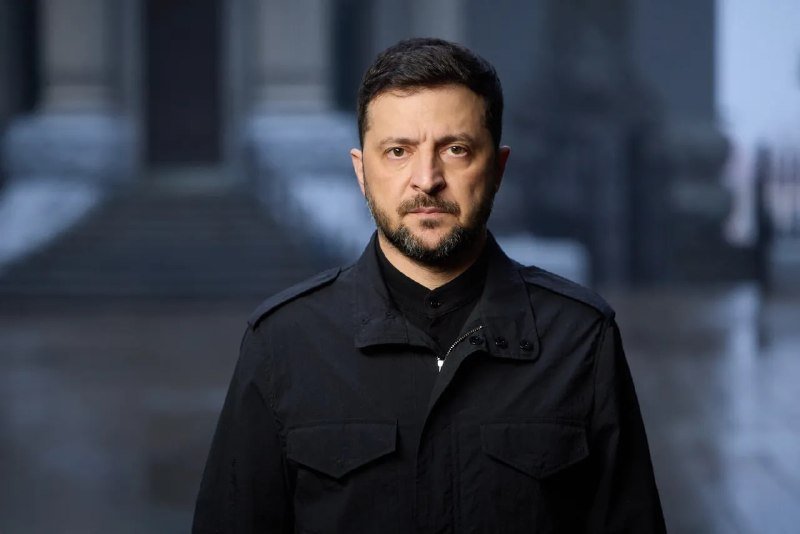
At roughly dawn on 14 June 2026, Ukrainian long-range drones hit an oil refinery in Russia's Yaroslavl region, more than 700 kilometres from the border. By 08:06 UTC, the independent channel Nexta was reporting that the Rybinsk facility was burning badly enough that oil was falling on the city. By 08:24 UTC, President Volodymyr Zelensky had publicly claimed the strike as a deliberate act of policy, framing it as a "long-range sanction" against Russia for refusing to end the war. The message, and the range, are the story.
Kyiv has spent four years insisting it cannot match Russia's artillery and missile barrages on a round-for-round basis. That is still true. What has changed is the range at which Ukrainian industry can now impose costs, and the political vocabulary the Zelenskyy government is using to describe those costs. "Long-range sanctions" is not the language of battlefield denial. It is the language of economic warfare, broadcast from a presidential podium.
What just got hit, and why it matters
The target was an oil refinery in Yaroslavl Oblast, the kind of mid-stream asset that turns crude into the diesel and gasoline that actually fuels a tank column, a freight train, and a harvest combine. The Telegram channel Visioner pegged the distance at roughly 750 kilometres from the Ukrainian border. Noel Reports, citing the SBU, put the SBU-claimed strike at "more than 700 km." The Slavyansk Nefteproduct refinery, the specific asset reported on by independent Russian-language channels, sits in the same federal district that supplies much of central European Russia.
Reuters and the Western wires have not, at the time of writing, independently confirmed every operational detail. The early reports come from Ukrainian officials, the SBU's own channel, and a tight cluster of Telegram accounts that have been right about previous deep strikes and wrong about others. The structural facts — a refinery in Yaroslavl, a Zelenskyy claim of responsibility, a fire visible on social media — are the load-bearing part of the story. The exact tonnage of damage is not.
This is the second front of the war, and it is no longer theoretical. The Tula-region Azot chemical plant was also reported burning in the same morning's wave, according to Nexta. Ukrainian long-range strikes on occupied territory and on Russian soil are not new. What is new is the willingness of the Ukrainian presidency to name the doctrine in public, in English, in the middle of a sanctions debate that has stalled in Washington and Brussels.
The Russian counter-read
Moscow's framing, where it has appeared, treats the strikes as terrorism against civilian energy infrastructure — the same template the Kremlin has used for Ukrainian attacks on Crimean bridges and Belgorod apartment blocks. Russian-aligned milbloggers have, in past cycles, dismissed deep strikes as one-off PR operations with no strategic effect, pointing to Russia's still-functioning fuel exports and a budget that has absorbed two years of sanctions.
That counter-read is not baseless. Russia remains a top-three global oil exporter. A single refinery fire does not break that. The honest answer is that one strike is a price signal, not a verdict. But price signals compound. If Ukrainian drones can credibly reach Yaroslavl, Tula, and the chemical assets of Tula, the discount the market demands on Russian-origin product rises, and the cost of the war inside Russia — in insurance, in air defence reallocation, in lost throughput — rises with it.
The structural argument is that long-range strikes work not by destroying the Russian economy in a single blow but by raising the marginal cost of every additional month of war to a point where the domestic political equation inside Russia shifts. That is a longer game than the one Western commentary usually wants to talk about, and it is the game the Zelenskyy comment is signalling.
The wire line, and what it is missing
The mainstream wire framing of the war has, for most of 2025 and the first half of 2026, focused on the Donbas front, on manpower questions, on the slow attrition of Pokrovsk and the defence of Sumy. The energy war has been treated as a sideshow, something the Reuters energy desk covers when there is a quiet news day.
That framing has a cost. It treats Ukrainian agency as reactive — holding ground, waiting on Patriot batteries, hoping the US Congress authorises another aid tranche — and treats Russian agency as a constant pressure that the West absorbs. What the Yaroslavl strike and the Zelenskyy comment together expose is a Ukrainian state that has decided to act on the Russian interior, on a doctrinal timetable of its own, and to claim the act in its own language. That is a different kind of war than the one the Western wire cycle is built to describe.
The stakes
If the Yaroslavl pattern holds — one strike a week, on a different federal district, on a different link in the Russian fuel chain — the discount the global market charges on Russian crude widens. The Russian federal budget tightens. The cost of defending every refinery, every chemical plant, every rail junction in European Russia climbs, and the air defence coverage that currently protects Moscow and the Crimea bridge thins at the edges. None of this is decisive on its own. Decisiveness, in this war, is a word that has lost its meaning.
What is decisive is whether the Western policy debate catches up with the operational reality. Long-range Ukrainian strikes on Russian energy infrastructure are now a scheduled, claimed, presidential-level instrument of Ukrainian state policy. Treating them as a tactical curiosity, or as something the US administration should quietly discourage, is to read the war in the wrong tense. The war, on the morning of 14 June 2026, is being fought on a 750-kilometre front. The wire cycle will catch up, or it will not. Ukraine has already decided.
This publication framed the strike as a claimed act of Ukrainian state policy, sourced to Zelenskyy's office and the SBU, rather than to any one Telegram channel. Western-wire confirmation of damage assessments was not yet available at the time of writing, and the piece says so plainly.
Wire provenance
This editorial synthesis draws on the following public wire/social posts:
- https://t.me/euronews/
- https://t.me/nexta_live
- https://t.me/uniannet
- https://t.me/noel_reports
Follow the event.
These dated source records provide context. They do not retrospectively verify this archive article.
A dated voting record is evidence of one decision. Use the original UN record before turning it into an alignment label.
Visual explainer · historical vote of 2022-03-02 →