Pyongyang closes the door on denuclearisation
On 13 June 2026, Pyongyang declared that denuclearisation was a process terminated without prospect of reversal — the clearest rhetorical break from the 2018-19 Trump-Kim track in nearly seven years.
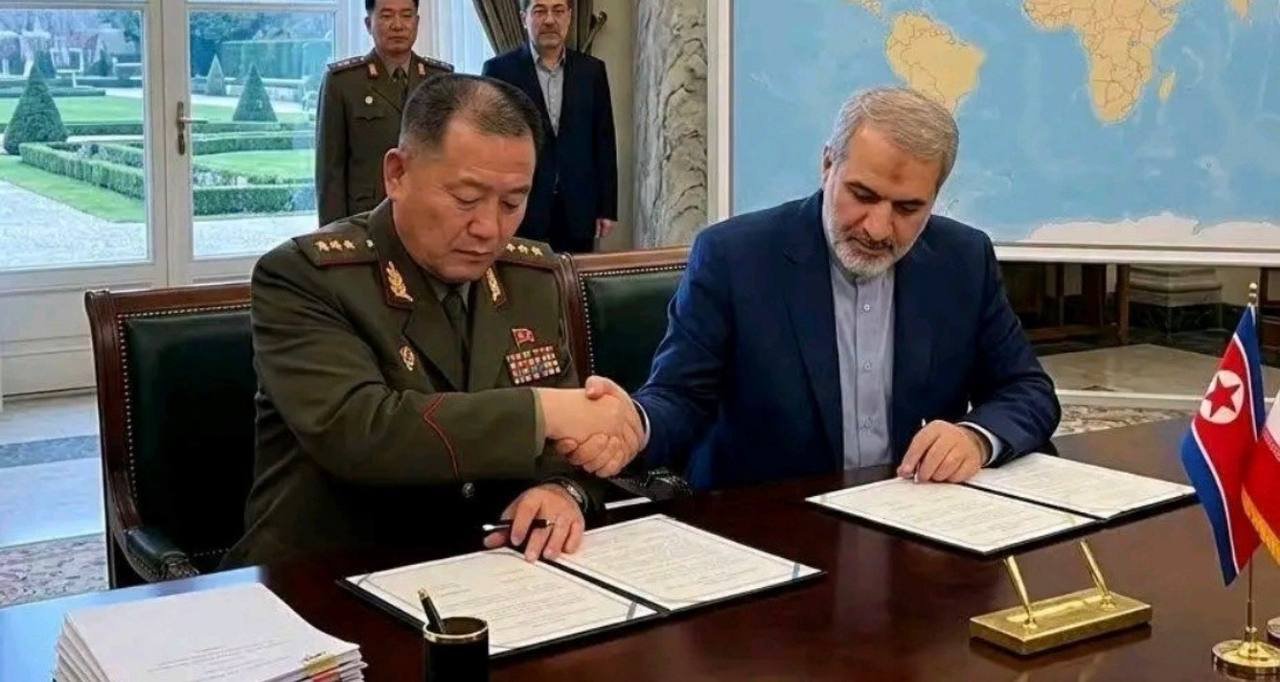
On the evening of 13 June 2026, the North Korean Foreign Ministry put the longest-running piece of diplomatic ambiguity on the Korean Peninsula out of its misery. Denuclearisation, the ministry said, was a question whose answer had been settled, irreversibly, by the country's status as a nuclear weapons state. Within hours, a follow-up statement circulated via state media warning that "military and technical countermeasures at all levels" were being taken to confront what Pyongyang described as a growing nuclear threat from hostile countries. The language was vintage Pyongyang — accusatory, conspiratorial, deliberate — but the strategic content was new in its bluntness: the door that American negotiators had spent three decades trying to prop open was, in the regime's own telling, being welded shut.
That declaration is not, in itself, a surprise. North Korea has tested nuclear devices, deployed solid-fuel intercontinental ballistic missiles, and refused International Atomic Energy Agency inspectors since 2009. What changes on 13 June is the rhetoric of permanence. By describing denuclearisation as something already concluded, Pyongyang shifts the burden of proof in any future negotiation: there is nothing to denuclearise, because the process is over. It is the diplomatic equivalent of declaring a ceasefire that nobody else signed.
From "the denuclearisation of the Korean Peninsula" to nothing
For more than thirty years, the phrase "complete, verifiable, irreversible denuclearisation" — a formulation most associated with American negotiating mandates since the 2000s — has functioned as the public-facing rationale for sanctions architectures, joint US-ROK military exercises, and the wider non-proliferation regime as it applied to the North. Even as that phrase slipped gradually out of joint communiqués in the late 2010s, it remained, in Western policy circles, the horizon line against which engagement was measured. To call it dead in Pyongyang's own vocabulary is to deny Washington the rhetorical territory it has occupied since the Agreed Framework.
The framing matters because the sanctions architecture is rhetorical as much as it is legal. UN Security Council resolutions, the US Treasury's sanctions lists, and the European Union's autonomous measures all rest on a normative claim: that the North Korean nuclear and missile programmes are illegitimate, that they are reversible, and that pressure will eventually produce compliance. Once a state describes its weapons status as "irreversible" — a word whose English-language equivalent Pyongyang has now used, unusually, in its own messaging — that normative claim loses coherence. Sanctions may still be enforced; they simply lose their stated endpoint.
The timing: a peninsula in motion
The declaration lands against a backdrop of accelerated change in the regional security environment. The Russia–Ukraine war has, over the preceding four years, demonstrated that nuclear-rhetoric states can fight conventional wars across their borders with less international constraint than non-nuclear states. Chinese and Russian vetoes at the UN Security Council have repeatedly insulated Pyongyang from additional punitive measures. The de facto Sino-Russian alignment since 2022 has given North Korea diplomatic cover — and, by multiple accounts from the South Korean defence ministry, materiel and labour cooperation that have accelerated Pyongyang's missile production cadence.
The South Korean government, for its part, has spent the last year debating whether its own posture should shift in response. President Lee Jae-myung's administration, which took office in 2025, has signalled interest in re-engaging Pyongyang and has been cool to some of the more maximalist US extended-deterrence framings. Washington, meanwhile, has been absorbed by a wider Indo-Pacific realignment in which the Korean Peninsula is one of several pressure points — Taiwan, the East and South China Seas, the Russia-North Korea axis — competing for attention and assets. Into that crowded field, Pyongyang has now thrown a marker that says, in effect, that any deal worth making will not be the one Washington has spent thirty years drafting.
What "irreversible" actually means in Pyongyang's dictionary
It is worth holding two readings of the statement side by side. The first, favoured by analysts in Seoul and Washington who have spent careers studying the North's negotiating repertoire, is that the declaration is bargaining theatre. Pyongyang declares permanence now in order to extract recognition later; the same pattern played out in reverse in 2018, when Kim Jong Un offered to dismantle the Yongbyon complex in exchange for sanctions relief, and in the 1990s Agreed Framework negotiations. In that reading, the word "irreversible" is itself reversible — a price tag, not a fact.
The second reading, increasingly given weight in South Korean conservative commentary and in some US intelligence assessments, is that the North has now concluded that the regime's survival and its nuclear arsenal are operationally identical. The argument runs: after watching Libya's Gaddafi surrender a nuclear programme and end up dead, after watching Ukraine surrender inherited Soviet weapons and end up invaded, the lesson Pyongyang has drawn is that the only insurance policy that works is the one you keep. In that reading, the statement is not a bargaining position; it is a description of how the regime now sees itself. The Foreign Ministry's accompanying language about "growing nuclear threat from hostile countries" reads, in this light, less as provocation than as doctrine: a nuclear state must be ready to use what it has, or it will be consumed by a rival that is.
Both readings can be true. Pyongyang is a regime that excels at running two clocks simultaneously — one for outside audiences, one for itself. The 13 June statement serves both: it locks in the domestic narrative of self-reliance and it tells outside powers that the price of engagement has gone up. The question for policymakers is not which reading is correct, but which one to plan against. The safe assumption, historically, has been the more pessimistic one.
What is left of the non-proliferation argument on the Peninsula
The non-proliferation regime was always a contract among states that agreed, however grudgingly, that the spread of nuclear weapons was dangerous. That contract is fraying in plain sight. The Joint Comprehensive Plan of Action with Iran has been a dead letter since 2018 and is not the subject of active multilateral restoration. Libya's programme is gone with the state that ran it. Ukraine's was traded away in 1994 in exchange for security assurances that were not honoured. Pakistan and India went nuclear outside the Non-Proliferation Treaty framework in 1998, and have not been rolled back. Israel is an undeclared nuclear state tolerated by the same powers that sanctioned the North.
Into that landscape, North Korea's 13 June declaration is less an aberration than a confirmation of a pattern. The argument that Pyongyang should give up its arsenal because proliferation is dangerous has, in the regime's telling, been undermined by the behaviour of the states making the argument. The Foreign Ministry's reference to "hostile countries" — a phrase that in the North's lexicon means the United States and, in some readings, South Korea and Japan — is not a deflection; it is a specific accusation that the security environment, not the regime's ideology, is what produced the arsenal.
For Seoul, Tokyo, and Washington, the practical question is what the rest of 2026 looks like. Three plausible paths can be sketched. The first is a renewed US-North Korea dialogue track, in which Washington accepts the new rhetoric as starting position and bargains over what the North will trade — a freeze on ICBM production, a cap on warhead numbers, limits on exports of weapons and missile technology to Russia — in exchange for partial sanctions relief. The second is a managed standoff, in which the allies tighten enforcement and accept the North as a permanent nuclear neighbour, the way Pakistan is treated. The third is a crisis spiral, in which a test, an export incident, or a South Korean domestic political shock pulls the region into a more dangerous posture than the one that obtained on 12 June.
A door that closes slowly — or not at all
It is easy, on nights like 13 June 2026, to read Pyongyang's statements at their loudest. The word "irreversible" does the work of headlines. But declarations of permanence, in the diplomatic record, have a habit of meeting realities that are messier and more contingent than the language admits. The North's economy remains heavily sanctioned, heavily aid-dependent, and exposed to shifts in Chinese policy that Beijing can move without notice. The regime's ability to project power abroad — through arms exports, through the dispatch of workers, through alignment with Moscow — is real, but it is also a substitute for the legitimacy that economic performance and external recognition would otherwise provide. The statement on 13 June closes a door. It does not, on its own, change the constraints behind it.
What the statement does change is the vocabulary available to everyone else. From this date forward, any American official who uses "complete, verifiable, irreversible denuclearisation" as a stated policy goal is using a phrase that the other party has declared obsolete. That is not a small thing. The North has, in one statement, denied its principal adversary the use of its own most durable diplomatic phrase. Whether the phrase is replaced — and with what — will be the next eighteen months' worth of work in Washington, Seoul, and Tokyo. The rest of 2026 will be, at minimum, a period in which the language of the Korean Peninsula is renegotiated before the policy is.
This piece is built from wire reporting in the public thread. The three sources used do not specify casualty figures, dollar amounts, or named officials beyond what is reproduced above; where the regional context is sketched, it relies on widely reported facts that the public record has documented over the preceding years. Where the diplomatic record has not yet caught up to the statement of 13 June 2026, the article flags the gap rather than filling it.
Wire provenance
This editorial synthesis draws on the following public wire/social posts:
- https://t.me/s/alalamarabic
- http://reut.rs/4vNqCXs
- https://x.com/polymarket/status/2065917428849078272