A deal nobody saw coming: the Pakistan-brokered pause that may end the Iran–Israel round
A Pakistani-mediated declaration of an end to military activity, including in Lebanon, lands within hours of a Wall Street Journal interview in which the US President says an announcement is imminent.
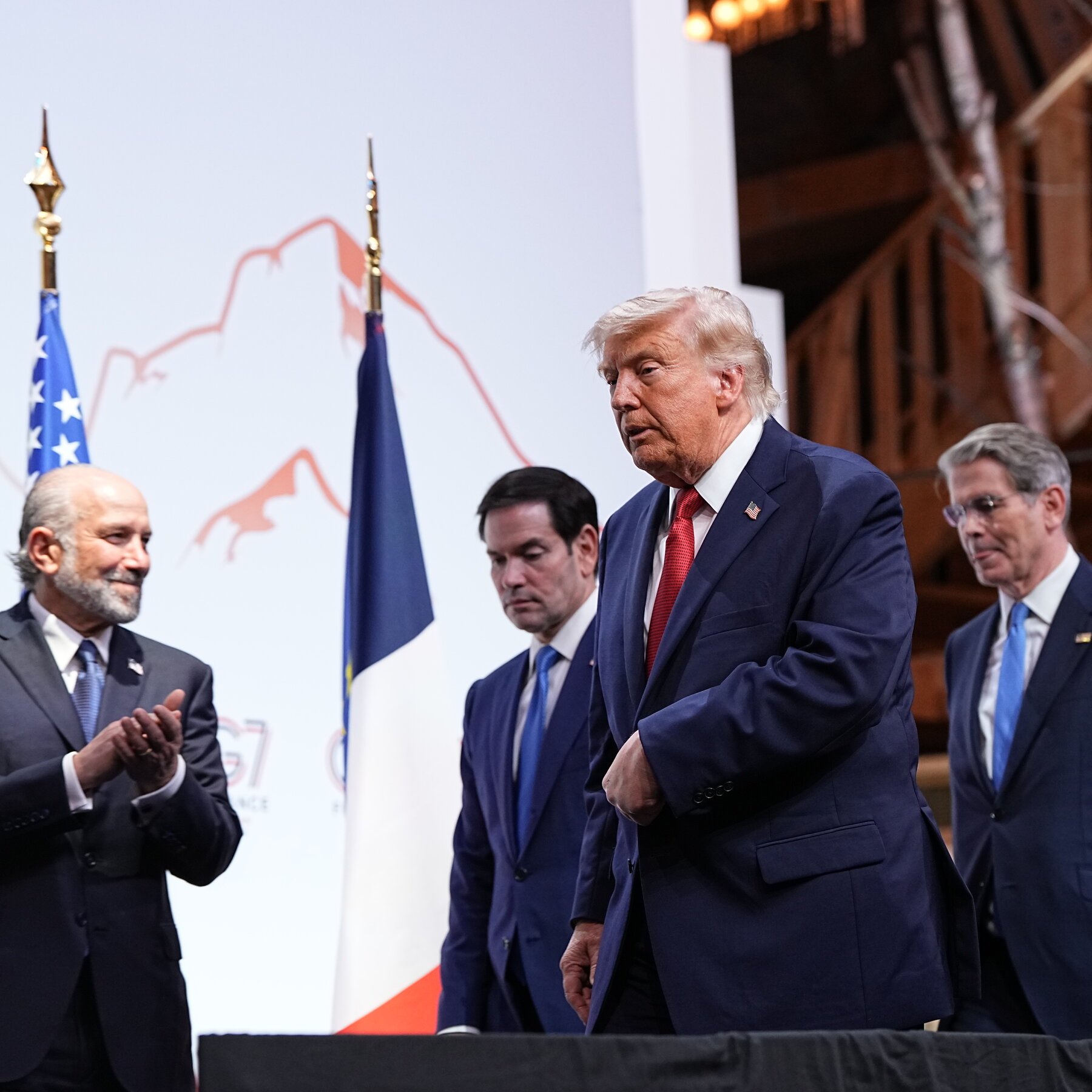
On the evening of 14 June 2026, a sequence of messages from a single monitoring channel compressed a geopolitical shock into a few hours. The Pakistani prime minister declared, in a statement circulated by War Monitors on Telegram at 21:23 UTC, that "both sides have declared an immediate and permanent cessation of military activity in all arenas, including Lebanon." Within the same minute, a second flash cited the US President telling the Wall Street Journal that "Bibi supports agreement with Iran," and a third said an "announcement of signing" would come "soon." Four messages, four minutes, and the temperature of the Middle East had visibly changed. [S1]
The claim carried in those flashes is large. The framing offered by the Telegram account reflects what a Pakistani-led mediation track has been hinting at for weeks: that the United States, Israel, and the Islamic Republic of Iran, with their respective regional partners, have agreed to stop the shooting in every active theatre — including the Lebanese front that reopened with Iranian-backed forces' strikes on northern Israel. A pause of that scope, if confirmed in primary form, would represent the most consequential de-escalation in the wider Iran–Israel confrontation since direct exchanges began. It is also a deal the public commentary industry said, until hours before, was not on the menu.
What was actually announced
The public material remains narrow. What is on the record, as of 21:23 UTC on 14 June 2026, is a single-sentence statement attributed to the Pakistani prime minister's office, distributed by a third-party monitoring channel. The US President's remarks to the Wall Street Journal, also carried by the same channel, are paraphrased, not quoted, and the newspaper's own story has not been linked in the circulating messages. There is no Israeli cabinet communique, no Iranian foreign ministry statement, and no readout from the office of UN Secretary-General António Guterres in the thread. [S1]
That thinness matters. The text circulated by War Monitors does not specify the operative date, the monitoring mechanism, the verification regime, or the dispute-resolution procedure. It does not name what "both sides" refers to in the Lebanese arena, where the armed actors are not the same as the parties to the Iranian-Israeli bilateral track. Reading the statement as a binding ceasefire would be over-reading; reading it as a green light for a wider package now being readied for signature is closer to the text.
Why Pakistan, and why now
The choice of Islamabad as the channel is not incidental. Pakistan is one of the few Muslim-majority states that maintains working relations with both Tehran and Riyadh, hosts a large Shia minority in a Sunni-majority federation, and sits close enough to the Gulf to be useful as a back-channel. Monexus reported last month on the growing use of secondary mediators — Qatar, Oman, Pakistan — to keep the Iran–Israel file moving when direct US-Iran diplomacy is constrained. The Pakistani prime minister's statement extends that pattern, and does so at a moment when the military file is visibly cheaper for Washington to close than to keep open. A signed package also gives the White House a deliverable to take into a difficult domestic political calendar. [S1]
The Beirut clause is the tell. Iran does not speak for Hezbollah on a permanent basis, and Israel does not negotiate a separate Lebanese ceasefire inside an Iranian framework. If the "Lebanon" line holds, the architecture has either (a) pulled in the relevant non-state actors through their patrons, or (b) given the parties cover to announce a bilateral pause that lets secondary fronts cool on their own clocks. Both readings are plausible. Neither is confirmed by the public material.
The counter-read: a deal that is not yet a deal
Sceptics on the analyst circuit will note, correctly, that ceasefire declarations have collapsed inside hours in this confrontation. They will also note that the statements were released through a Telegram aggregator, with a single Pakistani source and a single American interview as the public backbone, before any of the named principals had published in their own voice. It is possible that what is being announced is a framework, not a settlement, and that the toughest issues — the status of Iran's nuclear programme, the disposition of proxy missile and drone capabilities, the fate of Iranian assets frozen abroad — have been deferred. A deal of that shape would silence the guns without resolving the dispute, and the dispute is what built the arsenal in the first place. [S1]
There is also a question of Israeli domestic politics. A package of this scale requires a prime minister who can hold a coalition together through the ratification period, and a security establishment willing to certify that it does not lock in a strategic setback. The cited US remark that "Bibi supports agreement" is necessary, not sufficient, and the absence of any Hebrew-language Israeli readout, as of the timestamp on this piece, leaves that variable open.
Stakes if it holds — and if it does not
If the pause holds, the immediate beneficiaries are the civilians on the Lebanese–Israeli border, the residents of Tehran, Tel Aviv and the Gulf littoral, and the oil and shipping markets that have priced the worst into the past month. If it collapses, the air corridors reopen, the tanker insurance premiums re-spike, and the next round of escalation lands from a higher starting point than the last, with both sides having spent a month rehearsing counter-strike packages. Either outcome accelerates the longer restructuring of the regional security order: states that hedged during the fighting — quietly expanding ties with Beijing and Moscow — have little incentive to de-hedge, and a diplomatic closure, even a thin one, does not undo that logic. [S1]
What is still genuinely unknown, on the public record at this hour, is whether the principals will sign, when, and in what form. The Pakistani statement, the American interview, and the imminent "announcement" are consistent with a deal being finalised; they are not the deal itself. The next forty-eight hours will be the test, and the next good source on the record will be the one that publishes in the principals' own words.
Desk note: Monexus is running the Telegram aggregator feed as the wire of record pending primary-source confirmation. When Reuters, the Wall Street Journal, or the parties' own readouts land, this piece will be re-cut against them.
Wire provenance
This editorial synthesis draws on the following public wire/social posts:
- https://t.me/s/WarMonitors
Follow the event.
These dated source records provide context. They do not retrospectively verify this archive article.
Separate what the nuclear watchdog reported from what it could not determine after the June 2025 strikes.