Pakistan's Mediation Facade Is Cracking Before the Ink Is Dry
Islamabad presents itself as a neutral broker between Washington and Tehran. Public mourning rites for Iran's supreme leader on Pakistani soil suggest the script is more complicated than the press conferences admit.
On 13 June 2026, with the cameras rolling and the deal text reportedly in hand, Pakistan's Prime Minister Shehbaz Sharif announced that the United States and Iran had reached a final agreed-upon text on a peace arrangement, with a signing expected within twenty-four hours. The framing was triumphalist — Islamabad positioned as the indispensable broker, the honest broker, the neutral mediator between two governments that cannot speak directly without an interpreter. Forty-eight hours later, the interpreter's mask has slipped.
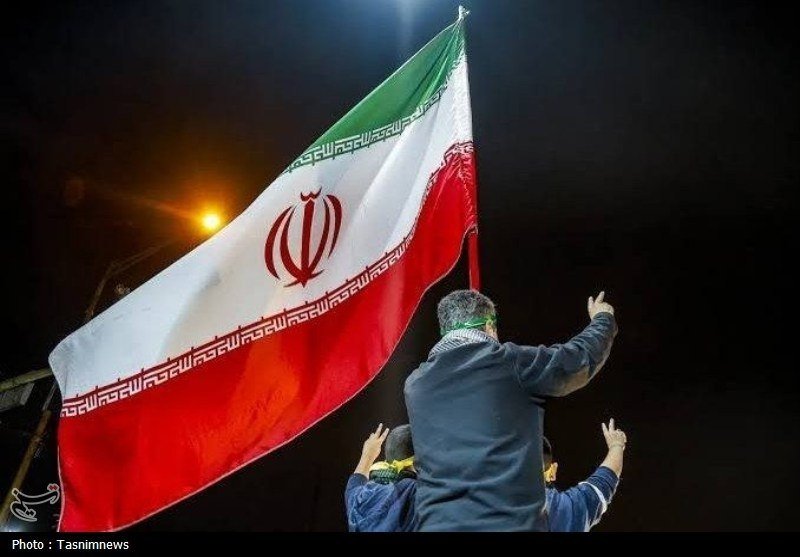
According to a dispatch carried by the Abu Ali Express channel on 14 June 2026, ceremonies were held on Pakistani soil in memory of Iran's supreme leader, Ali Khamenei, and in honour of his designated successor, Majtaba Khamenei. The events, held in the very same week that Sharif was selling Washington on Pakistani even-handedness, are not a minor embarrassment. They are evidence. Whatever the text of any signed agreement says on paper, the political theology of the host state is openly aligned with one of the negotiating parties at the level of clerical succession — the most sensitive internal question in the Islamic Republic. The mediation is a performance, and the performance is failing in real time.
The deal that nobody has read
The 12 June announcement, carried by Unusual Whales on X, described a "final agreed-upon text" without disclosing its contents. That opacity is itself the story. In a normal diplomatic process, a "final agreed-upon text" is a victory lap: the hard yards of negotiation are done, the brackets have been closed, and what remains is the choreography of signatures, ratification, and a joint communiqué heavy on adjectives. The Sharif announcement skipped every one of those steps. There is no published text. There is no third-party confirmation from either the US State Department or the Iranian foreign ministry that a final text exists in the form described. The deal is a rumour with a prime minister's voice attached to it, dressed up as a press conference.
The 13 June follow-up — that signing was expected within twenty-four hours — is the same rumour with a deadline bolted on. As of this writing, no signing has been confirmed. The deadline has passed without delivery. That pattern is familiar from other recent diplomatic episodes: a confident headline, a confident deadline, a quiet rollover, then a new headline. The architecture of the announcement is designed for financial markets and for a domestic Pakistani audience that wants to see Islamabad elevated. It is not designed for verification.
The cleric on the stage
Here is the contradiction the wire services have largely declined to underline. A state that hosts public mourning for the sitting Iranian supreme leader and celebration of his named successor is not a neutral party. It is a state with a position. That position may be unpopular in Washington, or it may be quietly tolerated as the cost of doing business in a region where Pakistani access to Tehran carries weight. Either way, it cannot be reconciled with the language of even-handed facilitation. The dispatches do not specify which city or province hosted the ceremonies, nor do they name the organisers, and that absence is itself telling — the events appear to have been held at a level that allows Islamabad plausible deniability while making the underlying alignment unmistakable.
The structural point is not that Pakistan is hypocritical. It is that the category of "neutral mediator" does not survive contact with the religious, sectarian, and strategic affinities of the actual players. Iran and Pakistan share a 900-kilometre border, deep Shia-Sunni institutional cross-pollination, and a history of cooperation on border security and energy. The United States has designated Iran as a state sponsor of terrorism for decades and has spent the post-2018 period enforcing a maximum-pressure sanctions regime. A state that is intimate with one of those parties cannot be neutral between them. It can be useful, and it can be candid about which side it is intimate with. What it cannot do, with any credibility, is claim to be both.
What the framework really looks like
Strip away the press-conference theatre, and what is on the table is a familiar arrangement: a regional state lends its diplomatic cover to a US-Iran negotiation that neither principal wants to conduct in public, in exchange for a combination of geopolitical standing, economic relief, and a measure of immunity from US scrutiny on its own Iran ties. Pakistan is not the first country to play this role; Turkey, Oman, Qatar, and Iraq have all hosted similar back-channels over the years. The novelty here is the gap between the rhetoric and the visible reality. Mediators do not usually hold mourning rites for the supreme leader of one of the parties on the eve of the announcement. That is not a facilitator's posture. It is a tribute.
There is also a quieter question of who benefits from a deal on these terms. If sanctions relief flows to Iran, Tehran gains oxygen. If sanctions are merely reshuffled, the Iranian economy continues to compress. If Pakistan is rewarded with renewed IMF consideration, regional investment, or a security upgrade on its western border, that is a separate transaction with its own political cost inside Pakistan. The press conference does not address any of this, because the press conference is not a substantive briefing. It is the billboarding of an outcome.
What remains uncertain
Three things are genuinely unclear in the available reporting. First, the text of the agreement itself — its scope, its enforcement mechanism, its sunset clauses, and whether it touches missile development, regional proxy activity, or only the nuclear file. The sources do not specify. Second, the durability of the political cover on the Pakistani side, given the public alignment visible in the Khamenei ceremonies. A mediator whose domestic constituency is openly celebrating the Iranian clerical succession has a narrower room to negotiate than a neutral broker would. Third, the reaction in Washington. The US side has not, on the record available here, confirmed the existence of a "final agreed-upon text" in the terms Sharif described. Without that confirmation, the entire edifice rests on a single prime minister's word, contradicted by the visible behaviour of his own state.
A more honest announcement would have been: Pakistan has been asked to help, Pakistan is helping, and Pakistan is not neutral. That would have been credible. The version the world got is less so.
— Monexus Staff Writer, 14 June 2026
Wire provenance
This editorial synthesis draws on the following public wire/social posts:
- https://t.me/abualiexpress