Pezeshkian draws a hard line: Iran's negotiating floor is the Supreme National Security Council, not state TV
In a 14 June meeting with media managers, Iran's president publicly rebuked state broadcasters for overstepping on war and negotiations — and tethered his own government to the Supreme National Security Council.
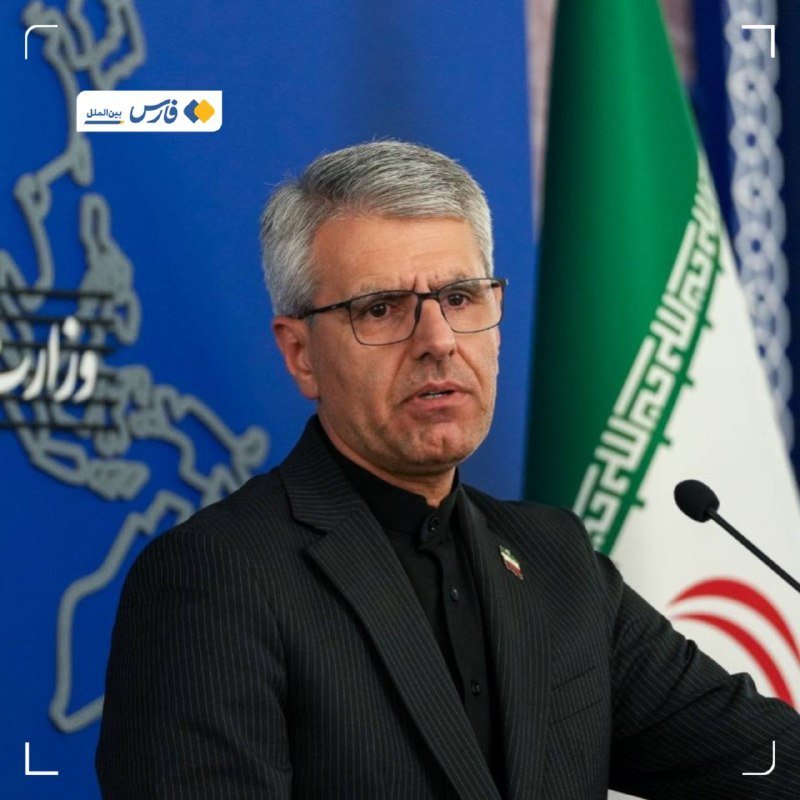
On 14 June 2026, in a closed-door meeting with Iranian media managers, President Masoud Pezeshkian did something Iranian presidents rarely do in public. He told the country's broadcasters — and by extension, the chattering classes that parse them — that what runs on state television about war and diplomacy "does not necessarily reflect the views of the Supreme National Security Council." The phrasing matters. This was not a minor press-correction; it was a sitting president publicly rebuking the loudest voices in his own media ecosystem, on the record, in front of the people who run them.
The substance is sharper still. Pezeshkian tied negotiations explicitly to the SNSC — "the decision of the Supreme National Security Council is the basis of action, and whatever is approved by the Supreme Leader is binding," per the readouts carried by Fars, Tasnim and the English-language channels that monitored them. He also framed the Gulf relationship as a working file rather than a permanent rupture: "many issues and misunderstandings with Gulf countries are on the path to resolution." Read together, the message is that the negotiating floor sits inside the SNSC, that the President is a messenger rather than a principal, and that the public-facing noise is — officially — neither policy nor permission.
What the president actually said — and to whom
The audience is the operative clue. Pezeshkian was not addressing negotiators in Washington, Muscat or Geneva; he was addressing the editors, producers and bureau chiefs who decide what Iranian viewers hear about those negotiations. The reported comments, carried in parallel by Fars and Tasnim and re-syndicated through The Cradle and the Open Source Intel aggregator, follow a familiar pattern: in moments of diplomatic intensity, Tehran's press apparatus has historically been the first draft of policy rather than the last. Pezeshkian's intervention reframes that order. Negotiating positions, he is saying, are settled upstream — inside the SNSC and ratified by the Supreme Leader — and downstream commentary that diverges from those positions is not "reporting" in any meaningful sense; it is freelancing.
That distinction lands at a moment when multiple tracks are visibly live. Gulf rapprochement has produced enough movement that Pezeshkian can credibly describe it as "on the path to resolution." Regional de-escalation rhetoric has increased, with several rounds of backchannel contacts reported across Q1 and Q2. And around all of it, a parallel information war runs through Iranian state broadcasters and the Telegram/X ecosystems that republish them in English, each side testing what the other will accept as a negotiating floor.
The counter-narrative the state press has been running
To appreciate the rebuke, you have to read the press Pezeshkian is rebuking. Iranian state media — Tasnim, Fars, the IRIB newsroom — has spent recent weeks in a posture of muscular indirection: hardline headlines about Israel, leaks about missile production capacity, semi-official commentary treating the Gulf states as adversaries. Some of that posture is domestic signalling for a base that reads the negotiations as concessions. Some of it is bargaining-by-broadcast: speaking into the Gulf ear at high volume to shift the perceived ceiling of any deal. The Cradle's English-language relay, picking up the Fars and Tasnim wires, gave that posture international reach it would not otherwise enjoy.
Pezeshkian's complaint, made explicit, is that this media posture is no longer aligned with the SNSC's working line. That matters because in Iran's constitutional order, the SNSC — chaired de facto by the President and reporting to the Supreme Leader — is the venue where national-security policy is supposed to crystallise before it reaches the public sphere. When a President publicly states that broadcasters have drifted from that line, he is also implicitly saying: the negotiating room is not where you think it is. Don't mistake the editorial board for the cabinet.
The structural read
What we are watching is a familiar authoritarian-modernising pattern: a regime that needs its press loud for legitimacy and cohesion, but needs it disciplined when external negotiations are underway. The contradiction is not new; what is new is the President's willingness to name it. Pezeshkian is drawing a line between the political work of state media — mobilising, signalling, intimidating — and the diplomatic work of the SNSC, and asking which one is in charge on a given day. By tethering his own office to the SNSC's resolutions, he gives himself political cover against hardline critics who would otherwise read any compromise as presidential weakness. By telling the broadcasters to fall in line, he is also — more practically — narrowing the menu of public positions a counterpart in Washington, Doha or Muscat has to read.
For outside observers, the operational consequence is simple. Treat Iranian state media as theatre and the SNSC readouts as the script. The two will diverge; the divergence is itself the message. Pezeshkian's 14 June remarks make the hierarchy official.
Stakes — and what remains uncertain
If the line holds, Tehran enters the next negotiating window with a more disciplined public line and a clearer internal consensus, which is generally the precondition for deals that survive their own press cycle. The Gulf file, where Pezeshkian himself signalled movement, is the most plausible early win: it is the lower-hanging diplomatic fruit and the one where signalling convergence inside Iran is least costly. The harder cases — the nuclear file, the relationship with the United States, the question of regional armed actors — sit further up the same hierarchy and will require the same discipline the President is now demanding of his own broadcasters.
What remains genuinely uncertain is whether the discipline will hold. Iranian state media is institutionally jealous of its editorial autonomy; the broadcasters Pezeshkian lectured on Sunday morning will be back on air by Sunday evening, and the temptation to interpret, editorialise, and outflank is structural rather than incidental. The honest reading is that Pezeshkian has issued a warning, not a guarantee. Whether the warning becomes the new operating procedure is the question that will define the next month's news from Tehran.
Desk note: Western wires have largely carried this story as a routine Iranian press encounter. Monexus reads it as a deliberate hierarchy-signalling event — a president publicly demoting state broadcasters to a supporting role in the country's negotiating posture, just as the Gulf track appears to be moving.
Wire provenance
This editorial synthesis draws on the following public wire/social posts:
- https://t.me/TheCradleMedia
- https://t.me/wfwitness
- https://t.me/wfwitness
- https://t.me/osintlive
- https://t.me/osintlive
- https://t.me/alalamarabic
Follow the event.
These dated source records provide context. They do not retrospectively verify this archive article.
Separate what the nuclear watchdog reported from what it could not determine after the June 2025 strikes.