Pezeshkian's careful disclaimer: who actually speaks for Iran on war and talks
Iran's president used a meeting with media managers to remind Tehran's press corps — and the outside world — that decisions on war and negotiations belong to the Supreme Leader, not the presidency or the studios.
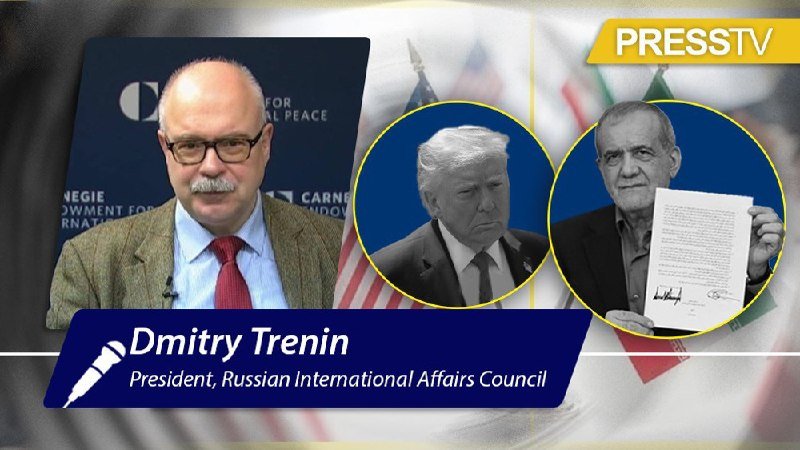
At a meeting with Iranian media managers in Tehran on 14 June 2026, President Masoud Pezeshkian drew a public line around a question that has trailed his government since he took office: who, exactly, gets to speak for the Islamic Republic on war and on negotiations. His answer, delivered to the editors who decide what Iranian state television puts on air, was uncharacteristically direct. Decision-making on war and on talks, Pezeshkian said, is the responsibility of the leadership and the Supreme National Security Council, and the SNSC's resolution is the basis of action — whatever is approved by the Supreme Leader is what binds. He added, pointedly, that the line occasionally taken by state media on these questions does not necessarily reflect the views of the Supreme National Security Council.
The remarks are the clearest signal yet from the presidency that Pezeshkian sees his room for manoeuvre on the country's most consequential security file as narrower than his office's constitutional weight might suggest — and that he wants the country's talking heads to know it.
A president drawing a line under his own commentators
The setting matters. Pezeshkian was not addressing diplomats or a foreign-policy forum; he was speaking to the managers of Iranian media outlets, the people who set editorial direction inside the country's tightly controlled information space. According to the Fars News Agency and Tasnim readouts, the president used the occasion to remind his audience that Pezeshkian's own commentary on war and negotiations does not, by itself, commit the state — and that the same courtesy should extend to the more hawkish voices who regularly fill Iranian airwaves with their own predictions. The implicit message: the studios are not the cabinet.
That distinction is easy to lose in translation. Western coverage of Iran's posture tends to treat bellicose statements by regime-adjacent commentators as quasi-official, then treats any subsequent diplomatic opening as evidence of duplicity when the two appear to clash. Pezeshkian is, in effect, asking outside observers — and his own press — to stop conflating the two registers.
The structural reality behind the talking points
Iran's foreign and security policy is concentrated in institutions the presidency does not control. The Supreme National Security Council, chaired in practice by the Supreme Leader, sets the strategic framework for both military decisions and any negotiation track. The president is a member of the Council and heads the executive, but on the questions Pezeshkian named — war, peace, the terms of engagement with the United States and the wider West — the SNSC's resolution is what governs. Pezeshkian's repetition of that fact is not modesty; it is a stress test on the chain of command.
The pressure is real. Iran is operating in a region where, in the period preceding these remarks, both the tempo of strikes attributed to Israel against Iranian-linked assets and the rhythm of indirect talks with Washington have made any on-camera utterance potentially market-moving. A president who clarifies, in advance, that the editorials are not the policy has bought himself a small margin of deniability — and has given the SNSC a margin of clarity about who leaks what, in which direction.
The press-freedom subtext nobody will print
There is a second, less diplomatic reading. Pezeshkian was elected on a platform that included an opening to the West and a less repressive information environment at home. The current remark — that state media does not always reflect the SNSC's view — is also an acknowledgement that Iranian outlets sometimes outrun the government on questions of war and peace, and that the public cannot always tell the difference. By publicly naming the gap, the president is preparing his audience for a negotiation outcome that may arrive faster, or slower, or on different terms than the talking heads have been promising.
It is also a quiet warning to the outlets themselves. Iranian state-aligned media have, in recent months, oscillated between triumphant declarations of regional ascendancy and apocalyptic warnings about the consequences of any deal. Pezeshkian's framing gives the Council cover to discipline that discourse without the president appearing to do so directly.
What remains genuinely uncertain
Three things are still unclear from the public record. First, the exact composition of the SNSC resolution Pezeshkian referred to — whether it formally authorises a particular negotiation track with Washington, or only endorses the principle of dialogue in the abstract, as the Open Source Intel feed suggested when it reported that the Council had concluded Iran should pursue the path of dialogue. Second, whether Pezeshkian's remarks were coordinated with the Supreme Leader's office in advance, or whether they were an unusually visible assertion of presidential prerogative on a day when it suited the leadership. Third, the operational implications for Iran's posture in the region: SNSC resolutions on the negotiation file do not automatically translate into changed behaviour by Iranian proxies, and several recent incidents attributed to those networks sit uneasily with a stated preference for dialogue.
The honest summary is that Pezeshkian has told Iran, and the world, that the next move is not his to make. That is not weakness, and it is not necessarily a setback for negotiations. It is a clarification of who, in the Islamic Republic's architecture, holds the pen — delivered, with characteristic care, to the people least able to admit they had forgotten.
Monexus framed this as an institutional clarification, not a foreign-policy scoop. The wire coverage of Pezeshkian's remarks is dominated by translations of the Fars and Tasnim readouts; this piece reads the same text against Iran's actual decision-making architecture.
Wire provenance
This editorial synthesis draws on the following public wire/social posts:
- https://t.me/wfwitness
- https://t.me/wfwitness
- https://t.me/thecradlemedia
- https://t.me/osintlive
- https://t.me/osintlive
Follow the event.
These dated source records provide context. They do not retrospectively verify this archive article.
Separate what the nuclear watchdog reported from what it could not determine after the June 2025 strikes.