A prediction market is now setting the tempo of US-Iran diplomacy — and that should worry everyone
A Polymarket contract on what Trump will 'agree to' by 30 June has become the de facto scoreboard for the US-Iran nuclear track. The market is not just watching the deal — it is shaping it.
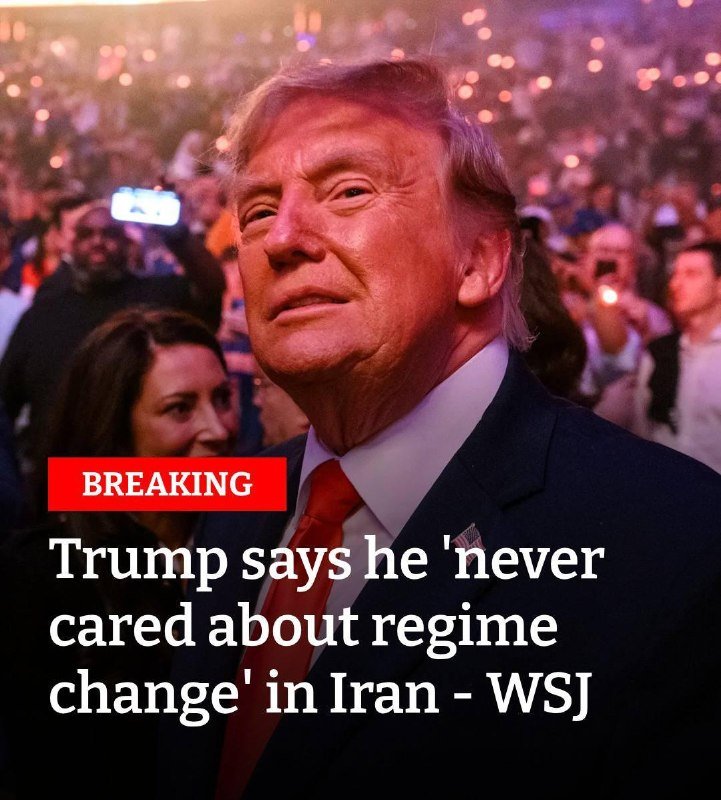
On 14 June 2026, a Polymarket contract titled "What Iranian demands will Trump agree to by June 30?" sat at roughly even money that the US president would accept at least one Tehran condition before month's end [1]. Two days earlier, the same market had just listed a fresh weekly contract on whether Trump's approval rating would rise or fall [2]. Three days before that, Donald Trump told reporters: "This is the deal. It's a great deal, and it's time to end this war" [3]. The line between prediction market and diplomatic instrument has effectively dissolved.
The thesis is plain. When retail-priced contracts on a US-Iran nuclear settlement trade 24/7 to a global audience, they stop being commentary and start functioning as a parallel signal channel — read by traders, journalists, and quite possibly the negotiators themselves. The market is no longer a thermometer reading the temperature of diplomacy. It is part of the thermostat.
The contract is the story
The headline contract on Polymarket is granular in a way that cable-news chyrons are not. It does not ask whether there will be a deal. It asks, in effect, which of Tehran's specific demands Washington will concede by 30 June 2026 — sanctions relief, enrichment latitude, nuclear-site configuration, proxy-related commitments, or some subset thereof [1]. That structure forces traders to price individual concessions rather than wave their hand at "a deal." The result is a more honest, more contestable picture of where the two sides actually are.
That granularity is also why the market is a useful reporting instrument. A binary "deal or no deal" line hides the substance. A multiple-outcome line forces specificity: enrichment on Iranian soil, sanctions snap-back architecture, IAEA inspection regime, the status of stockpile. Traders who pick the wrong sub-market lose money. That discipline is exactly what is missing from the public discourse.
The Trump approval overlay
The newly listed weekly Trump approval market, posted on 12 June 2026, is the second-order signal [2]. It is not a foreign-policy instrument by design. But in an environment where the president has publicly framed a possible Iran agreement as a personal victory — "this is the deal" — the domestic political odds and the diplomatic odds are now mechanically linked. A week of soft approval numbers tightens the Republican base's tolerance for a compromise. A week of strong numbers loosens it. The market on approval and the market on Iranian demands are therefore two readings of the same underlying variable: how much political room does the White House think it has to make a concession.
This is where prediction markets edge from entertainment into something more uncomfortable. They give political actors a real-time, monetised, publicly visible measure of their negotiating slack. That is information that was previously held in private polling, donor meetings, and the gut feel of senior staff. It is now legible, continuously, to anyone with a browser tab and a wallet.
The structural shift nobody asked for
Prediction markets have been around for decades. What changed in 2025 and 2026 is the migration of high-stakes political and geopolitical questions onto retail-accessible platforms, denominated in dollars small enough for individual traders to move prices meaningfully. The Iran track is the cleanest case study so far: a question of war and peace, priced in real time, with liquidity arriving from participants who are not diplomats, analysts, or even journalists — just bettors with an opinion and a position size.
The conventional defence of these markets is that they aggregate dispersed information efficiently, the way a financial market prices a stock. There is something to that. But equity markets sit on top of audited balance sheets, regulatory disclosure, and an issuer with fiduciary duties. There is no such foundation under a contract on whether Trump will agree to Iranian enrichment. The "asset" being priced is the discretionary decision of a single human being, communicated through leaks, statements, and the choreography of Oval Office photography [3].
That asymmetry is the under-acknowledged risk. A market that prices a CEO's quarterly earnings is reading a number that has to be filed. A market that prices a president's negotiating posture is reading vibes, tweets, and cable-news readouts. The signal-to-noise ratio is structurally worse. Yet the price still moves money, headlines, and — increasingly — the priors of the people doing the actual negotiating.
What this means for the next two weeks
By 30 June 2026, the Polymarket contract will resolve one way or the other [1]. If the line on Trump accepting a major Iranian concession trends toward "yes," expect two things to happen almost simultaneously. First, the diplomatic tempo will accelerate: leaks about a framework, an announcement of a summit, the familiar theatre of late-stage talks. Second, the politically invested counter-position will harden — hawks will frame any concession as a market-driven sell-out, and the prediction market will be invoked as evidence that the deal was "priced in" before it was negotiated.
If the contract trends toward "no," the more interesting dynamic emerges. A market that confidently prices failure becomes a permission structure for the failure. It tells each side that the other cannot afford to move. In a high-stakes negotiation, that can be the difference between a compromise and a collapse.
The honest reading is that we do not know which way this resolves, and the source material does not let us claim more [1][3]. What we can say is that the apparatus around the negotiation has changed. A retail-priced contract is now part of the dossier that every serious observer reads each morning, alongside the wires and the official readouts. That is a new fact about how American foreign policy is made and reported in 2026, and it deserves to be named as such.
Monexus frames this as the structural story it is: prediction markets have crossed from the sports page and the election page into the war-and-peace page. Wire reporting is still catching up to the implication.
Follow the event.
These dated source records provide context. They do not retrospectively verify this archive article.
Separate what the nuclear watchdog reported from what it could not determine after the June 2025 strikes.