Putin's Corner Tightens: EU Membership Talks With Ukraine and the Storm Signals Ahead
As Brussels prepares to open membership talks with Kyiv, the calculus in Moscow shifts from attrition to escalation risk — and weather, of all things, exposes the seams in Ukraine's resilience.
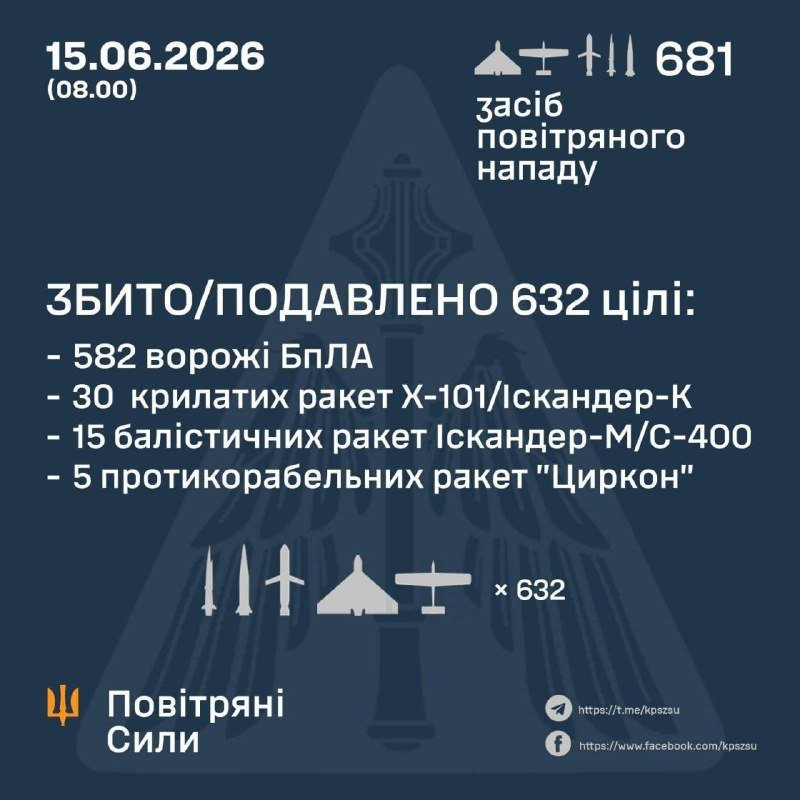
On 14 June 2026, two signals arrived within an hour of each other, and only one of them was about the weather. Al Jazeera's breaking-news wire reported, at 14:39 UTC, that the European Union is set to hold membership talks with Ukraine. Thirty-six minutes later, at 15:14 UTC, the Ukrainian outlet TSN carried an analysis arguing that Vladimir Putin's accumulating battlefield defeats in Ukraine may make him, not less, but more dangerous. By 15:15 UTC, the same TSN desk was warning that thunderstorms, hail and strong winds would sweep the country. A political storm and a meteorological one, queued for the same afternoon, turned out to be the right way to read the day.
Ukraine is about to be put on the same institutional track that absorbed Poland, Hungary and the Balkans. That is the headline. Everything else is about how Moscow, and the European public, will absorb it.
The procedural move, and what it actually means
"EU membership talks" is a term of art. It is the formal step in the EU's accession machinery where a candidate country's laws, institutions and economy are screened, chapter by chapter, against the acquis communautaire — the cumulative body of EU law. Opening talks is not membership. It is the promise of membership, conditional on reform, and it locks the candidate into a multi-year negotiation with the bloc's 27 existing members acting as gatekeepers.
For Ukraine, this is a direct rebuke to the argument — peddled for two years in several European capitals — that Kyiv's institutions are too war-damaged or too corrupt to begin the process. The move, as reported by Al Jazeera on 14 June 2026, says the opposite: that the EU's executive branch is now prepared to bet its enlargement credibility on Ukraine's trajectory continuing. The political cost of that bet, if the war worsens or reforms stall, will land in Brussels, not in Kyiv.
The counter-narrative: why Moscow reads this as a defeat
The TSN-cited analysis, also on 14 June 2026, advances the read now circulating in Western commentary: that a cornered Putin is more dangerous than a confident one. The structural argument is straightforward. When a regime's central war aim — preventing the westward integration of its neighbour — visibly fails, the incentive structure inside the Kremlin tilts toward escalation: longer-range strikes, nuclear signalling, sabotage of European logistics, the deliberate engineering of an energy crisis to fracture the European consensus that the membership talks themselves require.
The counter-argument, heard in some Western chancelleries, is the opposite: that formal EU integration is the moment Russia finally accepts the new geometry, because continued fighting becomes a war against a state that is, for all practical purposes, already inside the Western institutional architecture. History offers both priors. Finland in 1940 fought the Soviet Union to a stalemate and was left outside NATO for fifty years; Finland in 2023 joined NATO within months of the full-scale invasion of Ukraine. The lesson Moscow drew from Helsinki-2023 is the one European policymakers should expect to be in the back of Putin's mind as he watches Brussels move on Kyiv.
Why the weather bulletin matters more than it looks
The other TSN item on 14 June 2026 — thunderstorms, hail, high winds — is, on its face, trivial. In a country at war, where the air-defence budget crowds out civilian resilience spending, it is not trivial at all. Ukraine's energy grid has been a Russian target since October 2022. Severe weather on top of an already-strained grid forces a triage between civilian loads and the war economy, between keeping hospitals lit and keeping radar arrays powered. It is a reminder that membership talks are an institutional event; the country walking into the talks is operating on a knife-edge of material resilience that EU accession is meant, eventually, to harden.
The structural frame here is older than the war. The EU's enlargements of 2004 and 2007 did not just extend the single market; they extended the infrastructure of the single market, including the physical infrastructure that buffers member states against shocks. Ukraine is, in effect, applying to join a club whose principal post-2022 offer is precisely the resilience — institutional, financial, energetic — that Russia has spent four years trying to strip from it.
The stakes, plainly stated
If membership talks open and the process advances, three things follow. First, Ukraine's reform programme gets a written, Brussels-defined yardstick — useful for Ukrainian reformers, binding on Ukrainian governments. Second, the European budget's next Multiannual Financial Framework, the bloc's seven-year spending plan, will have to find room for a country at war, a fiscal gesture that will trigger fights inside the EU27 over agriculture and cohesion money. Third, Moscow's strategic premise — that time is on its side, and that Ukraine will eventually become a weary, divided, and unintegrated rump — is publicly retired.
If the talks stall, or if a member state blocks the opening on rule-of-law or minority-rights grounds as has happened in the Western Balkans, the Kremlin's bet on Western fatigue is vindicated. Kyiv, in that scenario, gets the worst of both worlds: a war that continues, and a European promise that has gone flat.
What the sources do not tell us
The Al Jazeera wire item confirms that the EU is set to hold membership talks with Ukraine on 14 June 2026, but it does not specify the negotiating framework, the chapter schedule, or the position of the more sceptical member states. The TSN analysis is an editorial read of Russian behaviour, not a verified intelligence assessment. And the weather bulletin, naturally, does not speak to missile trajectories. The picture is consistent across the three inputs: a continent integrating, a regime under pressure, and a country whose physical capacity to absorb either remains the binding constraint. That is enough to know that 14 June 2026 will be filed in two different ledgers — one in Brussels, one in Moscow — and that the storm on the horizon is political long before it is meteorological.
Desk note: Monexus is running this as an opinion piece in the staff-writer voice — sharper edge, higher opinion density, but anchored to three same-day wire inputs rather than speculative commentary. Where the wire and the editorial read diverge, we have said so explicitly.
Wire provenance
This editorial synthesis draws on the following public wire/social posts:
- https://t.me/TSN_ua/
- https://t.me/TSN_ua/
Follow the event.
These dated source records provide context. They do not retrospectively verify this archive article.
A dated voting record is evidence of one decision. Use the original UN record before turning it into an alignment label.
Visual explainer · historical vote of 2022-03-02 →