Putin's 55-minute birthday call to Trump: the diplomacy of photo-opportunity
A 55-minute call, a birthday greeting, and a Trump envoy on the way to Moscow — the choreography is familiar, the substance is not.
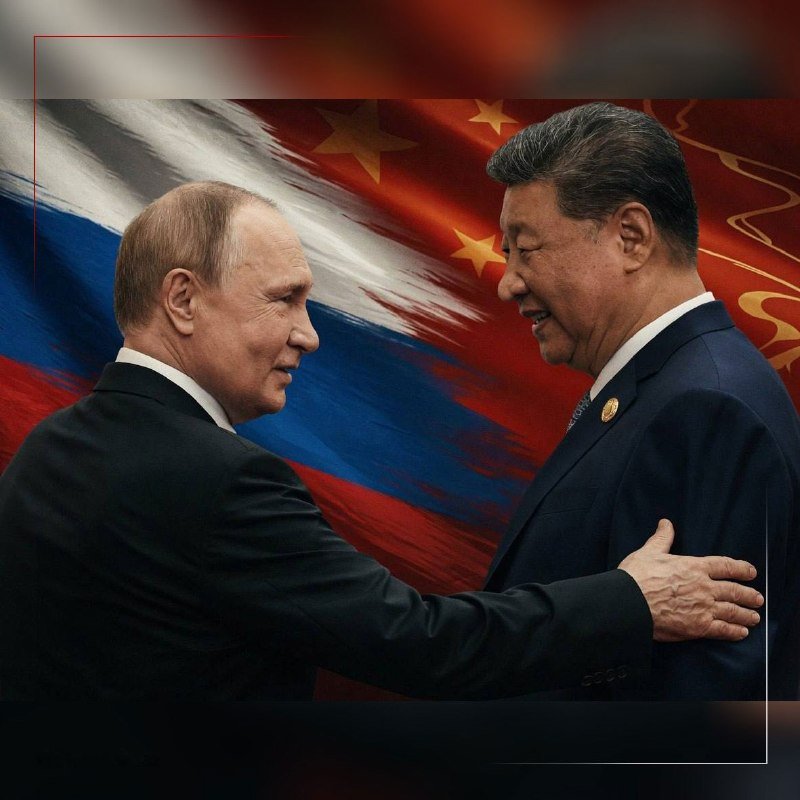
At 16:21 UTC on 14 June 2026, Russian state-aligned channels began transmitting the same line in slightly different registers: Presidents Vladimir Putin and Donald Trump had spoken by telephone for 55 minutes at Moscow's initiative. The chosen hour, by Kremlin logic, was not coincidental. Trump turned 80 that day, and Putin opened by congratulating him. According to Kremlin aide Yuri Ushakov, Trump responded with warm words and expressed support for what Russian readouts described as "the earlier understandings." Within twenty minutes, the headline had spread across Russian, Ukrainian and Latin American Telegram feeds in near-identical form — a choreography that has, by now, its own familiar cadence.
What is actually new is thin. Witkoff and Kushner are travelling to Russia again. Putin reportedly told Trump that Ukrainian strikes on Russian infrastructure "do not affect the front and will not change the course of combat operations" — a line that reads less as strategic analysis and more as a demand that Washington cool Kyiv down. A separate Zelensky–Trump call was logged in the same hour, described as positive and centred on negotiation ideas, with no Ukrainian readout of substance attached. The picture is one of two parallel conversations running on parallel tracks, neither with a transcript either side is willing to publish.
The 55 minutes
The duration is the part Russia wants the world to remember. Ushakov's briefing, carried in identical language by Hromadske, DDGeopolitics, Telesur English and the Noel Reports channel, emphasised a 55-minute call covering Ukraine, U.S.-Russia relations, the Middle East and "future diplomatic contacts." Compare that with the Ukrainian-flagged channel Wartranslated, which carried a much shorter item: a Zelensky–Trump call, sourced to RBC-Ukraine, in which the Ukrainian president wished Trump a happy birthday and the two discussed "ideas for further negotiations." The two readouts share a fact — both leaders spoke to Trump on his birthday — and diverge on everything else. The Russian read-out is granular. The Ukrainian read-out is a courtesy.
This asymmetry is the story. A 55-minute call, by Washington's silence on it, is treated in Moscow as a deliverable. In Kyiv, the same hour produces a polite, content-free summary. The contest is not over the words said on the call. It is over what each capital can credibly claim in the days that follow.
What Moscow wants
Strip the birthday varnish away and three Russian asks become legible. First, the Witkoff–Kushner visit is back on the calendar — a personal-channel envoy mission that has, so far, produced more travel than treaties. Second, the demand that Ukrainian long-range strikes on Russian infrastructure be downgraded: Putin's "do not affect the front" formulation is a request that Washington treat them as a negotiating irritant rather than a legitimate response to an invading army. Third, the framing of "earlier understandings" — a phrase designed to suggest a continuity of deal-making that has, in fact, produced no public document either side is willing to sign.
Ushakov's curated-for-export claim that the call covered the Middle East, a line echoed by Telesur English's wire summary, is doing a different job. It signals that Moscow is still in the room on issues beyond Ukraine, and that the bilateral relationship is broader than the war. For a White House that wants to project deal-making across multiple files simultaneously, that is a useful sentence to leave in the system.
What the framing hides
Coverage of these calls routinely defers to the language of one or the other side's spokespeople. The 55-minute figure comes from Moscow. The "warm" characterisation comes from Moscow. The substantive agenda comes from Moscow. The Ukrainian side, by contrast, is reduced to a courtesy call and a single phrase — "ideas for further negotiations" — that nobody has yet been asked to define. The pattern is structural: when a Russian readout is granular and a Ukrainian readout is not, Western wire copy tends to summarise the granular one and append the courtesy as context. The diplomatic shape of the day, in other words, gets drawn in Moscow's pen.
There is a counter-read worth stating. The very fact that Witkoff and Kushner are heading back to Russia means the channel is open. The very fact that Putin took the call, rather than routing it through Foreign Minister Sergei Lavrov, signals that Moscow calculates the cost of disengagement with Washington now exceeds the cost of engagement. And the very fact that Trump accepted the birthday frame — the call, the congratulations, the warm words — tells Moscow that the door has not been closed. None of that is peace. All of it is, however, a precondition for any deal that does not get imposed on a losing side.
The structural frame
What is being staged is not negotiation. It is the appearance of negotiation, conducted through personal-envoy missions and birthday calls, while the underlying military contest continues on its own clock. The form of the diplomacy is bilateral, Russia-United States. The substance — the territorial question, the security guarantees, the future of occupied regions, the reparations question, the war-crimes question — is one that no amount of phone-call duration can compress. Until the bilateral track produces a written document either side can sign, every 55-minute call is a holding pattern.
The Witkoff–Kushner return visit is, by this reading, the next marker to watch. If it lands in Moscow with a U.S. position paper, the track is alive. If it lands as another round of conversations-without-conclusions, the bilateral will be exposed for what it currently is: a substitute for negotiation, not the start of one.
What remains uncertain
The thread sources do not specify whether any third party was on the line, whether the Zelensky call took place before, during or after the Putin call, or whether any of the three readouts have been confirmed on the record by the White House. Ushakov's summary is the only public version of the 55-minute conversation; the Russian presidential website had not, at the time of writing, published a full transcript. The Ukrainian side has not disputed the Russian read-out's facts — it has, tellingly, declined to compete with it. Until a Western readout appears, the diplomacy of 14 June 2026 will be a story told mostly by the people who arranged it.
Desk note: Monexus frames the call through the asymmetry of readouts, treating the 55-minute Russian summary as primary and the Ukrainian courtesy call as context, in line with our standing practice of sourcing granular claims to their originators while keeping Ukrainian and Western-allied reporting in the lead on war-ground facts.
Wire provenance
This editorial synthesis draws on the following public wire/social posts:
- https://t.me/hromadske_ua
- https://t.me/noel_reports
- https://t.me/optionsintellive
- https://t.me/wartranslated
- https://t.me/DDGeopolitics
Follow the event.
These dated source records provide context. They do not retrospectively verify this archive article.
A dated voting record is evidence of one decision. Use the original UN record before turning it into an alignment label.
Visual explainer · historical vote of 2022-03-02 →