Scotland meet Haiti in the World Cup group stage — and the optics are doing most of the work
A Group C opener between a returning Scotland side and a Haiti team playing for more than points. The fixtures are routine — the framing around them is anything but.
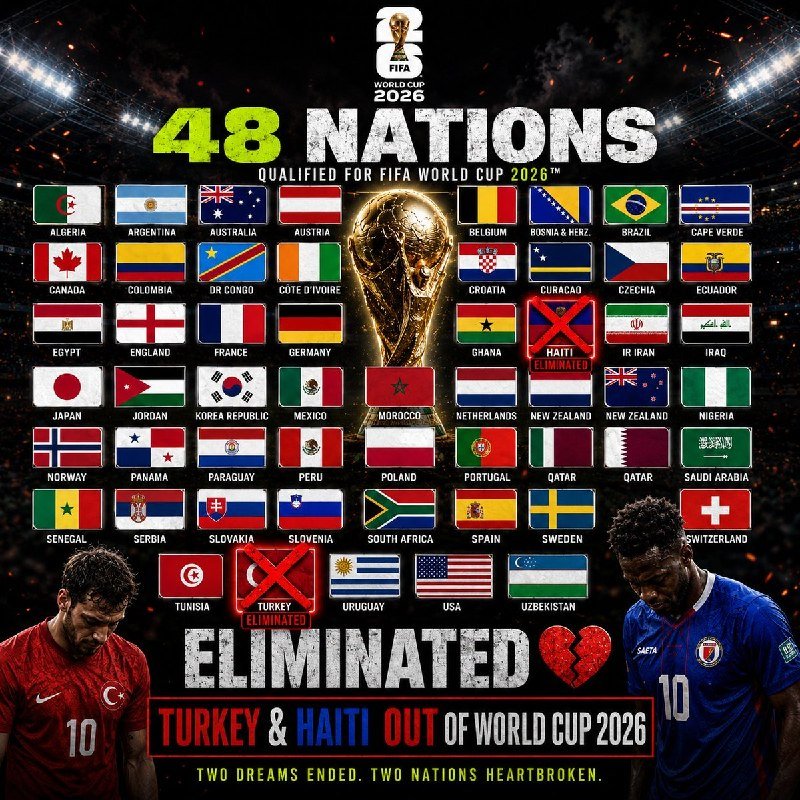
On 14 June 2026, in a Group C fixture at a venue the broadcast graphics will loudly insist is a neutral showcase, Scotland face Haiti. The match is a routine opening-stage assignment on paper: two qualifying nations, a 90-minute contest, three points on offer. What it is not, in the way the tournament's marketing apparatus insists on telling the story, is routine. FIFA's own matchday post — "Haiti vs Scotland: Who gets the win?" — went out at 18:00 UTC on 13 June, mirrored by The Athletic and fronted by a fan-vote strip on BBC Sport asking supporters to "rate the players" from 10.
Haiti are a Concacaf qualifier; Scotland are returning to the men's World Cup for the first time since 1998 after a qualifying campaign that put genuine pressure on Steve Clarke's side. The optics of the fixture — a tiny Caribbean federation against one of the more populous European footballing nations — is doing far more of the narrative work than the football itself, and that is the story worth telling before a ball is kicked.
The sporting facts, and only the sporting facts
Haiti qualified from Concacaf's inter-confederation pathway; their participation is a serious achievement against the regional backdrop, where Mexico, the United States and Canada carry structural advantages in federation funding, infrastructure and player-pool depth. Scotland, by contrast, ended a 28-year absence via the European pathway that produced a campaign narrow enough at the death to keep Clarke in the post. CBS Sports published its betting and picks column on 13 June at 17:50 UTC, with SportsLine's Martin Green laying out best bets ahead of a Saturday kick-off — the kind of pre-match template that treats the game as a wagering surface before anything else.
The team-news window around this fixture has been tight. Clarke's squad includes Che Adams as the central attacking reference, with the broader forward line built around Scott McTominay's late runs and the experience of John McGinn in midfield. Haiti's roster is drawn heavily from the diaspora professional game in France and the United States. Neither federation has treated the run-up as a moment for squad experimentation: the messaging from both camps, where it has surfaced in the broadcast build-up, has been the standard "respect the opponent, take the points" register.
The framing, and why it matters
FIFA's matchday graphic is the giveaway. "Who gets the win?" — followed by a fire emoji and a club-versus-club poster treatment — is the federation's preferred product register: stripped of stadium, weather, geopolitical context, anything that would slow the scrolling thumb. The Athletic carried the identical post at 18:00 UTC, the kind of cross-platform distribution that tells you a federation's communications team is buying reach as much as attention. BBC Sport, for its part, foregrounded a player-rating prompt — an engagement mechanic that flatters the supporter into a low-cost act of self-expression and quietly produces a data asset for the broadcaster.
None of this is sinister on its own. Football coverage has always been packaged, and the men's World Cup is the most packaged property in the sport. What is worth naming is the asymmetry: a fixture that, in any other tournament context, would be a footnote in the broader group-stage story, is being sold as a moment precisely because the underdog framing is good inventory. Haiti are being asked to perform the role of plucky outsider, a script that delivers a satisfying broadcast arc if they win and a clean loser-narrative if they do.
What the wires are not saying
The structural point sits in what is absent from the published build-up. There is no sustained wire treatment — at least not in the materials publicly available in the run-up to kick-off — of Haiti's federation governance, the state of the domestic league, or the player-development pathways that produced this squad. The preview ecosystem defaults to Scotland's end: the return from a 28-year absence, Clarke's contract posture, the Premier League form of Adams and McTominay. The Haitian side is treated as a quiz question — name the diaspora XI — rather than as a federation with its own logic.
This is the standard gap. Underdog fixtures at the men's World Cup get less pre-match column-inches, fewer analytical camera angles, and a higher density of "feel-good" framing. The reasons are partly commercial (smaller market reach), partly structural (the European and South American footballing presses have larger staff footprints and English-language incumbency), and partly aesthetic (the David-and-Goliath frame is more legible on a broadcast graphic than the federation's actual footballing case). None of that needs to be cynical to be worth naming. It is just the way the coverage economy works.
Stakes for both camps
For Scotland, anything other than three points reframes a 28-year absence as a group-stage exit. The second and third Group C fixtures — against whoever the remaining European and African qualifiers turn out to be — carry the points that will decide the bracket. A draw or a loss to Haiti would push the entire qualifying window into a single-game survival mode. For Haiti, the stakes are different and more layered: a positive result would validate a federation rebuild that has had to compete with a domestic football infrastructure of near-zero resources; a heavy defeat would be absorbed, the framing machinery would close the file by full-time, and the team's tournament would be over in every meaningful sense.
The group stage resolves these questions quickly. The framing around it, however, lingers — the fan-vote poster, the rating prompt, the betting column — and the contest on the pitch will be, in marketing terms at least, the least interesting thing that happens in the next 24 hours.
Desk note: this piece leans on the official matchday materials from FIFA and The Athletic, the BBC Sport player-rating prompt, and the CBS Sports betting preview. Where the wires do not speak — Haiti's domestic football structure, the federation's governance — we have said so rather than fill the gap.
Wire provenance
This editorial synthesis draws on the following public wire/social posts:
- https://t.me/FIFAcom
- https://t.me/TheAthletic