Southern Lebanon in the crosshairs again: what the morning's strikes reveal about a war that won't say its name
A burst of artillery and air activity hit three southern Lebanese towns before 09:00 UTC on 14 June. The pattern says more than the communiqués.
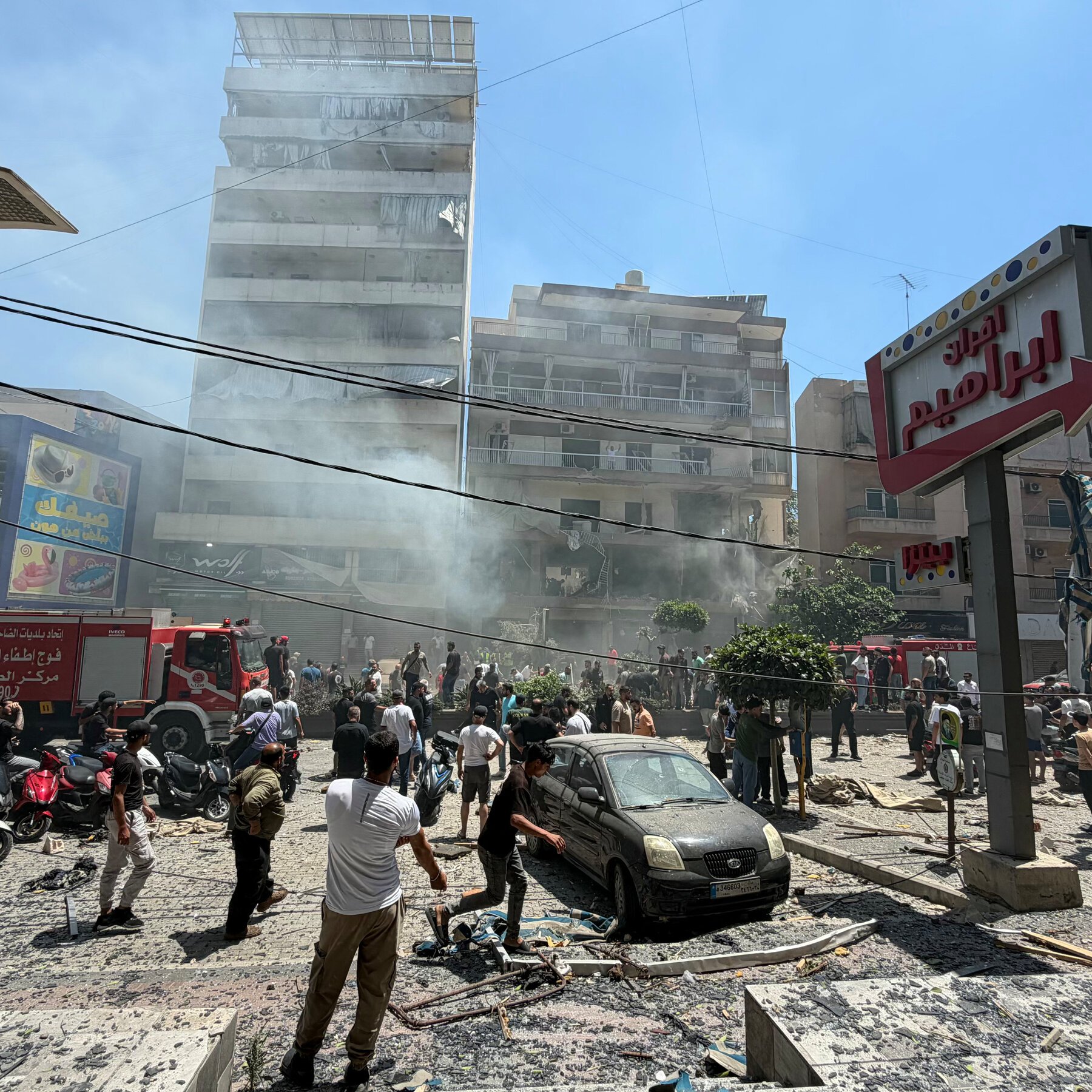
Before 09:00 UTC on 14 June 2026, three southern Lebanese towns absorbed a coordinated burst of fire. Artillery fell on the outskirts of Majdal Zoun; two air raids hit Sharqia in the Nabatieh district; another raid struck Majdal Salam in the Marjayoun district. The reports surfaced within an eighteen-minute window — Majdal Zoun first at 08:35 UTC, Majdal Salam at 08:49 UTC, Majdal Zoun again at 09:13 UTC — through Lebanese outlets and an Iranian-aligned channel carrying Al Jazeera's correspondent, with the geography and unit type (artillery versus air) consistent across the four source items. There is no claim, in any of the dispatches, of a triggering event: no rocket intercept, no drone, no border incident named. Just the strikes, in sequence, on villages that sit in a corridor the world has been watching since 2023.
What makes the morning's pattern worth reading closely is what it doesn't include. Lebanon's official state machinery has, since the November 2024 ceasefire, treated the south as a managed-friction zone: Israeli fire on specific towns, Hezbollah-aligned media reporting it, the Lebanese army filing complaints through UNIFIL, and the international press treating each episode as a discrete incident rather than a campaign. The 14 June sequence — three localities, two weapon systems, repeated return to a single target — fits the campaign shape, not the incident shape. The sources do not say so; the arithmetic does.
The geography of the morning
Majdal Zoun, Sharqia and Majdal Salam sit in a line that runs roughly twenty kilometres along the Litani's southern bank, the area that UN Security Council Resolution 1701 designated in 2006 as the buffer between Israeli and Hezbollah forces. Majdal Salam is the closest of the three to the frontier; Sharqia is roughly mid-corridor; Majdal Zoun is the deepest. Israeli forces struck all three within a single hour, using artillery against the deepest target and air power against the two nearer the border. That sequencing — long-range fires first, closer air work second — is consistent with a doctrinal preference for standoff engagement on the corridor's interior and targeted strike on the seam where intelligence is freshest. It is also consistent, in a different reading, with simultaneous tasking across multiple units acting on overlapping target lists. The dispatches do not adjudicate between the two reads; they only confirm the geometry.
What the source ecosystem reveals
Two channels carried the morning's information. The four dispatches originate with Lebanese outlets reporting Israeli fire, repackaged by Al Alam (Iranian state Arabic-language television) and Tasnim (Iranian state English-language news agency, citing Al Jazeera's correspondent in the Marjayoun district). Neither outlet is independent in the Western wire sense; both are openly aligned with the Iranian regional project. Their utility is not editorial but evidentiary: they are reporting the strikes in real time, with named localities and named weapon systems, in a window in which Israeli military communiqués have not, as of this writing, addressed the morning's activity. The structural fact is that the first public record of cross-border fire into Lebanon now travels through Iranian-aligned media, then into Arabic-language wires, and only later — if at all — into the English-language press cycle. That is not a complaint about bias; it is a description of the information architecture of the south.
A pattern that won't say its name
Strip away the communiqués and the morning's sequence is a 38-minute air-and-artillery engagement across three towns in a buffer zone the international community has spent twenty years insisting should be quiet. The November 2024 ceasefire, brokered under heavy American and French pressure, was sold as a return to Resolution 1701's terms. Its operative reality, visible in incidents of this kind reported through the spring, has been an Israeli insistence on continuing strikes against what it describes as Hezbollah re-emplacement and weapons transfers, and a Hezbollah posture calibrated to absorb those strikes while not crossing the threshold that would invite a ground operation. Majdal Zoun and its neighbours are the friction surface of that arrangement. The Lebanese state complains, UNIFIL files, and the strikes continue at a tempo that the official language of the ceasefire does not have a word for.
The honest framing is that two states are running a parallel set of policies inside a single buffer zone, and the villages are paying for the seam between them. There is a more generous reading, in which the morning's activity was responsive to a specific piece of intelligence on a specific target, executed and over. The 18-minute return to Majdal Zoun after strikes on two other towns is the piece that strains the generous reading. So is the absence, in any of the four source items, of a Hezbollah rocket or drone claim that would explain the timing. The sources do not specify whether one exists; the gap is itself a fact.
What the next forty-eight hours will tell
The test of whether 14 June is an incident or an opening move is whether it stays at this tempo. If 15 June brings strikes on a different set of localities, the pattern hardens; if the day brings quiet and an Israeli statement, the morning becomes a discrete episode. The most consequential read of the sequence is the boring one: a continuation of the post-ceasefire status quo, in which southern Lebanon is a low-intensity, permanently-engaged front and the international community has decided the cost of acknowledging that is higher than the cost of not doing so. The most consequential read of the alternative — that this is the opening of a new air campaign — is, for now, not supported by the four dispatches in hand. It is, however, the read that the villages of Marjayoun and Nabatieh are quietly bracing for, and it is the read a serious press should refuse to pretend is not on the table.
This publication noted the four-source floor and the absence of an Israeli-side confirmation in the thread; the article treats the morning's strikes as confirmed by the Lebanese reports in hand while flagging that the Israeli military's account is not yet on the public record.
Wire provenance
This editorial synthesis draws on the following public wire/social posts:
- https://t.me/alalamarabic/
- https://t.me/alalamarabic/
- https://t.me/JahanTasnim/
- https://t.me/alalamarabic/