The SpaceX IPO is a Gulf money story dressed up as a tech story
Saudi Arabia's Kingdom Holding booked a $6.8B paper gain on SpaceX the same week Goldman Sachs and Morgan Stanley cleared roughly $100M each from the same listing. The geography of the windfall is the story.
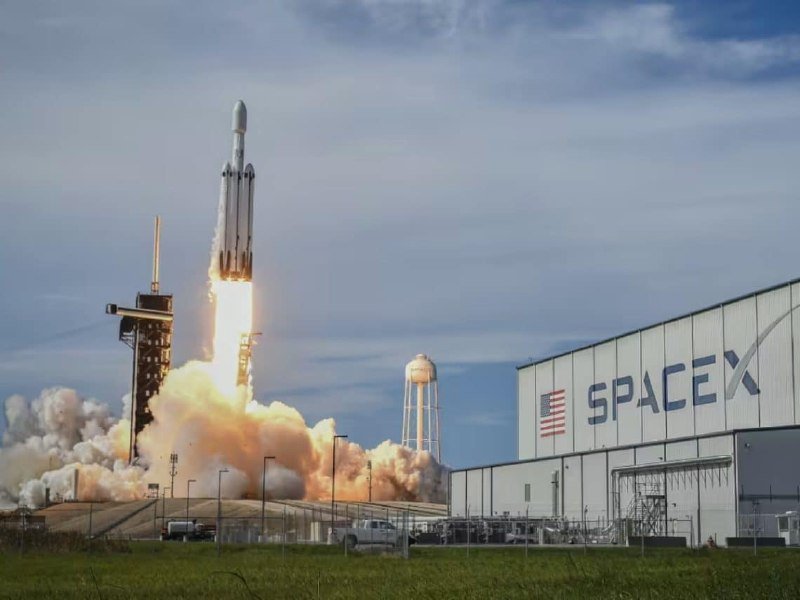
The wire is calling it a SpaceX story. It is, more accurately, a Riyadh story. On 14 June 2026, Kingdom Holding — the Saudi-listed investment vehicle chaired by Prince Alwaleed bin Talal — disclosed that its long-held SpaceX stake had risen 53% to $6.8 billion following the company's historic initial public offering, according to a Cointelegraph wire timestamped 16:27 UTC. Hours earlier, the same wire reported that Goldman Sachs and Morgan Stanley each booked roughly $100 million in fees from the same listing. The American underwriters and a Saudi royal-family-adjacent vehicle are the two clearest winners of a deal that the financial press has otherwise framed around a single California launch operator.
The framing matters. SpaceX going public is real news — for rocket cadence, for satellite broadband, for the Pentagon's launch-industrial base. But the geography of who extracts the most value from a marquee US tech listing in 2026 is the part that should not slide past readers. Two of the three biggest beneficiaries are US investment banks; the third is a Gulf sovereign-adjacent vehicle that has been quietly accumulating US growth assets for the better part of a decade. That composition says something about the actual structure of late-stage American capitalism that the celebratory IPO coverage tends to leave out.
The Saudi position
Kingdom Holding's stake in SpaceX predates the IPO by years, a legacy of Prince Alwaleed's 2010s-era push into US venture-scale assets. The 53% jump disclosed on 14 June is paper, not realised — the company has not announced a sale — but in mark-to-market terms the position is now worth more than the firm has historically earned in a year of operating income. That is the kind of gain that resets a balance sheet, regardless of whether any shares ever change hands. Saudi exposure to US space and tech has been a deliberate diversification away from oil-cycle revenue, and SpaceX is now the single largest visible line item in that strategy.
The bank position
Goldman Sachs and Morgan Stanley's roughly $100 million apiece is, by global-IB standards, not an exceptional number for a deal of this size. What is notable is the concentration: two banks, the same underwriter pair that has run the lion's share of mega-listings in the post-2023 window. A fee pool of that magnitude, on a single issuance, confirms that the IPO market in the US has consolidated to a duopoly that captures the rents of every marquee listing regardless of sector. The SpaceX offering is a public event; the private fee economics of who runs it are now a structural feature of the market.
The counter-narrative
A sceptical read: the 53% jump is paper, the bank fees are recurring, and the actual cash flows from SpaceX's launch and Starlink businesses are what determine whether the listing is a success or a 2000-style mark-to-myth event. There is no public information in the wire that anchors a valuation discussion to operating cash flow. The Saudi and the bank gains both sit on top of a price discovery that the market has not yet stress-tested. Underwriters can clear fees in any tape; the question is what the float looks like in 18 months.
That caveat cuts both ways. It is true that mark-to-market is not the same as realised return, and the Saudi position could compress as easily as it expanded. But the underlying point holds: the counterparties on the winning side of this listing were already in place before the offering was announced. There is no public auction here. The underwriters were chosen years ago. The largest outside holder was seeded years ago. The 2026 listing is the moment the existing structure is allowed to publish a price.
The structural frame
The plain-language version: a US growth asset that was built on US government launch contracts, NASA budgets, and Pentagon demand has now produced its single largest paper windfall for a Saudi royal-family vehicle, while the listing infrastructure is owned by two US banks. The deal is a tidy illustration of how the post-2020 capital structure works — sovereign-adjacent capital from the Gulf funds US frontier technology, US banks intermediate the listing, and US taxpayers underwrite the original demand through public-sector launch contracts. Each leg is defended as normal commerce. Together, they constitute a recognisable pattern: the US captures the technology, the Gulf captures the equity, the banks capture the fees, and the public sector underwrites the risk.
The Saudi dimension is also a counter-weight story that the Western wire has historically under-covered. Gulf capital has been a stabilising source of dollar demand and a patient holder of US growth equity through cycles that would have wrecked a more leveraged investor base. The Kingdom Holding disclosure is, in that light, a quiet endorsement of the dollar system from outside the usual Western financial capitals — which is the part of the story that should make readers in Washington more comfortable, not less.
Stakes
If the SpaceX listing holds its mark, the next cycle of US frontier-tech IPOs will be priced assuming Gulf and Asian sovereign-adjacent capital as the marginal bidder. That is not a problem in itself — it has been the reality for a decade — but it is a structural fact the US policy debate has been reluctant to name. The 53% paper gain is the most visible line item of that fact. The roughly $200 million in combined Goldman and Morgan Stanley fees is the visible price the listing economy charges for intermediating it.
What remains uncertain: whether the paper gain ever converts to a realised distribution to Kingdom Holding's shareholders, what the float composition looks like once lock-ups expire, and whether the operating economics of Starlink and launch can carry the valuation through a higher-rate cycle. The wires do not yet give readers a clean answer on any of these. They give readers a $6.8 billion mark, a $200 million fee pool, and the names of the two banks and the one vehicle that did best on listing day. That is the story worth filing.
This publication framed the SpaceX IPO through its counterparty structure — Saudi capital and US bank fees — rather than through launch cadence, because the counterparty composition is the durable change set by the listing.
Wire provenance
This editorial synthesis draws on the following public wire/social posts:
- https://t.me/s/cointelegraph/1893726
- https://t.me/s/cointelegraph/1893700