The Strait of Hormuz Circus: How a US Defense Secretary Boasted of Control He Doesn't Have
A White House briefing room exchange on 14 June 2026 has produced the clearest on-record admission yet that the United States is negotiating with Tehran over a waterway its own defense secretary claims it already controls.
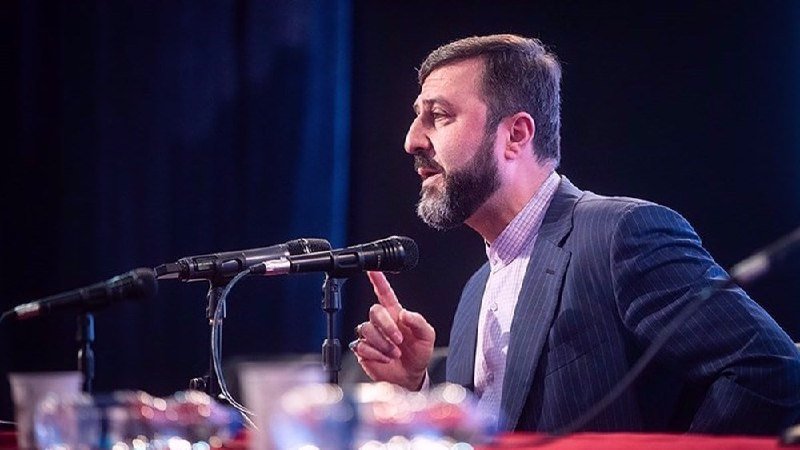
At roughly 14:54 UTC on 14 June 2026, a short clip began circulating on Telegram channels DDGeopolitics and ClashReport. In it, US Defense Secretary Pete Hegseth is asked — by a reporter whose name the clip does not give — whether the United States will negotiate with Iran to reopen the Strait of Hormuz. Hegseth replies that Washington has "controlled the Strait this entire time." The reporter's follow-up is the line worth sitting with: "Right, but you're gonna negotiate with them to reopen it?"
The exchange exposes, in fewer than thirty seconds, the central contradiction of the second Trump administration's Middle East posture. Hegseth claims total control of the world's most important oil chokepoint; the same administration is, by his own implicit admission, sitting across a table from Tehran to bargain for the right to transit it. Both cannot be true at the same register, and the choice of which register to drop is the story of the week.
The Vance caveat
Within twenty minutes of the Hegseth clip gaining traction, DDGeopolitics posted a separate clip — timestamped 15:08 UTC — in which Vice President JD Vance attempts the cleanup. The vice president's line, quoted verbatim in the Telegram post, is that "both Trump and I are generally skeptical of foreign military entanglements," followed by the hedge that "fundamentally, that doesn't mean you can never use military force." The phrase is the ideological scaffolding of Trumpist foreign policy in two clauses: a stated allergy to overseas commitments, followed by a hand-rolled exception large enough to drive the aircraft carrier through.
Vance is not a marginal voice in this debate. He is the administration's most visible internal critic of the interventionist wing, and his presence on tape doing the rhetorical labour of reconciling "skepticism" with the deployment of force is itself a tell. The White House does not put the vice president on camera to clean up a defense secretary's line unless the line is already causing damage.
What "control" means in the Strait
The Strait of Hormuz is, by any honest measure, not a piece of territory a navy can occupy. It is a 21-nautical-mile-wide channel between Iran and the Arabian Peninsula, through which roughly a fifth of global oil passes on any given day. The US Navy's Fifth Fleet, headquartered in Bahrain, has maintained a continuous presence there since the Iran-Iraq war. Iran has, in turn, spent four decades building an asymmetric capability — fast-attack craft, anti-ship cruise missiles along its coastal belt, naval mines, and the Revolutionary Guard Navy's swarm doctrine — explicitly designed to make that presence expensive to exercise.
Hegseth's claim of control is, in this light, either a definitional sleight of hand (the US can transit; therefore it controls) or a negotiating posture (tell the public we have it, tell Tehran we may not need them). Either reading points to a problem: a defense secretary who tells the American public one thing and a vice president who tells the same public the opposite is not running a coherent deterrent policy. He is running two deterrent policies, one for each audience.
The negotiation that proves Hegseth wrong
The most damning fact in the clips is the one the reporter surfaces. If the United States has controlled the Strait "this entire time," there is nothing to negotiate. The fact that a US negotiating team is sitting with Iranian counterparts — a fact implied by Hegseth's own non-denial — proves the control thesis incomplete. It does not prove it false in the military sense; sea control is a spectrum, and the US retains meaningful dominance at the high end of naval warfare. It does prove that the operational reality is more contested than the secretary's one-liner suggests, and that Tehran retains leverage sufficient to make Washington talk rather than simply steam through.
This is the structural point the casual viewer of the clip will miss. The Strait is not a question of who wins a shoot-out; it is a question of who can impose cost day after day. On that scoreboard the United States retains enormous advantages, but it has never been able to translate them into a position where the Iranian side consents to being ignored. The negotiation, in other words, is not a sign of US weakness. It is a sign that even overwhelming naval power has political limits when the chokepoint runs along the coast of a hostile state.
Stakes, and the gap the clips leave open
What remains genuinely uncertain, after fourteen hours of these clips circulating, is the substantive content of the US-Iran exchange. The Telegram posts do not name a counterpart, a venue, a date, or an agenda. They do not say whether the talks are bilateral, mediated, or conducted through a third capital. They do not say what "reopen" means in operational terms — full freedom of navigation, or the lifting of specific Iranian inspections of commercial tonnage that have periodically slowed traffic in recent months. The clips confirm a negotiation exists; they do not tell us what is on the table.
The honest read, for now, is the duller one. The administration is running a familiar playbook: maximalist public posture, calibrated private engagement, the vice president on standby to translate between them. The cost of that playbook is exactly what Hegseth's clip demonstrates — a public record in which the most powerful military in human history, on the same afternoon, claims total control of a waterway and prepares to bargain for access to it. The two messages do not reconcile, and no amount of Vance-style reasoning about the principled use of force can square the circle. The next time a Pentagon spokesperson steps to a podium, the press corps will be carrying the reporter's follow-up. That is the lasting damage of a 14 June 2026 afternoon: not a crisis at sea, but a credibility crisis in the briefing room.
This publication framed the Hegseth clip as a problem of audience management rather than as a story about US naval capability, on the reading that the same administration's parallel negotiating track is the more durable fact.
Wire provenance
This editorial synthesis draws on the following public wire/social posts:
- https://t.me/DDGeopolitics
- https://t.me/DDGeopolitics
- https://t.me/ClashReport