Tehran's Dahiyeh verdict: a public breach in a quiet war
Iran's parliament speaker has publicly questioned whether Washington can — or will — restrain Israel, turning a Beirut strike into a credibility test for the US-Iran relationship.
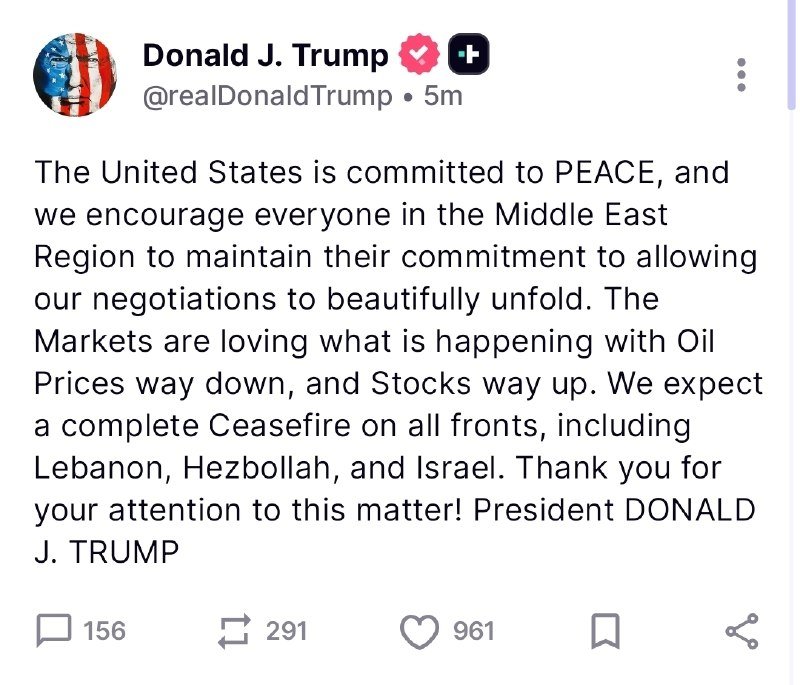
On 14 June 2026, Iran's parliament speaker publicly questioned whether the United States can be relied on to restrain Israel, in remarks carried on Iranian state-aligned channels. The setting was a Beirut suburb the speaker called by its Arabic name, and the message was directed at Washington as much as at Tel Aviv.
The statement, attributed to Mohammad Baqer Qalibaf and circulated by Iranian state media and regional aggregators on 14 June, is the most pointed formulation yet of a question Tehran has been raising in private for months: whether the diplomatic channel between Iran and the United States is, in practice, capable of constraining the military behaviour of a third party. That the complaint was delivered in public, in the language of failed commitment, marks a shift from the cautious, behind-the-scenes phrasing that has characterised Iranian statements since the most recent round of indirect talks.
What was actually said
According to two regional Telegram channels carrying the speaker's statement on 14 June, Qalibaf framed an Israeli incursion into the Dahiyeh — the Shia-majority southern suburb of Beirut long associated with Hezbollah's civilian-facing presence — as evidence that "America either lacks the will to fulfil its commitments or the ability to" constrain its ally. The phrasing was reported identically across both channels, suggesting the text was distributed in written form rather than reconstructed from audio.
The choice of words is deliberate. By presenting the failure as a binary between will and capacity, Tehran preserves maximum room to argue later that the United States is choosing not to act — a charge with heavier political consequences than admitting Washington is outmatched. It also reframes the diplomatic problem as an American one, not an Israeli one: the implicit demand is that Washington should be the guarantor, not merely a broker.
Why Dahiyeh, and why now
Dahiyeh is not a neutral stage. The suburb has been struck repeatedly in past Israeli operations, including the 2006 war with Hezbollah and the 2024 escalation, and the destruction of residential blocks there is consistently treated in regional reporting as a politically weighted event — heavy in symbolism for the Iran-aligned axis, and treated by Israeli spokespersons as legitimate targeting tied to Hezbollah infrastructure embedded in civilian areas. The suburb is, in other words, precisely where a message about commitment would be sent.
The timing matters as much as the geography. Iranian and US negotiators have, in recent weeks, traded language on nuclear constraints, sanctions sequencing, and the fate of regional proxy forces. A public breach from a senior Iranian figure hours after a Beirut strike is the diplomatic equivalent of slamming a door mid-negotiation: it does not end the talks, but it raises the cost of resuming them and forces the other side to demonstrate it can deliver something concrete before the rhetorical temperature cools.
The structural frame
What is being staged is a credibility auction. Tehran is signalling that the price of the relationship has gone up; Washington is being asked to prove, by action, that the restraint it claims to broker is real. The complaint is not new — Iranian officials have made comparable arguments in past escalations — but the public register is unusually blunt for a parliament speaker, whose role is normally ceremonial once statements are issued.
The risk runs in both directions. If the US treats the statement as rhetoric and does not respond with a visible gesture, Tehran's negotiating hand is weakened at home: hardliners gain ground against those who argued the channel was worth maintaining. If the US responds publicly, it raises Israeli expectations that any future accommodation with Iran will be met with Israeli unilateralism. Either outcome narrows the space in which a deal can be struck.
What remains uncertain
The Iranian statement does not, on the record, specify which incursion is being referenced, the scale of the operation, or whether there were casualties. The two Telegram channels carrying the text are aligned with Iranian state framing and do not, on their own, establish a basis for verifying the underlying event. Israeli, US, and Lebanese wire reporting on the strike itself has not been included in the source set available to this article, and a fuller picture will require those wires to weigh in.
What is already clear is that the diplomatic temperature between Washington and Tehran has changed. The question is no longer whether the channel is strained; it is whether the two sides are still speaking the same language about what the channel is for.
This article was sourced exclusively from two regional Telegram channels circulating an Iranian state-aligned statement on 14 June 2026. Monexus has not, at the time of publication, been able to corroborate the underlying strike from independent wire reporting and has flagged that limitation explicitly. The framing above is interpretive; the underlying event remains to be verified.
Wire provenance
This editorial synthesis draws on the following public wire/social posts:
- https://t.me/Middle_East_Spectator
- https://t.me/GeoPWatch
Follow the event.
These dated source records provide context. They do not retrospectively verify this archive article.
Separate what the nuclear watchdog reported from what it could not determine after the June 2025 strikes.