Trump's Beirut Rebuke Tests the Limits of US Leverage on Israel
A US president publicly telling an Israeli prime minister that a Beirut strike 'should not have happened' is a rare moment. Whether it changes anything is the question.
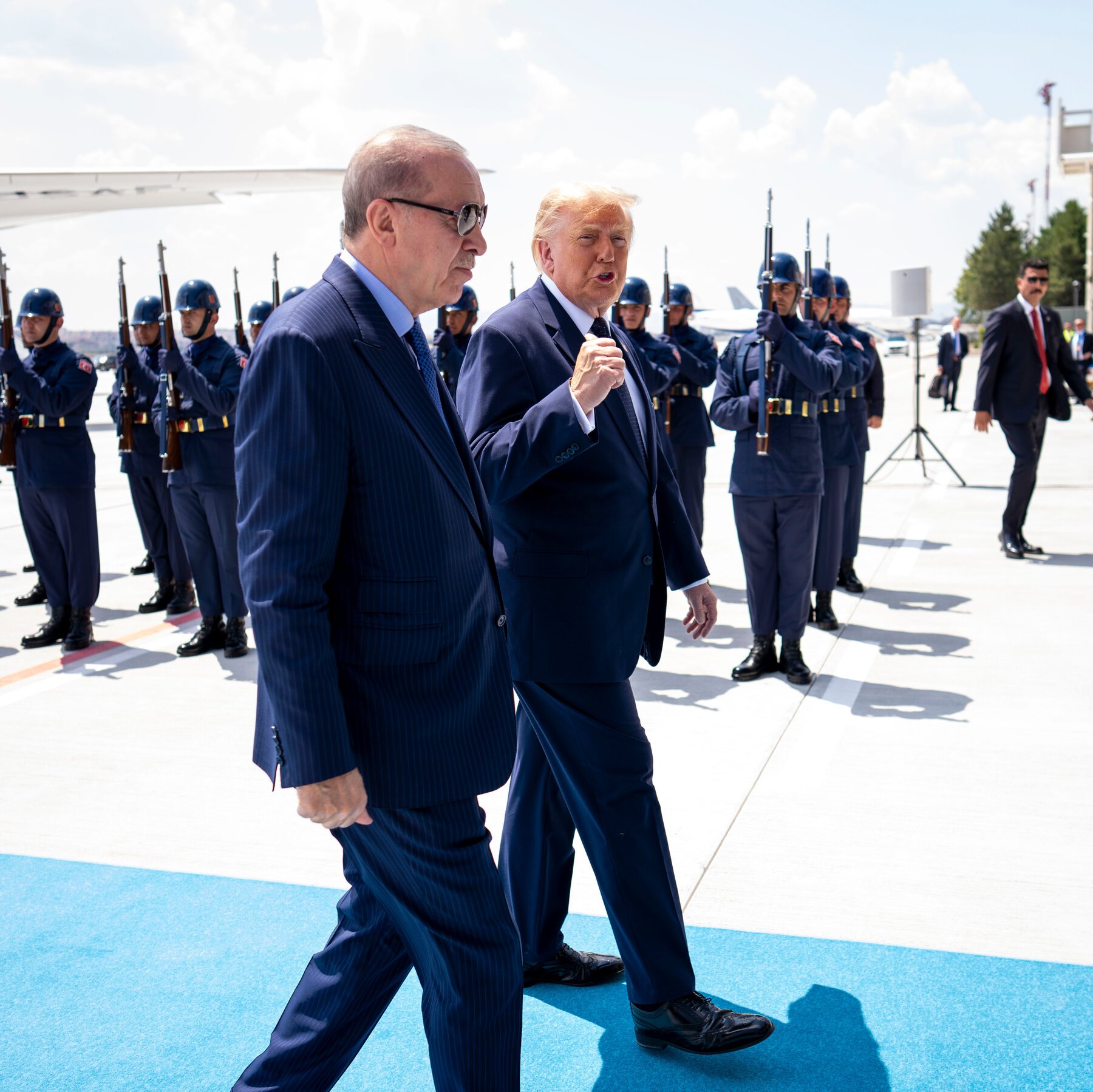
On 14 June 2026, the White House did something the modern Middle East beat rarely sees in real time: it rebuked an Israeli strike on a Middle Eastern capital in front of the cameras. According to messages carried by three separate Telegram channels — Abu Ali Express, DDGeopolitics and Middle East Spectator — President Trump said the Israeli bombing of Beirut "should not have happened" and urged "all parties to refrain from escalating," a formulation directed at Hezbollah as well as at Israel. The wording was reproduced in near-identical form across the three channels, with identical timestamps, which is itself a small news item: it suggests an on-the-record statement issued by the president rather than a backchannel aside leaked by aides.
The interesting question is not whether the statement is real. Multiple independent channels carrying the same quotation in the same hour is the modern equivalent of a pool report. The interesting question is what it means — and, more pointedly, whether it means anything at all.
The diplomatic cost of saying it out loud
Public disagreements between a US president and an Israeli government are not unprecedented, but they have become rarer as the bipartisan centre of gravity in Washington has consolidated around Israel. Trump's predecessors have, on occasion, expressed displeasure at settlement expansions, at operations in Gaza, at the pace of normalisation with Arab states. What made Sunday's intervention unusual is the venue: a direct, public, undiplomatic phrase — "should not have happened" — applied to a specific kinetic event in a specific capital. The statement, as carried by the three Telegram channels, also included a demand that "other parties including Hezbollah" stand down, an attempt at even-handed framing that is harder to deliver when one of the parties is bombing a foreign ministry building and the other is firing rockets across a border.
The cost-benefit calculation on the Israeli side is straightforward. Israel has, for most of the post-October 2023 period, operated on the assumption that the United States will support its operations in Lebanon, in Syria and in Iran-adjacent theatres as a matter of structural alignment rather than transactional gratitude. A public presidential rebuke complicates that assumption — not by changing the underlying supply of munitions, intelligence cooperation or diplomatic cover, but by introducing an additional layer of political risk for the Israeli prime minister inside the US domestic conversation. Israeli leaders have historically cared less about US pressure than about US silence. The shift from silence to public criticism is the variable to watch.
What Trump is actually buying
The cynical read is that the statement costs Washington almost nothing and signals almost nothing. No sanctions have been threatened, no arms deliveries paused, no UN votes indicated. The "stand down" call is a rhetorical instrument: it creates deniability for the United States if the next round of escalation produces civilian casualties that the cable-news cycle has to explain, while leaving the underlying US–Israel military relationship functionally unchanged. Under this read, Trump is buying optionality — the ability to say "I told them" if the situation deteriorates further — at a price of zero.
The less cynical read is that the statement is part of a broader effort to position the United States as the honest broker for whatever post-conflict settlement emerges in Lebanon, in Syria or, eventually, between Israel and a more chastened Hezbollah. The Trump administration has invested heavily in the Abraham Accords architecture and in quiet diplomacy with Saudi Arabia. A Lebanon track in which the United States is seen to have restrained Israel — even rhetorically — is a Lebanon track in which Washington retains the standing to shape the outcome. That is not a small thing in a region where the United States has been losing broker credibility for two decades.
The Hezbollah variable
Both interpretations, however, assume that the addressee on the other end of the statement cares. The "other parties" Trump named — Hezbollah, and by extension Iran — have their own incentive structure. A public US call to "stand down" gives Tehran and its Lebanese proxy a face-saving exit ramp if they choose to take it, and a propaganda victory if they don't. The framing "all parties" also does something the Israeli political class will have noticed: it places Hezbollah and Israel in the same sentence as co-equal escalators, rather than as aggressor and defender. For an Israeli government that has spent the better part of two years arguing that Hezbollah initiated the current round, that is a meaningful diplomatic signal — even if the underlying material support continues to flow.
What remains genuinely uncertain is the reaction on the ground. The three Telegram channels carrying the Trump statement do not specify the scale of the Beirut strike, the targets, or the casualty toll. They do not specify whether Hezbollah has, in the hours since, fired back across the border. The statement itself, as reported, calls for restraint from "all parties" — a phrase that, in the Middle East, is almost always the prelude to one party not being restrained. That is the part of the story the wire services will fill in over the next 24 to 48 hours. Until then, what we have is a US president using the bully pulpit to draw a line that nobody has yet agreed not to cross.
This piece treats the three Telegram channels that carried the Trump statement on 14 June 2026 as the wire record for the remark. Where wire services publish the same quotation with additional context in the next news cycle, Monexus will update the framing accordingly.
Wire provenance
This editorial synthesis draws on the following public wire/social posts:
- https://t.me/abualiexpress
- https://t.me/DDGeopolitics
- https://t.me/Middle_East_Spectator