Trump's birthday diplomacy and the limits of the deal-of-the-century sales pitch
A phone call with Kyiv, a self-described "great deal," and a betting market that refuses to commit: the performance of resolution is doing more work than resolution itself.
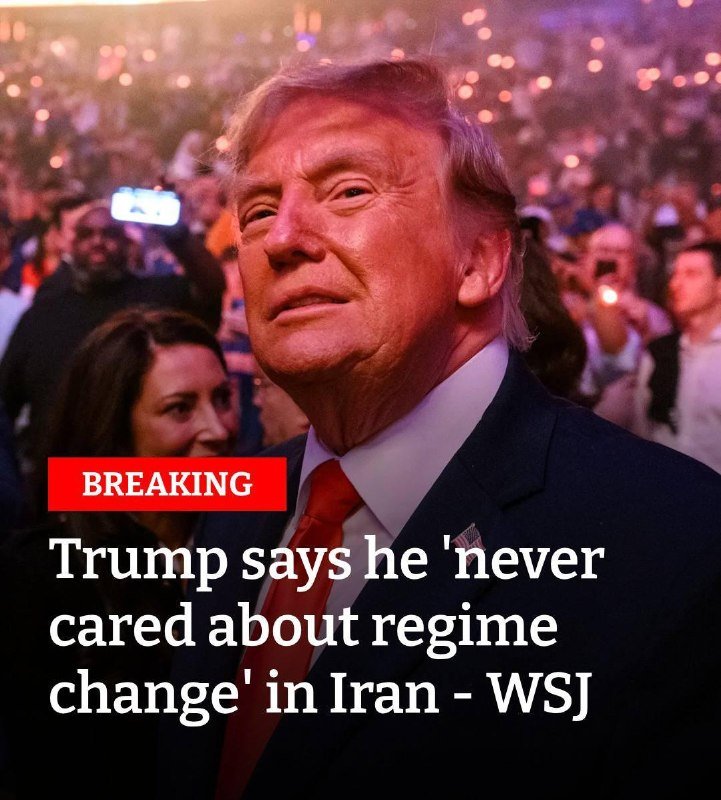
Donald Trump turned 80 on 14 June 2026 with a routine that has, by now, its own choreography: a phone call with a wartime head of state, a public statement that the war in question is days from ending, and a prediction market set up the same week to monetise the question of whether the man doing the predicting is actually becoming more popular for it. Volodymyr Zelensky rang in to wish him a happy birthday, and the two sides spent the conversation discussing "ideas for further negotiations and other important topics," according to a Telegram post by the noel_reports channel timestamped 2026-06-14T14:46 UTC. Trump, for his part, had already told an interviewer that he intended to mark the day "without much fanfare," per a post on X by @sprinterpress at 2026-06-14T13:43 UTC. The fanfare, characteristically, was happening anyway.
None of this is, on its own, a story. Heads of state congratulate one another; presidential birthday diplomacy is a minor genre of mutual reassurance. The story is what the rest of the week's signals are doing around that phone call — and what they are doing, when stacked, is the strange work of manufacturing closure on a conflict that has not, in fact, closed.
A deal, repeated until it lands
On 13 June at 2026-06-13T20:01 UTC, Trump's own messaging account — relayed by the @unusual_whales X account — summed up the week's pitch in five words: "This is the deal. It's a great deal, and it's time to end this war." No text of the deal, no named counterparties, no enumeration of territorial or security arrangements. Just the verdict, repeated. The grammatical certainty ("is," not "would be") is doing all the load-bearing work. Ukraine is the invaded party in this war — that is the established international-law premise, recognised by the UN General Assembly and uncontested across the Western-allied press — and any settlement that is being sold as "a great deal" is a settlement being sold to two audiences at once: Kyiv, and the American voter being asked to accept the result as success.
The Polymarket contract that dropped the same day, advertised by @polymarket on X at 2026-06-14T10:06 UTC, makes the second audience explicit. The question on the table is not "will the war end?" — that is too coarse a measure for a market that wants weekly resolution. It is the narrower, more revealing question: "Trump approval up or down this week?" A prediction market on presidential approval is, structurally, a market on the credibility of presidential claims. When the administration's public position is that peace is imminent, approval becomes a real-time referendum on whether the public believes it.
Courts as the other front
While the deal is being marketed, the underlying machinery of the second Trump term is being forced through the courts. On 12 June at 2026-06-12T17:57 UTC, @unusual_whales reported that a federal judge had blocked the Trump administration from proceeding with a $1.8 billion "anti-weaponisation fund," citing a Wall Street Journal report. The dollar figure is specific enough to anchor the story; the framing — that an administration is funding, in its own telling, the de-weaponisation of the federal apparatus — is specific enough to flag the political risk. The juxtaposition matters. The president is asking the public to treat the war as a closing transaction, while a federal court is signalling that the discretionary architecture around the executive is being contested in real time. Every "great deal" claim is being made against a backdrop in which the executive's broader project is being litigated, line by line.
What the framing leaves out
The counter-narrative is the obvious one, and it deserves its own paragraph. None of the public materials circulating in this thread specify the terms of any Ukraine settlement, the status of occupied territories, the security guarantees Kyiv would receive in lieu of NATO membership, or the position of European Union capitals — France, Germany, Poland — whose governments have a direct stake in whatever "deal" emerges. Reporting on the war elsewhere has stressed, repeatedly, that the European side has refused to be a footnote to a bilateral American–Russian track. A "great deal" that is not on paper, in other words, is a deal whose European clause is unwritten, and that is a deal whose durability is untested.
The structural read is that what is being sold, in this moment, is not a peace — it is the appearance of a peace. The combination of a confident presidential verdict, a market pricing the politics of the verdict, a court pushing back on adjacent executive action, and a public birthday call treated as diplomatic substance is the signature of an administration that has substituted announcement for architecture. This is not a new pattern; it is, however, a pattern that the public materials for this week make unusually legible, because the timing aligns so cleanly.
Stakes, and what remains uncertain
If the trajectory continues — presidential verdict on Monday, market repricing by Friday, court pushback as ambient noise — the winners are short-horizon: the political coalition around the president gets a wins column to point to, the betting market extracts a fee from the uncertainty, and the public gets the affective experience of resolution. The losers are longer-horizon: Kyiv gets a deal whose terms are not visible, European allies get a settlement that was negotiated past them, and the public record gets a "great deal" that may or may not survive contact with the actual battlefield.
What the sources for this piece do not establish — and what should be marked as genuinely uncertain — is whether there is a written document behind the verbal claim, who has signed or initialled it, and on what timeline the parties expect implementation. They also do not specify the European position on the framework being discussed. Until those gaps are filled, the most defensible reading is the modest one: a presidential birthday call, a self-described great deal, and a prediction market that is, very sensibly, pricing the politics rather than the peace.
This article treats the thread's public signals as a pattern rather than as a verdict on the merits of any negotiation. The published sources do not specify deal terms, and this publication declines to fill that gap with speculation.
Wire provenance
This editorial synthesis draws on the following public wire/social posts:
- https://t.me/noel_reports
- https://x.com/sprinterpress/status/
- https://x.com/unusual_whales/status/
- https://x.com/unusual_whales/status/
Follow the event.
These dated source records provide context. They do not retrospectively verify this archive article.
A dated voting record is evidence of one decision. Use the original UN record before turning it into an alignment label.
Visual explainer · historical vote of 2022-03-02 →