Trump races for an Iran deal as Tehran holds out, and a naval blockade hangs in the balance
As Trump predicts a deal within hours, Iran demands up to $12 billion in frozen funds and reportedly rejects additional US incentives, leaving a US naval blockade and the Strait of Hormuz on the table.
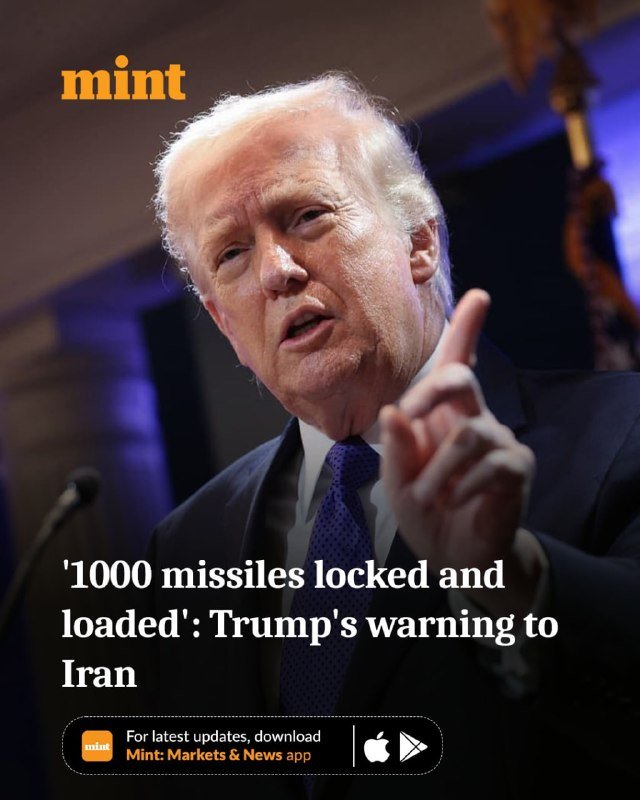
At 18:05 UTC on 14 June 2026, Israeli Channel 12 reported that President Trump had proposed releasing additional funds to Iran in exchange for Tehran refraining from targeting Israel. By 18:10 UTC, Iranian outlets were already saying the offer had been rejected, and a response was being prepared against Israel's earlier strike on Dahieh. By 19:50 UTC, Ynet was carrying a different framing: Trump may be prepared to lift the US naval blockade on Iran and reopen the Strait of Hormuz on a faster track than the phased timetable currently on the table, in order to head off precisely that attack. Twenty-four hours earlier, the same President had warned Iran that the United States held the "ultimate alternative" if diplomacy collapsed, and on 13 June accused the Obama-era nuclear deal of having cleared Iran's path to a weapon "six years ago." The shape of the day is the shape of the file: movement in every direction at once, and no settled answer about which way the deal, the blockade, or the gunboat diplomacy is actually pointing.
The simplest read is that a US-brokered framework is closer than at any point in the current crisis, but the gap between announcement and agreement is doing most of the work. Trump told reporters on 14 June that he expected a deal to be signed "within two-three hours," a timeline that, on the day it was given, looked less like a forecast than a bid to force the other side's hand. Tehran, by contrast, was simultaneously demanding up to $12 billion in frozen funds, threatening to walk out of the talks, and rejecting the additional economic sweeteners on the table, according to the same day's reporting. Each announcement was a counter-bid in a market the White House wants closed before markets open on Monday.
The blockade becomes the centre of gravity
What makes the moment different from prior US-Iran near-misses is the naval blockade. Ynet's reporting, carried into English-language channels by Middle East Spectator and War Footage Witness on the evening of 14 June, is that Trump is weighing an immediate, unilateral lift of the blockade and a reopening of the Strait of Hormuz, in place of the slower phased sequence previously discussed. That would amount to a substantial concession on the kinetic instrument most capable of hurting Iran's export economy, traded, in the Israeli framing, against an Iranian decision not to retaliate against Israel. The proposition inverts the usual hierarchy: instead of money for behaviour, the offer is access for restraint, with cash as a parallel sweetener.
Iran's reported rejection of "additional economic incentives" suggests Tehran does not yet regard the offer as adequate. The demands visible in the day's reporting — up to $12 billion in released funds, alongside an end to the blockade and a path through the Strait — describe a settlement that looks more like a price for the status quo ante than a price for restraint above it. That is a meaningful distinction: Iran is pricing the absence of war at a level associated, in earlier episodes, with the lifting of primary sanctions.
The Israeli variable, and what is being traded
Israel sits inside the package even though it is not the named counterparty. The Israeli strike on Dahieh, referenced in Iranian state-adjacent reporting on 14 June, is the proximate cause of the response Iran is now preparing. The Trump proposal — cash plus a blockade lift in exchange for no further strikes on Israel — is, in effect, a US side-payment to an Iranian decision that, on its face, concerns Israeli rather than American cities. That is the structural shift. The United States is converting strategic concession into a regional non-aggression bond whose first beneficiary is a third country.
It also explains why the blockade is the asset most likely to move. Lifting a naval blockade is reversible; releasing tens of billions in frozen funds through formal channels is a process that runs through banks, compliance teams, and the Treasury Department. For a White House that wants a signed page by the close of business on 14 June, the reversible instrument is the one that can be deployed fastest, and the one that costs the least in the sense that matters politically at home.
The threats that bracket the talks
The negotiation is being held open by two explicit warnings. The first is the American "ultimate alternative," delivered on 13 June, which is the public-facing shorthand for the military option Washington keeps in reserve when talks are about to fail. The second is Iran's own walk-out threat on 14 June, paired with a public line that the additional US incentives have been rejected. Both threats are doing real work: the American one disciplines Iranian demands, the Iranian one disciplines American offers. The trouble with that equilibrium is that it does not end. Two players holding the credible threat of escalation, and trading the credible threat of walk-out, can sustain a negotiation long past the point at which the underlying issues have been addressed, which is itself a kind of outcome.
Trump's own framing of the predecessor deal — the Obama-era Joint Comprehensive Plan of Action, attacked on 13 June as a deal that would have given Iran a nuclear weapon "six years ago" — is also doing work. It is a binding constraint on the size of any agreement the White House is willing to sign in its own name. A package that looks too much like JCPOA-plus will be read, by the same political coalition that produced the maximum-pressure sanctions architecture, as surrender. That tilts the negotiating range toward something the US can call something other than a nuclear deal, even if much of the substance resembles one.
Stakes and what remains unsettled
If the package closes, the immediate winners are the oil market, which has been pricing a Strait-of-Hormuz disruption; the Iranian government, which obtains liquidity and access; and the Israeli public, which is the named beneficiary of the non-aggression understanding. The losers are the sanctions architecture as it has been built since 2018, and the precedent value of a US-imposed naval blockade as a tool of coercion — once lifted under fire, it is harder to re-impose on a future occasion. The Strait of Hormuz carries roughly a fifth of seaborne oil; even a partial reopening is a real-economy event, not a symbolic one.
What the sources do not settle is whether there is, in fact, a deal. The 14 June reporting contains the simultaneity that has marked this file for a decade: an imminent signing, a rejection of the offer, a threatened walk-out, and a unilateral concession, all in the same news cycle. Each item is sourced; none of them together produces a clean read. The Polymarket market on a Trump-Putin meeting in 2026 — at 38% on the evening of 14 June, against the backdrop of a reported nearly hour-long birthday call between the two leaders earlier that day — is a reminder that headline-driven diplomacy has become tradable, and that the price of any individual deal is now set in a continuous market rather than at a signing ceremony.
This publication treats blockade-and-blockade-lift reporting as a single news event, since the assets on the table change with each Telegram cycle. Where wire reporting and Israeli or Iranian state-adjacent channels diverge, both versions are carried with their attribution intact.
Wire provenance
This editorial synthesis draws on the following public wire/social posts:
- https://t.me/Middle_East_Spectator
- https://t.me/wfwitness
- https://t.me/rnintel
- https://t.me/Middle_East_Spectator
- https://t.me/producthunt
- https://t.me/AngelList
Follow the event.
These dated source records provide context. They do not retrospectively verify this archive article.
Separate what the nuclear watchdog reported from what it could not determine after the June 2025 strikes.