Trump says Iran deal is "hours" away; Tehran denies it and Israel is the swing factor
Within a four-hour window on 14 June 2026, Donald Trump told Fox News a deal would be signed "within hours," Iran publicly rejected that timeline, and Tehran is reportedly demanding up to $12bn in frozen funds. The variance now is whether Israel, not Washington, is the binding constraint.
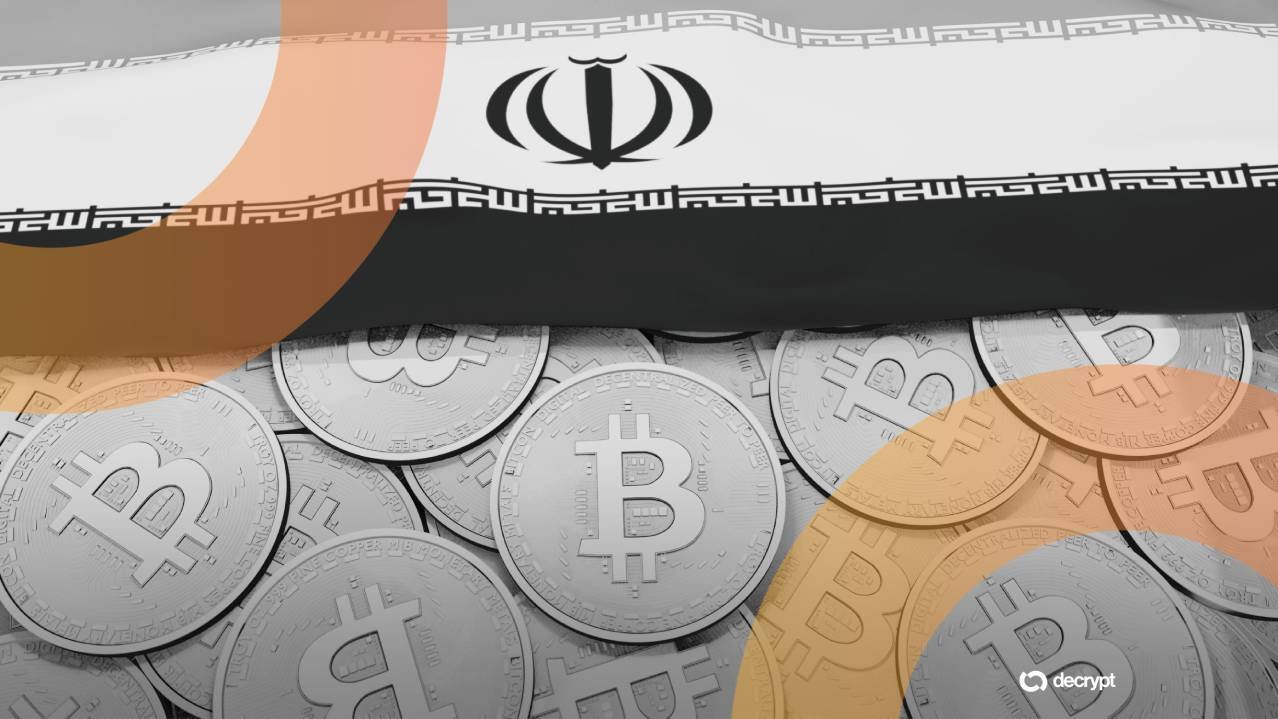
At 17:39 UTC on 14 June 2026, Donald Trump told reporters the United States and Iran would sign an agreement "in hours." By 17:10 UTC the same afternoon, the same news cycle had already logged a public rejection from Tehran, an Israeli strike on the Dahiya suburb of Beirut that the US President characterised as a delay tactic, and a Polymarket-flagged report that Iran is asking for as much as $12bn in released funds before any document is initialed. The gap between the President's announcement and the Iranian counter-announcement is the story.
The through-line of the day is not diplomacy. It is a tri-party credibility auction, in which Washington, Tehran and Tel Aviv are bidding against each other for the right to define the timeline. The economics of that auction — sanctions relief in one direction, frozen-asset release in the other, an Israeli security veto in the middle — is what the next 72 hours will be priced on.
What the four-hour window actually contained
The day opened with a Fox News interview in which Trump, asked about an Israeli strike on Dahiya, told the network he had told Prime Minister Benjamin Netanyahu "what the hell are you doing," and said he would ask Iran not to respond by launching missiles at Israel. The clip, circulated on Telegram by channels including @englishabuali and @abualiexpress at 16:21–16:35 UTC, frames the strike as the proximate cause of the deal's delay rather than as a separate theatre. By 16:15 UTC, @BRICSNews was already running a split-screen headline — "Trump says deal with Iran will be signed today. Iran says a deal will not be signed today." — that captured the divergence in real time.
At 16:14 UTC, Polymarket's news desk flagged a figure: Iran is reportedly demanding up to $12,000,000,000 in frozen funds from the United States as a condition of signing. The number is large enough to be the spine of the dispute. Frozen Iranian assets, parked in escrow accounts in third countries since the early-2010s sanctions architecture, have been the standing ask in every back-channel round of the past decade. Naming a specific ten-figure sum moves the conversation from atmospherics to arithmetic.
By 17:10 UTC, @BRICSNews reported Trump saying the agreement had been "delayed by Israel." By 17:15 UTC, Polymarket was quoting Trump expecting signing "within two-three hours." At 17:39 UTC, the X account @unusual_whales ran the same "agreement with Iran will be signed in hours" line. Inside roughly 85 minutes, the public timeline had moved from "today," to "two-three hours," to "hours" — even as Iran's own messaging, tracked across the same wire, kept the door open and simultaneously refused to commit.
The Iranian counter-frame
The most consequential beat of the day is not American. At 15:30 UTC, Polymarket reported that Iran is threatening to pull out of talks with the United States. That is not a negotiating posture. It is the language a sovereign uses when it wants to reset the price.
Read against the $12bn figure, the threat is legible. Tehran is signalling that it does not intend to sign for less than the headline number, and that it is willing to carry the reputational cost of an explicit walk-out to get it. Iranian state media has historically been treated by Western desks as a counter-claim source; in this cycle, the substance of Iran's position — the dollar figure, the threat to withdraw — is appearing on Western-allied prediction-market wires rather than on PressTV or Tasnim. That is an inversion worth noting. The bargaining position is no longer filtered through Iranian outlets; it is being priced by the same American information intermediaries that price oil futures.
The structural read is that Tehran has learned the choreography. The 2015 Joint Comprehensive Plan of Action took nearly two years of public negotiation to seal, with the financial substance buried in technical annexes. The current episode is being negotiated in plain view, on platforms where the market can hedge every quote. The Iranian side is using that transparency as leverage: every "Trump says hours" headline is, for Tehran, a public commitment the US President will be measured against.
Israel as the swing factor
Trump's own framing of the 14 June delay assigns the role of spoiler to Israel. The Dahiya strike is the concrete referent. The President's reported admonishment to Netanyahu — "what the hell are you doing" — is the first time in this cycle a sitting US President has publicly rebukied an Israeli prime minister on camera, in English, about a specific operation, in the middle of a third-party negotiation.
That posture is consistent with the 13 June warm-up, when Trump warned Iran the US has the "ultimate alternative" if a deal falls through, and contrasted the prospective agreement with the Obama-era JCPOA, claiming the earlier deal would have let Iran acquire a nuclear weapon "six years ago." The two statements, read together, define the US negotiating envelope: any deal is preferable to the alternative, and the alternative is being held above the table.
For Israel, the calculation is narrower. A deal that releases $12bn and validates an Iranian nuclear-capable threshold posture is, in the framing of Israeli security planners, materially worse than the status quo. Dahiya is the operational expression of that view: a strike timed to make the signing window logistically difficult, and to remind Washington that Israel retains an independent kinetic option. The same logic explains why Israeli sources have historically been more comfortable with ambiguity in US-Iran framings than with a signed document.
What the market is being asked to price
Crypto, equities, oil and gold desks treated the four-hour window as a single tradable event. Telegram channels aggregating financial-product news, including @producthunt and @AngelList, framed the announcement as a macro trigger: "Geopolitical news like this can move crypto, stocks, oil, and gold within minutes." The framing is correct but incomplete. The market is not pricing the signing. It is pricing the probability distribution across three outcomes: a signed deal that releases approximately $12bn; a collapse that pulls the US back toward the "ultimate alternative"; and a prolonged twilight in which Iran walks out and Israel continues to act unilaterally.
The $12bn figure is the fulcrum. Below it, Tehran has little reason to sign. Above it, the US domestic political base — already skeptical of unfreezing Iranian assets in an election year — treats the number as a concession too far. The Israeli variable operates as a third constraint on that interval. The actual deal, if there is one, will land where all three tolerances overlap, and the market's job over the next 72 hours is to discover that point in real time.
What remains unresolved
The sources do not specify which country's frozen-asset pool the $12bn would be drawn from, nor the legal mechanism for release. They do not name the Iranian official who set the figure, nor confirm whether the demand is in dollars, euros, or a basket. The Dahiya strike's casualty count, target, and Iranian retaliatory posture are also unverified in the wire traffic reviewed here. The single most consequential question — whether Iran's threat to walk is a negotiating posture or a genuine exit — is not resolved by the available reporting, and reasonable analysts will differ on which reading is dominant.
What is verifiable is the sequence: a US announcement of imminent signing, an Iranian denial, an Israeli strike publicly rebuked by the US President, a ten-figure financial ask, and a market repricing all of the above inside a single afternoon. The variance between "hours" and "not today" is now the working definition of the negotiation.
This article was framed by Monexus as a tri-party credibility auction rather than as a bilateral deal-watch. The wire traffic is consistent on the existence of talks; it is not yet consistent on their substance, and we have declined to fill that gap with inference.
Wire provenance
This editorial synthesis draws on the following public wire/social posts:
- https://x.com/unusual_whales/status/
- https://t.me/polymarket
- https://t.me/polymarket
- https://t.me/polymarket
- https://t.me/bricsnews
- https://t.me/englishabuali
- https://t.me/abualiexpress
- https://t.me/producthunt
Follow the event.
These dated source records provide context. They do not retrospectively verify this archive article.
Separate what the nuclear watchdog reported from what it could not determine after the June 2025 strikes.