Trump Says Iran Deal Within Hours, Floats End to Naval Blockade
Three afternoon claims from the US president — told to Fox News and amplified by Iranian state-linked wires — point to a deal within hours, contingent on Tehran staying silent.
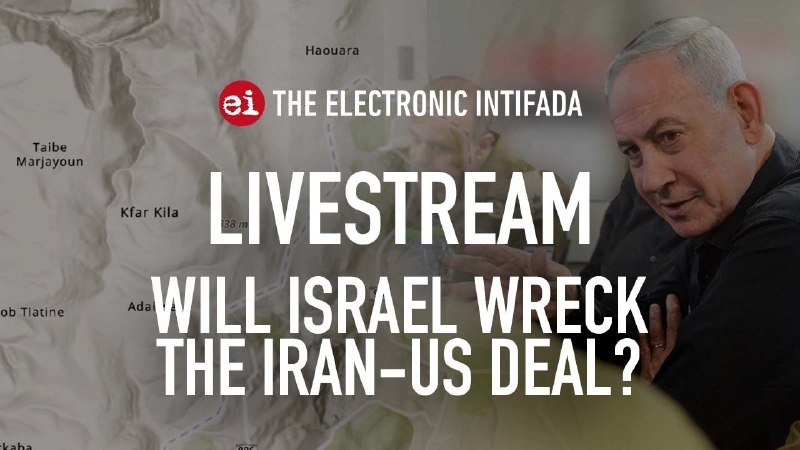
Donald Trump said on the afternoon of 14 June 2026 that a deal with Iran could be signed within hours, and that he was prepared to order an immediate end to the US naval blockade of the Islamic Republic the moment pen touches paper. The remarks, delivered to Fox News correspondent Trey Yingst and amplified within minutes by Iranian state-linked outlets, were conditional on one explicit demand: that Iran not respond militarily in the interim.
The claim, made across three posts on 14 June 2026 between 16:20 and 16:28 UTC, sets the most concrete timeline for a US-Iran agreement in months. It also re-introduces a coercive instrument — control of shipping through the Strait of Hormuz — that had largely faded from Western coverage even as Iranian outlets kept it on the front page. The shape of the deal, and the price of silence, remain unclear.
What was actually said
Three near-simultaneous statements, all attributed to the US president, drove the news. At 16:20 UTC, Telegram channel Middle East Spectator posted Trump telling Yingst that he had "told Iran not to respond. If they respond it's going to fucking ruin everything," and that "a deal will be signed in the next 2-3 hours." Eight minutes later, Tasnim News, the English-language wire of Iran's Islamic Republic News Agency-aligned Tasnim outlet, ran a parallel framing: "If the agreement is signed tonight, I will immediately issue an order to lift the naval blockade of Iran." A third post, on the rnintel channel, summarised the Yingst exchange as an "Iran Deal expected in the next few hours."
The three accounts are consistent on timeline and conditionality. They diverge in emphasis. The US-side feed — the Yingst exchange — frames a deal on the verge of closing, with a warning attached. The Iranian-side feed — Tasnim — frames a concession (the blockade) as already conceded in principle, contingent only on signature. Neither side published the text of any agreement.
What a "naval blockade" means here
A blockade of the Islamic Republic, in this context, refers to US Navy interdiction of commercial shipping in and out of Iranian ports in the Persian Gulf and the Strait of Hormuz — the narrow chokepoint between Iran and Oman through which roughly a fifth of the world's traded oil passes. The instrument has been threatened, partially imposed, and partially walked back at intervals since the US withdrew from the Joint Comprehensive Plan of Action in 2018.
Iranian state media has, for months, treated the blockade as live and tightening. Western wires have been more cautious — reporting seizures of individual tankers and the deployment of carrier groups, but rarely using the word "blockade" in headline copy. The Tasnim framing on 14 June is therefore notable not for the demand itself but for putting the term "naval blockade" in English, in quotation marks, attributed to Trump. It is a translation that doubles as a political claim: that the lifting, when it comes, will be a tangible concession, not a return to a pre-existing baseline.
Why the demand that Iran "not respond"
Trump's warning — that any Iranian military move would "ruin everything" — points to the constraint that has defined the file for weeks. Israeli strikes on Iranian-linked assets in Lebanon and Syria have continued. US forces in Iraq and the Gulf have come under periodic attack from Iran-aligned militias. A deal announced in Washington has, in past rounds, been blown open within hours by a kinetic event on the ground.
The structure is a familiar one in coercive diplomacy: a public ultimatum binds the weaker side's behaviour by making any response legible to domestic audiences as the cause of collapse. It also binds the stronger side, since any US-tolerated strike on Iran-linked assets during the deal window would be read in Tehran as bad faith. Neither side is, in this reading, fully in control of its own hardliners for the next 2-3 hours. The "don't respond" demand is as much an internal US-Israeli message as an Iranian one.
Stakes, and what we don't know
If a deal is signed on 14 June 2026, the immediate winners are the oil markets — tanker insurance rates in the Gulf have priced in a Hormuz risk premium for months — and any Iranian faction invested in the diplomatic track over the military one. The losers, in the short term, are the Israeli and Gulf Arab hardliners who have argued that only sustained pressure, not negotiation, will produce a real rollback of Iran's nuclear and missile programmes. Over a longer horizon, the question is whether a Trump-era deal survives a post-Trump White House — the same durability problem that consumed the 2015 JCPOA.
What the three Telegram posts do not establish: the text or scope of the agreement, the verification regime, the status of Iran's enriched-uranium stockpile, the treatment of Iranian funds frozen abroad, or the fate of Iranian-aligned proxy forces. They establish only that, as of 16:28 UTC on 14 June 2026, both Washington and Tehran judged it useful to publish the same headline: deal within hours, blockade lifts on signature, silence in the meantime. That is, by itself, a fact worth reporting carefully and without embellishment.
How Monexus framed this: the dominant Western wires had, by mid-afternoon UTC, not yet matched the Telegram-led reporting on the blockade concession. Monexus treats the Iranian-state-linked Tasnim framing as primary-sourced reporting of a Trump quote rather than as commentary, and pairs it with the parallel Fox News exchange to give the reader the two emphases — deal imminent, or concession imminent — without merging them.
Wire provenance
This editorial synthesis draws on the following public wire/social posts:
- https://t.me/tasnimnews_en
- https://t.me/Middle_East_Spectator
- https://t.me/rnintel
- https://en.wikipedia.org/wiki/Strait_of_Hormuz
- https://en.wikipedia.org/wiki/Joint_Comprehensive_Plan_of_Action
Follow the event.
These dated source records provide context. They do not retrospectively verify this archive article.
Separate what the nuclear watchdog reported from what it could not determine after the June 2025 strikes.