Trump's Iran deal is a memo, not a settlement
A memorandum of understanding is not a treaty, not a verified stockpile handover, and not a regional settlement. Reading the G7 summit against the announcement tells a different story than the cable hits.
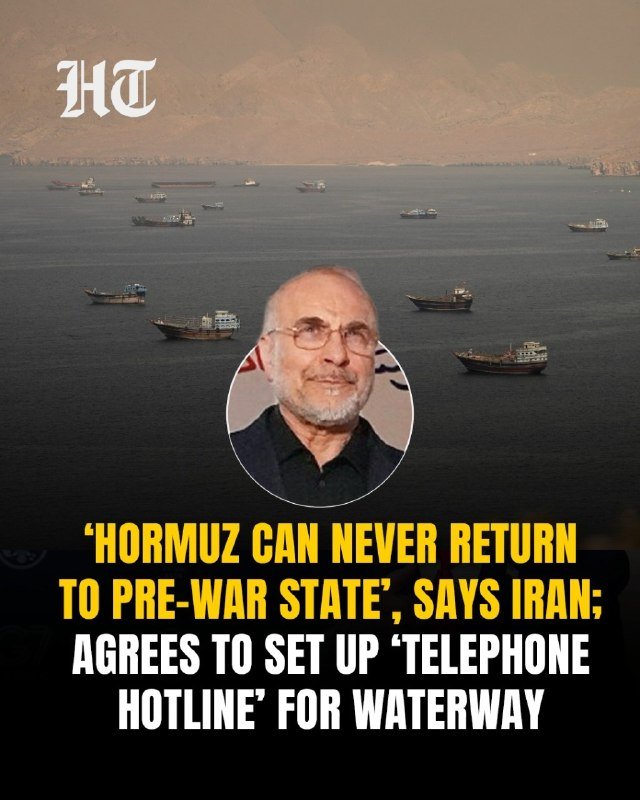
On 13 June 2026 at 17:34 UTC, Donald Trump announced that a memorandum of understanding between the United States and Iran would be signed "tomorrow." A day later, his administration walked the line back: a deal was "likely in the coming days, but not '100%' certain." The same 14 June news cycle carried a separate, more unsettling question — can anyone, in fact, get Iran's enriched uranium out of the country.
The pattern is familiar. A deadline approaches, a venue (this time the G7 in France) supplies a stage, and a presidential statement does the work of an actual agreement. A memorandum of understanding is a political handshake, not a binding instrument. It signals intent; it does not verify compliance. The Iran file has seen this choreography at least twice before in the past decade, and the gap between announcement and delivery has, each time, been where the story actually lived.
The venue is doing the work the substance is not
NPR's reporting on 14 June 16:00 UTC framed the G7 gathering as one now dominated by "the U.S.-led war in Iran" — a phrase that, on the page, compresses an enormous set of unresolved questions into a single noun. The original summit programme was meant to span separate economic and security files. The reordering is itself the news: an ongoing war, a memorandum that may or may not be signed, and a host of allied leaders being asked to either bless or quietly tolerate a process none of them drafted.
This is the part that deserves more scrutiny than it has received. When the venue absorbs the policy, the venue becomes the policy. France, Japan, Germany, the UK, Canada and Italy are now parties to the optics of a deal whose operative text, if one exists, has not been published. The closer a major-power settlement moves to a presidential statement, the less leverage allied capitals have — and the more the outcome depends on the domestic political weather in Washington and Tehran alone.
The uranium question is the deal's centre of gravity
The Indian Express dispatch of 14 June 15:52 UTC asked the right question bluntly: Trump wants Iran's uranium. But can anyone really get it out. The technical answer to that question is not trivial. Highly enriched and near-weapons-grade material does not travel well; it requires secured transport, verified chain of custody, a receiving facility, and a political arrangement that survives the moment the first convoy crosses a border. None of those elements have been described in any of the public statements surrounding the 13 June announcement.
Iran's nuclear architecture is dispersed, hardened in places, and partly international-monitored. Past attempts to ship material out of Iranian territory — most recently the 2015-era discussions about Iranian natural-uranium stocks going to Russia in exchange for reactor fuel — foundered on logistics, on inspections rights, and on Tehran's calculation that giving up physical inventory removes the only durable bargaining chip it has. If the memorandum being floated in mid-June 2026 does not address custody, sequence, and verification, it is a framework for further negotiation, not a settlement.
The "not 100% certain" walk-back is the story
There is a tendency in Western wire coverage to treat a deal announcement as a discrete event and a subsequent walk-back as a footnote. The reverse is closer to the truth. The 12 June 19:26 UTC read from the @unusual_whales account, sourcing administration comments, that the Iran deal signing was "likely in the coming days, but not '100%' certain." That is the operative line. It concedes that the binding language is not yet drafted, that the counterparties have not signed, and that the timing is hostage to events — Israeli actions, Iranian internal politics, and the U.S. domestic calendar among them — that no memorandum can constrain.
Reading the wire this way also disciplines the framing. A memo is a step; it is not the destination. The U.S.-led war that now defines the G7 agenda is not a war that ends with a handshake on a hotel ballroom in the south of France; it ends, if it ends, with a verifiable, monitorable, reciprocal set of actions. None of those actions are in the public record as of 14 June 2026 16:00 UTC.
What the framing leaves out
The structural point: the architecture of the post-2015 nuclear file was built precisely because earlier agreements relied on presidential statements. That architecture is, in this news cycle, being set aside in favour of speed and stagecraft. That is not in itself a verdict on the merits — a faster deal that holds is better than a slower one that collapses — but it does mean the burden of proof sits with the people doing the announcing.
Two things remain uncertain. First, whether the memorandum, when and if it is signed, contains operative language on uranium disposition or merely a commitment to keep talking. Second, whether the G7 frame around the signing produces allied buy-in, allied acquiescence, or a quieter allied distancing. The Indian Express dispatch, the Trump administration walk-back, and the Polymarket-flagged announcement are the three inputs that the public record actually offers on 14 June 2026. Everything beyond them is, for now, framing.
This publication treats the memorandum as a political signal, not as the settlement the wire cycle is inclined to describe. The next 72 hours — whether the text surfaces, what it says about uranium, and how allied capitals respond from the G7 — will tell us whether the announcement was a beginning or a familiar pattern running on a different clock.
Wire provenance
This editorial synthesis draws on the following public wire/social posts:
- https://x.com/polymarket/status/
Follow the event.
These dated source records provide context. They do not retrospectively verify this archive article.
Separate what the nuclear watchdog reported from what it could not determine after the June 2025 strikes.