Trump says Iran deal will be signed Sunday; Hormuz to reopen, nuclear barrier promised
President Donald Trump says a US-Iran deal will be signed Sunday and reopen the Strait of Hormuz immediately, though Tehran publicly disputes the timeline.
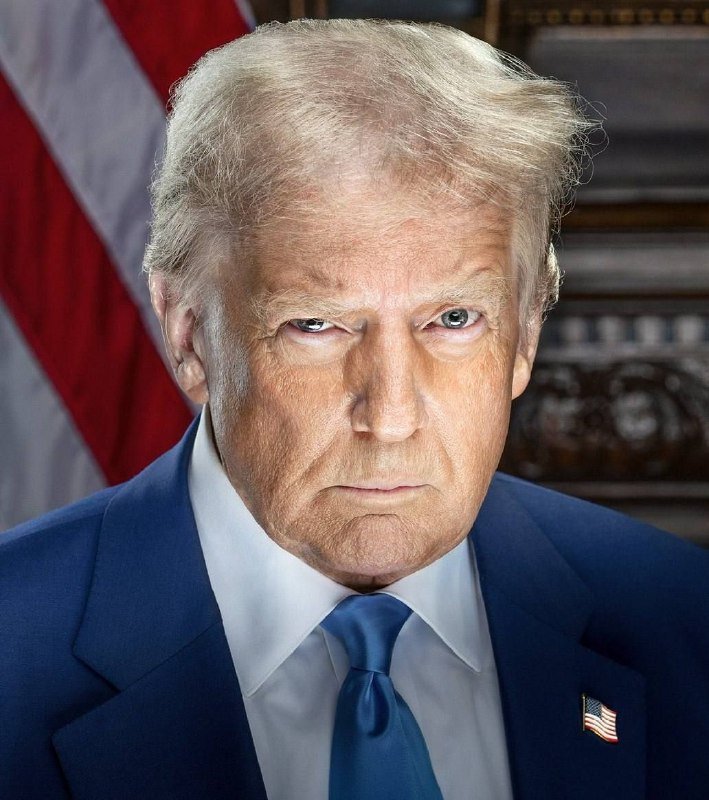
Donald Trump announced on 14 June 2026 that a peace agreement with Iran will be signed on Sunday and that the Strait of Hormuz, the world's most consequential oil chokepoint, will be open to all shipping "immediately" once the deal is concluded. The president made the claim via his social media account at 05:31 UTC, according to a post carried by @unusual_whales. Trump added, in a separate statement reported by Middle East Eye at 08:16 UTC, that the proposed agreement would create a barrier preventing Tehran from obtaining nuclear weapons.
If accurate, the announcement marks the most consequential Middle East de-escalation in years and would remove a tail-risk that has lingered over global crude markets and dollar-denominated energy trade since Iranian-aligned forces began harassing commercial shipping in the Gulf. It would also represent a personal foreign-policy win for Trump ahead of midterm-season politics. The rest of this article treats the claim as the news it purports to be, while flagging the contradictions already on the public record.
What Trump said, and when
The two statements landed within a three-hour window on the morning of 14 June 2026. The first, via Truth Social and relayed by @unusual_whales at 05:31 UTC, framed the deal primarily as an energy story: the Strait of Hormuz, through which roughly a fifth of globally traded crude passes on most days, will be "open to all immediately" upon signature. The second, reported by Middle East Eye at 08:16 UTC, recast the same agreement as a non-proliferation instrument, with Trump asserting it would build a "barrier" against an Iranian nuclear weapon.
Neither statement was accompanied by text of the agreement, by a list of signatories, or by a venue. No joint communique was issued by the US State Department or the Iranian foreign ministry in the window covered by the available reporting.
Tehran says the timeline is wrong
The most important counter-narrative comes not from analysts but from the Iranian government itself. According to Cointelegraph reporting at 05:07 UTC on 14 June 2026, Trump contradicted Tehran by claiming a Sunday signature; the Iranian side, in the same wire cycle, did not confirm that date. Crypto markets read the headline as bullish risk-on anyway: Michaël van de Poppe, cited in the same Cointelegraph item, argued that a reopening of the Strait of Hormuz would likely send liquidity back to risk-on assets including cryptocurrencies, on the logic that oil-driven inflation expectations would soften and that Middle East risk premia embedded in global rates would compress.
That market read is worth dwelling on for a moment, because it shows how dollar-priced assets price Middle East news before diplomats do. The Brent and Dubai curves, the tanker freight indices, and the bitcoin order book all started moving on the Trump post, not on an Iranian confirmation. None of that means the deal is real, but it does mean the price of optionality on a deal has collapsed in a single morning.
What the deal is supposed to contain
Stripped of campaign language, three substantive claims sit inside the announcement.
First, shipping access. The Strait of Hormuz has been intermittently contested since 2019, when Iran seized commercial tankers in response to US sanctions. A formal, signed guarantee of free passage would, on paper, restore the legal baseline that has applied since the 1980s and remove the implicit Iranian leverage over Gulf transit that has cost shipowners and their insurers hundreds of millions of dollars a year in war-risk premia.
Second, a nuclear barrier. Trump described the deal as a barrier preventing Tehran from obtaining a nuclear weapon. That phrasing is closer to the language of the 2015 Joint Comprehensive Plan of Action than to the 2018 "maximum pressure" framework, and it implies some combination of enrichment constraints, inspections, and a defined breakout timeline. The Middle East Eye item at 08:16 UTC does not specify enrichment caps or IAEA access arrangements.
Third, a Sunday signing. Cointelegraph, citing the same cycle, reports that Tehran disputes the timing. That disagreement is the single most important open question, because a deal that exists only in the US president's Truth Social feed is not a deal in the diplomatic sense. It is a negotiating position.
Why the gap between announcement and confirmation matters
Past experience with Trump-era Middle East announcements suggests two failure modes worth taking seriously. In 2018, the administration announced a US-North Korea summit in Singapore on a similar cadence; the on-again, off-again pattern produced whipsaw in Asian equity markets and in the Korean won. In 2020, the Abraham Accords were telegraphed for weeks before they were signed, with both Israeli and Emirati counterparts on the record. The current Iran cycle looks more like the 2018 pattern than the 2020 one: the headline is out, but the counterpart has not yet signed.
The structural frame here is familiar. Major-power negotiations, particularly those that touch nuclear capability and energy corridors, are routinely conducted through a public channel of presidential statements and a private channel of working-level drafts. The public channel is now loud; the private channel is unverified. Monexus's read is that the public channel is being used to harden Iran's negotiating position against any last-minute US demand, and to give Trump's domestic audience a foreign-policy win, before either side has signed anything binding.
Stakes: who wins, who loses
If the deal holds, the immediate winners are oil importers in Asia and Europe, whose terms of trade improve the moment the tanker-war risk premium evaporates; the US Treasury, which loses a sanctions-enforcement lever but gains a more stable oil price; and the Iranian rial, which typically rallies on de-escalation headlines. Crypto markets, per van de Poppe's framing, would also benefit from a rotation into risk-on assets as oil-driven inflation fears recede.
If the deal collapses, the losers are predictable: Iranian civilians, who have borne the cost of sanctions; Gulf shipping insurers; and any administration that sold Sunday as the day the deal was signed. The single largest external risk is that a failed signature becomes the trigger for a kinetic response, either direct or through Iranian-aligned groups in Iraq, Syria, Yemen, or Lebanon. The most important internal risk, and the one most under-reported in English-language wires, is that hardliners in Tehran use the gap between Trump's claim and Iran's denial to mobilise parliamentary opposition to any compromise that does not include full sanctions relief.
What remains uncertain
Three things are not yet knowable from the public record. The text of the agreement is not published. The Iranian confirmation, or denial, of the Sunday date is not on the wire as of 08:16 UTC on 14 June 2026. And the inspection regime, if any, that would operationalise Trump's "barrier" language has not been described by either side. Until all three move from the public channel to the diplomatic one, this is a deal in the conditional tense.
Desk note: Monexus treated Trump's Sunday claim as the lead because it is the most market-moving data point in the cycle, but kept the Cointelegraph contradiction with Tehran on equal footing in the nut graf. The crypto-market read is included as evidence of how the headline is being priced, not as an endorsement of the price move.
Wire provenance
This editorial synthesis draws on the following public wire/social posts:
- https://t.me/unusual_whales
- https://t.me/middleeasteye
Follow the event.
These dated source records provide context. They do not retrospectively verify this archive article.
Separate what the nuclear watchdog reported from what it could not determine after the June 2025 strikes.