Trump's Iran Hour, Putin's Birthday Call, and the Deal That Might Not Exist
On his 80th birthday, Donald Trump juggled an alleged imminent Iran accord, a 49-minute Putin call, and a Polymarket crowd that cannot decide whether any of it is real.
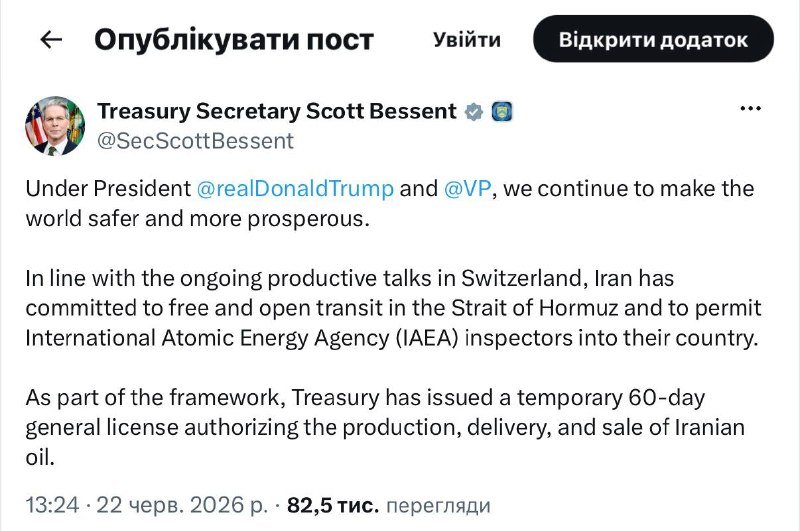
The 80th-birthday geopolitics tour
By 22:32 UTC on 14 June 2026, the headlines had already done the work of a season finale. The South China Morning Post reported that Vladimir Putin and Volodymyr Zelensky had both placed phone calls to Donald Trump on the day the US president turned 80. A separate post, timestamped 19:59 UTC, claimed Putin spent nearly an hour of that birthday wishing Trump well and praising him as a "bright, remarkable person and politician." The same afternoon, Trump told reporters an agreement with Iran could be signed "within two-three hours." On Polymarket, the prediction market pegged the odds that Trump himself would sign an Iran deal at 49% and the odds of a Trump–Putin in-person meeting by year-end at 38%. It is hard to recall a single day in which so many unresolved diplomatic storylines converged on one birthday, one news cycle, and one man's rhetoric.
This is the Trump-era foreign policy operating mode in its purest form: maximalist claims, compressed timelines, and a trading-floor in the background pricing every sentence. The question is no longer whether Washington is negotiating with Tehran, with Moscow, or with Kyiv. It is whether any of the deals being announced will survive contact with the following morning's confirmation cycle.
The Iran track, in its strongest and weakest forms
In its strongest form, the story is genuinely moving. On 13 June at 14:48 UTC, a Polymarket post projected a permanent US–Iran peace deal by month-end at 52%. A day later, at 17:15 UTC, Trump said publicly that he expected the agreement "within two-three hours." On the substance, Iran was reportedly demanding up to $12 billion in frozen funds; Trump was warning that the US held the "ultimate alternative" if the talks collapsed. That is a recognisable diplomatic shape: leverage, money, a deadline, and a fallback threat.
In its weakest form, the story is a prediction market tautology. The same Polymarket feed that gave the deal a 52% chance on 13 June was reporting at 16:14 UTC on 14 June that Iran was "demanding up to $12,000,000,000.00 in frozen funds," and at 15:30 UTC that Iran was "threatening to pull out of talks with the U.S." In other words, the market and the principals were describing the same negotiation in the same window as both imminent and on the verge of collapse. A Polymarket-contract crowd is not a foreign policy. It is a sentiment indicator with a price tag, and a 49% chance of Trump signing personally is, definitionally, a coin flip.
The most plausible read: a framework is genuinely close, but the gap between a framework and a signed agreement is the gap that swallows Middle East diplomacy. Trump's rhetorical compression of weeks into "two-three hours" should be read as a negotiating posture aimed at Tehran, not as a forecast.
The Putin call, and what a birthday hour does to foreign policy
The Putin track is harder to dismiss. A reported nearly-hour-long birthday call, in which the Russian leader described Trump in personal and laudatory terms, is the kind of optics the Kremlin actively seeks and the White House usually resists. The Zelensky call, by contrast, is what the calendar demands of a US president on the day Russia is grinding forward in eastern Ukraine. Both calls happened; only one of them was a love letter.
The counterpoint, and it is a serious one, is that Trump has used direct leader-to-leader calls as his primary diplomatic instrument since 2025. There is no public evidence the call produced any concrete movement on the war. The 38% Polymarket contract on an in-person Trump–Putin meeting by year-end is a more honest reading of where this stands: low-conviction, not zero, and entirely dependent on Russian movement on a Ukraine settlement that Moscow has not yet shown any sign of accepting.
The structural frame is plain. A US president who treats foreign policy as a personal relationship — birthdays, flattery, hour-long calls — is a president for whom state machinery is downstream of chemistry. That has advantages: lines of communication stay open. It has obvious costs: deals priced on personal warmth tend to be repriced when the weather changes.
What the wire and the prediction market disagree on
The wire-level reporting from the South China Morning Post treats the Putin and Zelensky calls as confirmed events. The Polymarket feed layers probability markets and attributed quotes on top, which is useful as a sentiment gauge and dangerous as a primary source. The two systems are describing the same day through different instruments: a newsroom asking "did this happen" and a market asking "what do traders think will happen next."
A reasonable judgement: the calls happened, the birthday rhetoric was real, the Iran framework is plausibly close, and the headline-grabbing speed of every announcement is itself the story. The pattern of an 80th-birthday afternoon — Putin on the line, an Iran deal "within two-three hours," a prediction market wavering near 50% — is the pattern of a foreign policy run on the speaker's own metabolism, not on the slower clock of verification.
The serious part: stakes if the timeline slips
If the Iran agreement slips past its 30 June window, the diplomatic clock collides with an Israeli and Gulf security clock that has its own red lines on enrichment. If the Putin track produces a Trump–Putin summit without Ukrainian movement, it produces a photo, not a settlement, and the photo will be read in Kyiv, in Berlin, and in the Gulf capitals as a signal of where US attention is actually going. The Polymarket numbers on both tracks are low-conviction for a reason: the principals have not paid for the deals they are claiming to be close to, in either sanctions relief for Tehran or territorial reality for Ukraine.
The sources do not specify whether the Iran deal text exists, whether Putin's birthday warmth translated into anything operational, or whether Trump's "ultimate alternative" is a credible threat or a rhetorical placeholder. Until the wire confirms one of these in primary form, the only honest read is that 14 June 2026 was a day of plausible claims, conflicting probabilities, and a birthday phone call that told us more about the US president's operating style than about the trajectory of any of the three wars he is supposedly managing.
Desk note: Monexus treated the Polymarket feed as sentiment, not as reporting, and deferred on substance to the wire-level account from the South China Morning Post, with prediction-market data used to price the gap between announcement and confirmation.
Wire provenance
This editorial synthesis draws on the following public wire/social posts:
- https://t.me/polymarket
- https://t.me/polymarket
- https://t.me/polymarket
- https://t.me/polymarket
- https://t.me/polymarket
Follow the event.
These dated source records provide context. They do not retrospectively verify this archive article.
Separate what the nuclear watchdog reported from what it could not determine after the June 2025 strikes.