Trump announces end to Iran war, lifts Strait of Hormuz blockade in surprise Saturday night pivot
Vice President JD Vance confirmed on Fox that Washington and Tehran have agreed to end the war and permanently bar Iran from a nuclear weapon, hours after President Trump announced the Strait of Hormuz blockade is over.
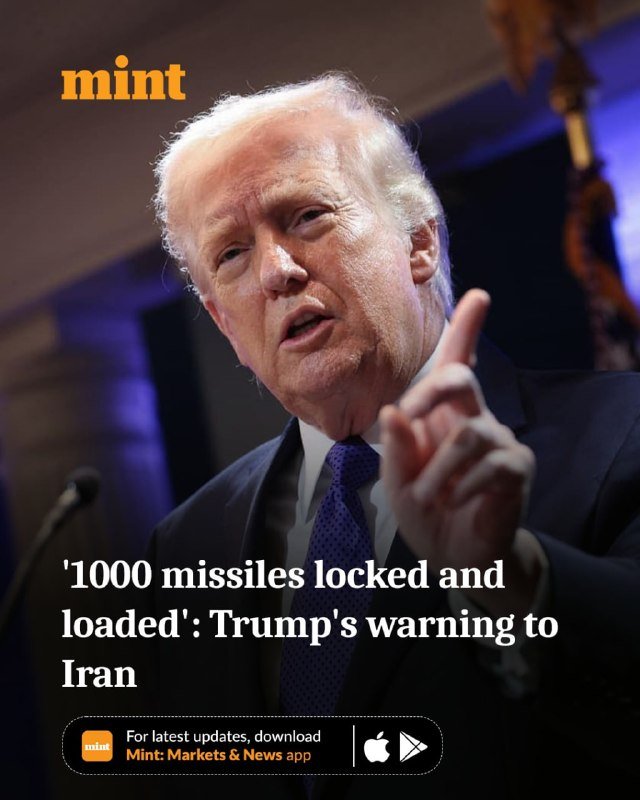
At 22:22 UTC on 14 June 2026, Vice President JD Vance told Fox News that the United States and Iran had reached a peace agreement ending the war between the two countries, with Tehran permanently barred from pursuing, procuring, or obtaining a nuclear weapon. The announcement capped a Saturday night sequence in which President Donald Trump separately declared the naval blockade of the Strait of Hormuz over and called on the world's commercial fleet to resume transit through the world's most consequential oil chokepoint.
If the Vance terms hold, the deal would close one of the sharpest escalations of the post-2024 Middle East cycle. It would also reopen, in a matter of days, a sea lane that at peak tension had been pricing in war premia across global crude. The shape of the agreement, the verification regime, and the position of Gulf allies are now the three questions that will determine whether Saturday was a peace or a pause.
What was actually announced
Vance's framing, as carried by the Open Source Intel Telegram channel, was categorical: Iran is "permanently blocked from pursuing, procuring, or obtaining a nuclear weapon," with the Strait of Hormuz named as part of the package. The Vice President did not, in the clip that circulated on Sunday morning, enumerate the verification mechanism, name an Iranian signatory, or specify whether the arrangement was a formal treaty, an executive understanding, or a presidential declaration with no parallel Iranian instrument. The channel's summary also did not specify the length of Iran's obligations, the role of the International Atomic Energy Agency, or the sanctions architecture that would attach to the deal.
Trump's own message, relayed by Ukrainian war correspondent Andriy Tsaplienko's Telegram feed at 21:44 UTC, was shorter and more theatrical. "Congratulations everyone!" the President is quoted as saying. "I completely open the Strait of Hormuz and end the naval blockade. Ships of the world, start your engines. Let the oil flow!" A parallel Telegram feed run by English-language Iran-watcher Abu Ali carried a corroborating line at 22:19 UTC: "President Trump officially announces the lifting of the blockade over Hormuz." Two independent channels, no Iranian counter-statement yet visible in the public Telegram record.
The first-order economic consequence is that roughly a fifth of globally traded oil, plus a comparable share of liquefied natural gas, was told to start moving again. Tankers that had rerouted around the Cape of Good Hope, refiners that had paid war-surcharge premia, and Gulf producers that had cut output to avoid storing crude they could not ship, all now face the same simultaneous question: how fast can you unwind a shock? Insurance markets, which had priced the Strait at multi-year highs as recently as the previous week, will be the first to answer.
The verification gap
History offers a reminder. The 2015 Joint Comprehensive Plan of Action was also presented as a permanent bar on an Iranian bomb, and it unravelled through a combination of US withdrawal, Iranian incrementalism, and disputes over what inspections actually meant. The Vance wording — "permanently blocked from pursuing, procuring, or obtaining" — is tighter than the political-language formulations of the JCPOA era, but it leaves open the same operational questions. What counts as "pursuing"? Does uranium enriched to 60 percent count? Does a missile test programme that, in the Israeli intelligence reading, can loft a device to the threshold of weapons-grade? Does a civil nuclear build-out that Iran describes as peaceful and US negotiators read as breakout optionality?
The Telegram accounts that carried Saturday's announcement did not include an Iranian read-out, a foreign ministry statement from Tehran, or a confirmation from the Gulf Cooperation Council. That absence is itself the story. The Iran file has rarely ended cleanly without a signatory on the other side, and Tehran's silence on the night of the deal is the first thing markets and foreign ministries will probe on Sunday morning.
Why now
The pressure to close the file had been building on three fronts. Domestic US politics, with midterm-adjacent voter patience for sustained deployments in a fourth Middle Eastern theatre running thin. Energy markets, where the war premium had been feeding through to petrol and diesel prices in ways that the administration was plainly tracking. And the Gulf states, whose own economic exposure to a prolonged closure of the Strait was the unspoken driver of back-channel pressure on Washington to declare victory and move to commercial reopening.
Trump's own line — "ships of the world, start your engines" — is a political sentence. It is the language of a closing argument, addressed to oil traders, to allied capitals, and to a domestic audience that has been watching a war whose visible costs have been rising faster than its visible gains. The Vance announcement, with its explicit denial of an Iranian nuclear path, supplies the policy sentence that gives the political sentence a claim to substance. Whether that claim survives contact with the text of any actual agreement is the open question.
What remains uncertain
The Telegram record on which this article is based does not include a named Iranian counterpart to Vance or Trump, nor a textual agreement; it does not specify whether the IAEA has been brought into the arrangement; it does not detail the sanctions calendar; and it does not address the fate of Iranian assets that have been frozen or the status of detained Iranian-linked figures abroad. Israeli reaction, which historically has been a leading indicator of whether a US-Iran deal of this shape can hold, was not visible in the three source items circulated on Saturday night.
What can be said with confidence is narrower than the headlines suggest: the US President and Vice President have publicly committed to a deal they describe as ending the war and foreclosing an Iranian bomb, and they have ordered the Strait reopened. What cannot yet be said is whether the Iranian side accepts those terms on the same record, whether the verification architecture that the deal implies is in place, and whether Gulf and Israeli partners have been brought inside the arrangement rather than presented with a fait accompli. Those are the questions that Sunday morning will be asked to answer.
This piece relied on three Telegram feeds — Open Source Intel, Abu Ali English, and Andriy Tsaplienko — for the initial reporting on Saturday's announcement. Monexus is publishing on the strength of those wires pending an Iranian official response, an IAEA read-out, and confirmation from Gulf partners.
Wire provenance
This editorial synthesis draws on the following public wire/social posts:
- https://t.me/osintlive
- https://t.me/englishabuali
- https://t.me/Tsaplienko
Follow the event.
These dated source records provide context. They do not retrospectively verify this archive article.
Separate what the nuclear watchdog reported from what it could not determine after the June 2025 strikes.